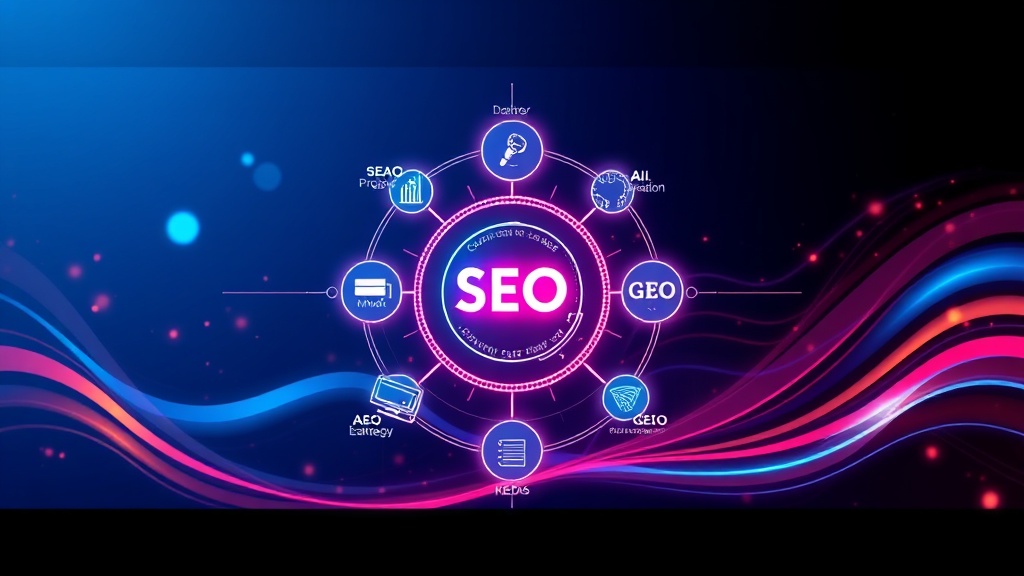
In the rapidly evolving digital landscape, content is king, but intelligent content is the empire builder. The convergence of artificial intelligence (AI) with traditional and advanced optimization methodologies is fundamentally reshaping how businesses connect with their target audiences. To achieve unrivaled digital dominance today, a holistic and sophisticated approach is required, one that seamlessly integrates AI Optimization (AIO), Search Engine Optimization (SEO), Answer Engine Optimization (AEO), and Geographic Optimization (GEO). This comprehensive strategy moves beyond basic keyword matching to embrace semantic understanding, user intent, conversational search, and hyper-localized relevance, all amplified by the analytical and generative power of AI. Understanding each component and their synergistic relationship is paramount for any organization aiming to capture significant market share and build lasting digital authority.
Understanding AIO: AI Optimization for Intelligent Content
AIO, or AI Optimization, is the strategic application of artificial intelligence technologies to enhance content creation, distribution, and performance across all digital channels. It leverages machine learning, natural language processing, and predictive analytics to automate tasks, personalize experiences, and optimize content for human and algorithmic understanding, thereby improving efficiency and effectiveness.
AI Optimization acts as the foundational layer, transforming raw data into actionable insights and automating complex content workflows. Generative AI models, such as large language models (LLMs), play a crucial role in drafting content, brainstorming ideas, and adapting text for various platforms. This capability significantly accelerates content production cycles, allowing teams to focus on strategic oversight and creative refinement. Beyond generation, AI-powered tools offer predictive analytics, identifying trending topics, optimal publishing times, and potential content gaps based on vast datasets of user behavior and competitor analysis. Natural language processing (NLP) algorithms refine content for clarity, tone, and readability, ensuring it resonates with the intended audience while satisfying algorithmic requirements for semantic relevance and topical authority. This intelligent automation empowers content strategists to scale their efforts, deliver highly personalized experiences, and maintain a competitive edge in fast-paced digital environments.
- Content Generation: Using LLMs to draft articles, social media posts, and email campaigns.
- Topic Clustering: AI identifies related topics to build comprehensive content hubs.
- Sentiment Analysis: Understanding audience emotion towards content and brands.
- Performance Prediction: Forecasting content engagement and conversion rates.
- Personalization: Tailoring content delivery based on individual user profiles and past interactions.
Revisiting SEO: Semantic Search and Entity Recognition
Modern SEO transcends keyword stuffing, focusing instead on semantic search and entity recognition to help search engines understand the deeper meaning and context of content. This involves structuring information around entities (people, places, things, concepts) and their relationships, ensuring content accurately answers user queries by demonstrating expertise, authority, and trustworthiness (E-E-A-T).
Traditional SEO often revolved around exact-match keywords and rudimentary link building. Today, Google’s advanced algorithms, including BERT (Bidirectional Encoder Representations from Transformers) and MUM (Multitask Unified Model), are designed to understand natural language with unprecedented accuracy. These algorithms process entire queries and content in context, identifying the intent behind a search rather than just matching keywords. Content strategists must therefore focus on creating rich, comprehensive resources that cover topics thoroughly and establish clear relationships between entities. Leveraging structured data via schema markup is critical for explicitly defining these entities and their properties, making content more machine-readable. Building a robust Knowledge Graph around a brand’s core topics enhances topical authority, signaling to search engines that the content is a definitive resource. This shift necessitates a move towards providing complete answers and demonstrating genuine expertise, rather than merely optimizing for search terms.
Key SEO Paradigms
- Knowledge Graphs: Connecting entities and their relationships for deeper understanding.
- E-E-A-T: Demonstrating Experience, Expertise, Authoritativeness, and Trustworthiness.
- Topical Authority: Producing comprehensive content that covers an entire subject domain.
- Structured Data: Implementing schema.org markup to provide context to search engines.
- User Intent Matching: Aligning content with the underlying goal of a user’s search query.
Elevating with AEO: Answer Engine Optimization for Direct Answers
Answer Engine Optimization (AEO) is the process of optimizing content to directly answer user questions, particularly for voice search, featured snippets, and direct answer boxes on search engine results pages. It prioritizes clarity, conciseness, and structured information to be easily extracted and presented by AI-driven answer engines.
As voice search via devices like Google Assistant, Amazon Alexa, and Apple Siri becomes more prevalent, and search engines increasingly provide direct answers, optimizing for AEO is non-negotiable. Users often phrase queries as natural language questions (‘How do I…’, ‘What is…’, ‘When did…’). Content must be structured to provide immediate, unambiguous answers. This involves identifying common questions related to your topic and explicitly addressing them with clear, concise paragraphs (often 40-60 words, ideal for featured snippets), bulleted lists, or tables. Implementing FAQ schema markup helps search engines understand which parts of your content directly answer specific questions. Understanding conversational AI principles, such as anticipating follow-up questions and maintaining a natural flow of information, further enhances AEO. The goal is to become the definitive source that answer engines confidently cite, significantly boosting visibility and establishing authority.
AEO Best Practices
- Question-Based Content: Directly answer common user questions within content.
- Concise Answers: Craft short, definitive answers suitable for snippets and voice.
- FAQ Schema: Markup questions and answers using JSON-LD for explicit identification.
- Conversational Language: Write in a natural, conversational tone that mimics human speech.
- Clarity and Simplicity: Ensure answers are easy to understand and free of jargon where possible.
Localizing with GEO: Geographic and Local Search Optimization
Geographic Optimization (GEO) involves tailoring content and digital presence to attract users searching for local products, services, or information, often incorporating location-specific keywords, Google Business Profile management, and mobile optimization. It leverages proximity signals and local intent to connect businesses with nearby customers.
For many businesses, a significant portion of their customer base is local. GEO ensures that when potential customers search for ‘near me’ or include specific location names in their queries, your business appears prominently. The cornerstone of GEO is a meticulously optimized Google Business Profile, complete with accurate business information, photos, reviews, and regular updates. Content strategy should incorporate hyperlocal details, mentioning local landmarks, events, and community-specific issues to resonate deeply with the local audience. Mobile optimization is critical, as most local searches occur on smartphones. Geospatial data, derived from user location and business addresses, plays a crucial role in how search engines rank local results. Consistent Name, Address, Phone (NAP) information across all online directories is fundamental for establishing trust and authority in local search algorithms. Ignoring GEO means missing a vital segment of potential customers with high purchase intent.
Essential GEO Elements
- Google Business Profile (GBP) Optimization: Complete and regularly update business listings.
- Local Keywords: Integrate city, neighborhood, and region-specific terms into content.
- NAP Consistency: Ensure Name, Address, Phone are uniform across all online platforms.
- Local Citations: List business in local directories and industry-specific platforms.
- Geotagged Content: Use location tags in images and videos where relevant.
The Synergistic Framework: Integrating AIO, SEO, AEO, GEO
The true power lies not in isolated strategies but in their seamless integration. An AI-powered content strategy acts as the orchestrator, ensuring AIO, SEO, AEO, and GEO work in concert. AI tools can analyze vast amounts of data to identify opportunities for semantic SEO, suggest content for AEO-rich snippets, and pinpoint GEO-specific content needs, creating a cohesive and hyper-effective digital presence.
Imagine a scenario where AI analyzes search queries, identifies both semantic gaps (SEO) and direct questions (AEO) within a specific geographic region (GEO). It then uses generative capabilities (AIO) to draft targeted content that addresses these needs, optimized with appropriate schema markup and localized keywords. This unified approach eliminates silos and maximizes the impact of every content piece. For example, a restaurant chain might use AI to detect a surge in ‘vegan restaurants near [city neighborhood]’ searches. AI would then generate a blog post detailing their vegan menu options, optimized for local SEO with neighborhood names, structured for AEO to win featured snippets for ‘best vegan dishes [city neighborhood]’, and distributed across local social channels. This data-driven, interconnected approach ensures maximum visibility and relevance across all touchpoints in the customer journey.
Integrated Strategy Components
| Strategy Pillar | AI Contribution (AIO) | Impact on SEO | Impact on AEO | Impact on GEO |
|---|---|---|---|---|
| Content Creation | Generative AI, topic modeling | Semantic richness, entity coverage | Direct answer formulation | Hyperlocal content generation |
| Audience Understanding | Predictive analytics, NLP | Intent matching, E-E-A-T signals | Question identification | Local demographic insights |
| Distribution & Discovery | Optimal channel recommendations | Higher organic rankings | Increased featured snippets | Enhanced local visibility |
| Performance Monitoring | Real-time analytics, anomaly detection | Improved SERP positions | Higher click-through rates | Increased foot traffic/local leads |
Implementation Strategies: Tools and Tactics
Implementing this integrated strategy requires a combination of sophisticated tools and tactical execution. Leveraging AI-powered content platforms, advanced analytics dashboards, and robust SEO/AEO/GEO specific tools is crucial. These technologies enable data collection, content generation, performance tracking, and continuous refinement, streamlining complex processes and maximizing strategic outcomes.
Start by auditing your existing content and digital footprint using AI-driven SEO tools that can identify semantic gaps, missing schema, and local listing inconsistencies. Utilize generative AI for brainstorming content ideas, drafting initial versions, and repurposing content across various formats (e.g., converting a blog post into social media snippets or FAQ answers). Implement content management systems that support structured data easily. Develop a robust internal linking strategy to establish topical authority and improve crawlability. Actively manage your Google Business Profile and encourage local reviews. Crucially, foster a culture of data-driven decision-making, where every content piece is analyzed for its performance across all four pillars and continuously optimized based on feedback and new insights. This iterative process is key to maintaining digital dominance.
Key Implementation Tactics
- AI Content Platforms: Utilize tools like Jasper, Copy.ai, or Frase for content generation and optimization.
- SEO/AEO Tools: Employ Semrush, Ahrefs, or Surfer SEO for keyword research, competitive analysis, and content grading.
- Local SEO Management: Tools like BrightLocal or Moz Local for managing GBP and local citations.
- Structured Data Automation: Plugins or tools to automate schema markup implementation.
- Analytics & Reporting: Google Analytics 4, Google Search Console, and custom dashboards for performance tracking.
Measuring Success: KPIs and Iterative Improvement
Measuring the success of an AI-powered content strategy integrating AIO, SEO, AEO, and GEO requires a blend of traditional and advanced Key Performance Indicators (KPIs). Beyond organic rankings and traffic, focus on metrics that reflect true audience engagement, answer engine visibility, and localized impact, driving an iterative improvement cycle for continuous optimization.
Monitor organic search visibility, specifically tracking improvements in keyword rankings for both broad semantic queries and specific questions. For AEO, track the percentage of featured snippets or direct answer box appearances for target queries. GEO success can be measured by local pack rankings, Google Business Profile views, clicks, and calls, as well as foot traffic or local lead generation. Engagement metrics like dwell time, bounce rate, and conversion rates provide insights into content quality and relevance. AI plays a role in identifying patterns in these metrics, highlighting areas for improvement, and even predicting future performance. Establish a regular review cycle, analyzing data to refine content, adjust optimization tactics, and adapt to evolving search engine algorithms and user behaviors. This continuous feedback loop ensures the strategy remains agile and effective.
Critical Performance Indicators
- Organic Search Visibility: Keyword rankings, organic traffic, impressions.
- Answer Engine Presence: Featured snippet acquisition, direct answer appearances.
- Local Search Performance: Local pack rankings, GBP insights (views, clicks, calls).
- Engagement Metrics: Dwell time, bounce rate, pages per session.
- Conversion Metrics: Lead generation, online sales, form submissions attributable to search.
Conclusion: The Future of Digital Content Strategy
The digital frontier is no longer about simply being present; it’s about being intelligently discoverable, contextually relevant, and authoritatively engaging. Mastering an AI-powered content strategy that deeply integrates AIO, SEO, AEO, and GEO is not merely an advantage—it is a fundamental requirement for achieving unrivaled digital dominance. Organizations that embrace this holistic approach, leveraging AI to understand complex user intent, optimize for diverse search environments, and localize their message, will be the ones to forge deeper connections with their audiences, command greater market share, and define the future of digital engagement. The synergy of these pillars, powered by artificial intelligence, transforms content from a mere commodity into a strategic asset, driving sustainable growth and establishing enduring online authority.