The exponential growth of data generated at the periphery of networks—from industrial sensors and smart city infrastructure to autonomous vehicles and personal devices—has fundamentally reshaped the landscape of artificial intelligence. While cloud computing offers unparalleled scalability and processing power for AI model training and batch processing, its inherent latency and bandwidth limitations often prove prohibitive for real-time AI applications that demand instantaneous insights and actions. This paradigm shift, from solely cloud-centric AI to a distributed cloud-to-edge continuum, is critical for unlocking the full potential of AI in time-sensitive operational environments.
The Paradigm Shift: Why Edge for Real-time AI?
The transition to edge computing for real-time AI is driven by the necessity to overcome the inherent latency, bandwidth constraints, and privacy concerns associated with centralized cloud processing, enabling immediate data analysis and autonomous decision-making closer to the data source.
The Limitations of Cloud-Centric AI
Cloud-based AI architectures, while powerful for compute-intensive tasks like deep learning model training, face significant hurdles when deployed for applications requiring millisecond response times. The round-trip latency involved in transmitting raw data from edge devices to a centralized cloud data center, processing it, and sending back an inference, can be unacceptably high for mission-critical operations. For instance, an autonomous vehicle cannot afford several hundred milliseconds of delay in processing sensor data to avoid a collision. Furthermore, the sheer volume of data generated by myriad IoT devices can quickly overwhelm network bandwidth, leading to bottlenecks and exorbitant data transfer costs. Compliance regulations, such as General Data Protection Regulation (GDPR) or California Consumer Privacy Act (CCPA), also impose restrictions on data sovereignty and privacy, making local processing a more viable option for sensitive information.
The Imperative for Real-time Processing
Real-time AI is characterized by its ability to process data and generate insights with minimal delay, often within milliseconds. This immediacy is not merely a convenience but a fundamental requirement for a growing number of applications. In industrial automation, real-time anomaly detection can prevent catastrophic equipment failures. In smart cities, immediate analysis of traffic patterns can optimize signal timings dynamically. For augmented reality and virtual reality applications, imperceptible latency is crucial for a fluid user experience. The ‘real-time’ designation extends beyond mere speed; it encompasses reliability, availability, and the ability to operate effectively even with intermittent network connectivity to the cloud. Edge computing addresses this imperative by placing computational resources directly where data is generated, minimizing latency and maximizing operational responsiveness.
Understanding Edge AI Architectures
Edge AI architectures involve deploying AI processing capabilities closer to the data source, ranging from individual devices to localized micro-data centers, thereby creating a distributed intelligence network that complements centralized cloud resources.
Distributed Intelligence: Processing at the Source
At its core, edge AI represents a distributed intelligence model where AI workloads, particularly inference tasks, are executed on devices or local servers situated at the ‘edge’ of the network. This ‘edge’ can encompass a broad spectrum of hardware, from tiny microcontroller units (MCUs) embedded in sensors, single-board computers like a Raspberry Pi or NVIDIA Jetson, to industrial gateways and on-premise servers. The primary benefit is reduced data transmission, leading to lower latency, decreased bandwidth usage, and enhanced privacy by keeping sensitive data localized. This approach enables instantaneous decision-making without reliance on a constant cloud connection, crucial for applications in remote locations or environments with unreliable network infrastructure.
The Cloud-Edge Continuum Model
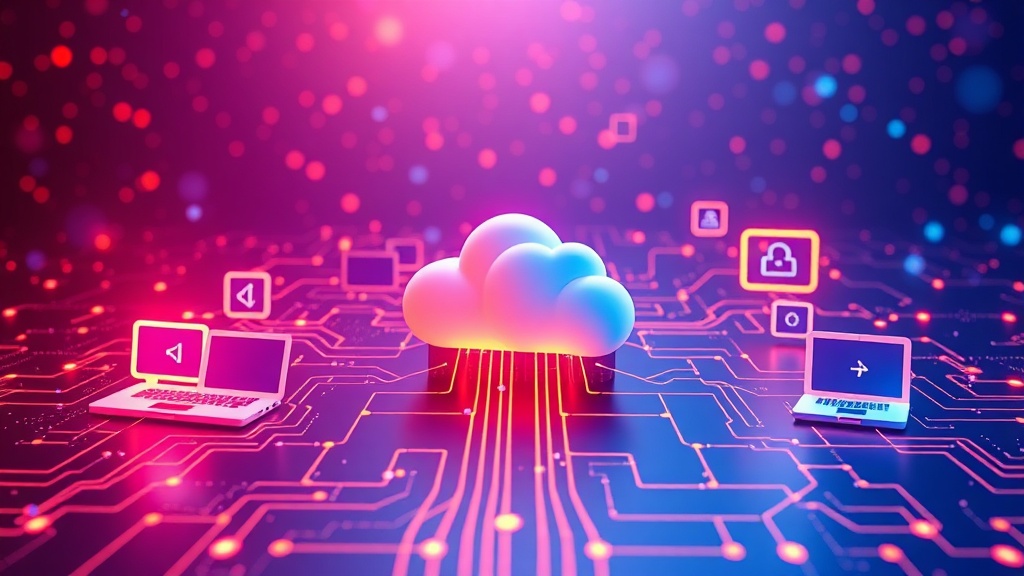
Rather than a binary choice between cloud and edge, modern AI deployments increasingly leverage a synergistic cloud-edge continuum. In this hybrid model, the cloud typically serves as the central hub for computationally intensive tasks like training large-scale deep learning models, storing vast datasets, and performing complex analytics that do not require real-time responses. The trained models are then optimized, compressed, and deployed to the edge for real-time inference. Data generated at the edge can be preprocessed locally, with only relevant insights or aggregated anonymized data being sent back to the cloud for further analysis, model refinement, or long-term storage. This continuum allows organizations to harness the strengths of both paradigms, achieving optimal performance, scalability, and cost-efficiency.
Data Ingestion and Preprocessing at the Edge
Effective edge data processing begins with efficient acquisition from diverse sources, followed by intelligent, resource-constrained preprocessing to filter, aggregate, and transform data locally, minimizing the volume transmitted to the cloud and accelerating local inference.
Efficient Data Acquisition Strategies
Data acquisition at the edge involves collecting information from a myriad of sensors, cameras, and IoT devices. This process demands robust and efficient protocols suitable for constrained environments. Message Queuing Telemetry Transport (MQTT) is widely adopted for its lightweight publish-subscribe model, ideal for low-bandwidth, high-latency networks. Constrained Application Protocol (CoAP) provides a similar capability for highly resource-constrained devices. Data ingestion frameworks like Apache Kafka or EMQX can be deployed in lightweight edge configurations to handle high-throughput streaming data, providing reliable data pipelines from devices to local processing units. Selecting the right protocol and infrastructure is critical for ensuring data integrity and timely delivery to the edge AI inference engine.
Edge-Native Preprocessing Techniques
Preprocessing data at the edge is crucial for several reasons: reducing the volume of data transmitted upstream, conserving bandwidth, enhancing data privacy, and speeding up local inference. Techniques include data filtering to discard irrelevant or redundant information, aggregation to summarize data points over time windows, and normalization to bring data into a consistent format for the AI model. For video streams, motion detection or object detection can trigger recording and analysis, rather than continuously streaming raw footage. Lightweight stream processing engines or custom-built scripts running on edge devices perform these tasks. This intelligent preprocessing ensures that only actionable or highly relevant data is fed to the AI model or transmitted to the cloud, significantly optimizing resource utilization.
Optimizing AI Model Inference at the Edge
Optimizing AI model inference at the edge involves reducing model complexity and computational demands through techniques like compression and quantization, distributing inference tasks, and leveraging specialized hardware accelerators for efficient, low-latency execution.
Model Compression and Quantization
Edge devices typically have limited computational power, memory, and energy resources compared to cloud servers. To deploy sophisticated AI models, techniques like model compression and quantization are essential. Model pruning removes redundant connections or neurons from a neural network. Knowledge distillation involves training a smaller ‘student’ model to mimic the behavior of a larger ‘teacher’ model. Quantization reduces the precision of model weights and activations, often from floating-point numbers (float32) to lower-bit integers (int8). Frameworks like TensorFlow Lite, OpenVINO, and ONNX Runtime provide tools for these optimizations, enabling complex models to run efficiently on edge hardware while minimizing accuracy degradation.
Federated Learning and Distributed Inference
For scenarios where data privacy is paramount or data cannot be moved due to its sheer volume, federated learning offers a solution. In federated learning, models are trained collaboratively across multiple decentralized edge devices, each holding local data samples, without exchanging the data itself. Instead, only model updates or gradients are sent to a central server for aggregation. Distributed inference involves partitioning a single large AI model across several edge devices or breaking down complex inference tasks into smaller, manageable sub-tasks that can be executed in parallel across a cluster of edge nodes. This approach leverages collective computational power and improves resilience.
Hardware Acceleration for Edge AI
The performance of AI inference at the edge is heavily reliant on specialized hardware accelerators. General-purpose CPUs can execute AI models, but often lack the efficiency for real-time demands. Graphics Processing Units (GPUs), such as those found in NVIDIA Jetson modules, offer parallel processing capabilities ideal for deep learning workloads. Tensor Processing Units (TPUs), exemplified by Google Coral Edge TPUs, are custom-built ASICs designed specifically for neural network inference. Field-Programmable Gate Arrays (FPGAs) provide flexibility for custom AI accelerators. The selection of edge hardware—be it an NPU, GPU, or FPGA—depends on the specific AI model, latency requirements, power budget, and cost constraints of the application.
Network Protocols and Connectivity for Edge-Cloud Synergy
Establishing robust edge-cloud synergy requires low-latency, resilient communication protocols, coupled with strategies to manage intermittent network availability, ensuring continuous data flow and operational integrity for real-time AI applications.
Low-Latency Communication Protocols
Efficient communication between edge devices, edge gateways, and the cloud is paramount. While MQTT excels for IoT messaging, other protocols address different needs. gRPC (Google Remote Procedure Call) offers high-performance, language-agnostic communication based on HTTP/2, ideal for synchronous, low-latency interactions between services. Apache Kafka is a distributed streaming platform well-suited for high-throughput, fault-tolerant message queues, enabling real-time data pipelines for analytics and storage. Advanced Message Queuing Protocol (AMQP) provides robust messaging guarantees for complex enterprise integration. The choice of protocol is dictated by factors such as message volume, latency tolerance, reliability requirements, and the ecosystem of existing infrastructure.
Managing Intermittent Connectivity
Edge environments often suffer from unreliable or intermittent network connectivity. Real-time AI applications must be designed with robust offline capabilities. This includes local data buffering and persistence mechanisms to store data when the network is unavailable, with automatic synchronization when connectivity is restored. Store-and-forward strategies are critical. Implementing local caches for frequently accessed data or model segments can reduce dependency on constant cloud communication. Additionally, designing edge applications to operate autonomously for extended periods, only uploading critical events or aggregated insights when a connection is stable, ensures continuous operation and prevents data loss. Edge orchestration platforms often provide features for managing these synchronization patterns and ensuring data consistency across the continuum.
Strategic Implementation: Security, Scalability, and Management
Successful edge AI deployment necessitates a holistic strategy encompassing robust security measures, scalable orchestration for numerous devices, and comprehensive lifecycle management to ensure operational efficiency and compliance across the distributed infrastructure.
Ensuring Edge Security and Data Privacy
Security is a paramount concern in distributed edge AI architectures. Edge devices are often physically exposed, making them vulnerable to tampering. Implementing secure boot processes, hardware root-of-trust, and tamper-resistant enclosures are fundamental. Data in transit and at rest must be encrypted using strong cryptographic protocols like Transport Layer Security (TLS) and Advanced Encryption Standard (AES). Device authentication and authorization mechanisms are critical to prevent unauthorized access. Implementing granular access controls, regular security patching, and intrusion detection systems tailored for edge environments are essential. Data privacy, especially for sensitive personal or industrial data, is maintained through local processing, anonymization, and adherence to regulatory frameworks such as GDPR and HIPAA.
Orchestration and Management of Edge Devices
Managing hundreds or thousands of geographically dispersed edge devices presents significant operational challenges. Containerization using Docker enables packaging AI applications with all their dependencies, ensuring consistency across diverse hardware. Kubernetes, or its lightweight distributions like k3s or MicroK8s, provides robust orchestration capabilities for deploying, scaling, and managing containerized workloads at the edge. Centralized management platforms allow for remote device provisioning, software updates, model deployment, monitoring of device health, and telemetry collection. Over-the-air (OTA) updates are crucial for maintaining security and functionality without physical intervention. Implementing a DevOps or MLOps pipeline adapted for edge deployments streamlines the entire lifecycle, from model training in the cloud to deployment and monitoring at the edge.
Real-World Applications and Impact
The convergence of cloud and edge AI is driving transformative applications across industries, delivering immediate insights and enabling autonomous actions that were previously unattainable with purely centralized or decentralized approaches.
- Autonomous Vehicles: Real-time processing of lidar, radar, and camera sensor data on the vehicle itself enables instantaneous perception, path planning, and obstacle avoidance, crucial for safety and operational efficiency.
- Industrial IoT (IIoT): Edge AI powers predictive maintenance for factory machinery, real-time quality control on production lines, and optimized resource utilization, leading to reduced downtime and increased productivity.
- Smart Cities: Traffic management systems leverage edge AI to analyze video feeds for real-time traffic flow optimization, public safety solutions identify unusual activities, and smart utilities monitor infrastructure for immediate fault detection.
- Healthcare: Remote patient monitoring devices use edge AI for continuous analysis of vital signs, alerting medical professionals to anomalies instantly. In hospitals, edge inference can assist with real-time diagnostics from medical imaging.
- Retail: In-store analytics for customer behavior, inventory management, and personalized marketing can be executed at the edge, protecting customer privacy while enhancing the shopping experience.
These applications underscore the undeniable impact of a well-architected cloud-to-edge strategy, which balances the immense power of cloud resources with the low-latency, privacy-preserving capabilities of edge computing.
The shift from cloud to edge computing is not merely a technological trend but a strategic imperative for organizations aiming to harness real-time AI. By intelligently distributing data processing and AI inference closer to the source of data generation, enterprises can overcome the limitations of centralized cloud architectures, achieving lower latency, optimized bandwidth utilization, enhanced data privacy, and robust operational resilience. The successful implementation of a cloud-to-edge strategy requires careful consideration of architectural design, data ingestion and preprocessing techniques, model optimization, network protocols, and robust security and management frameworks. As the volume and velocity of data continue to accelerate, the sophisticated interplay between cloud and edge will define the next generation of intelligent, autonomous, and responsive AI applications, driving innovation across every sector.