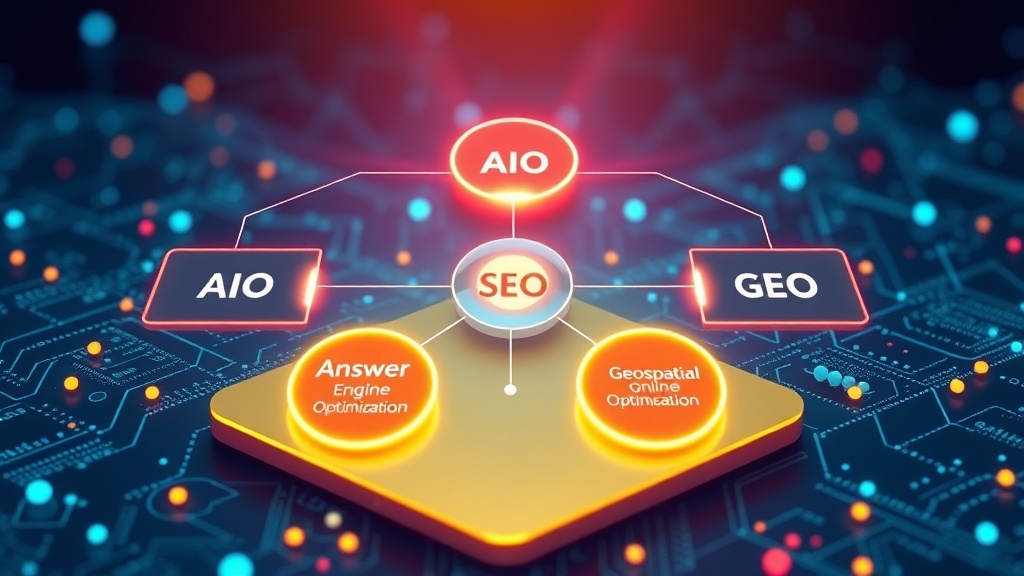
The digital landscape is a battlefield where visibility equals victory. In an era defined by data deluge and relentless algorithmic evolution, traditional optimization methods are no longer sufficient. Businesses and content creators require an advanced, integrated approach that leverages the full spectrum of artificial intelligence to not just rank, but to dominate. This article delves into the synergistic power of Artificial Intelligence Optimization (AIO) as the central orchestrator for achieving unparalleled efficacy across Search Engine Optimization (SEO), Answer Engine Optimization (AEO), and Geospatial Optimization (GEO). We will explore how these interconnected disciplines, when unified by intelligent automation, forge a formidable strategy for sustained digital dominance.
The Dawn of Artificial Intelligence Optimization (AIO)
Artificial Intelligence Optimization (AIO) represents the next frontier in digital strategy, transcending conventional approaches by employing machine learning and deep learning algorithms to analyze vast datasets, predict user behavior, and automate the refinement of online presence across multiple channels. It acts as an intelligent command center, continuously adapting and improving based on real-time performance metrics and evolving digital trends, providing a holistic and proactive optimization framework.
What Defines AIO?
AIO is characterized by its capacity for autonomous learning and decision-making. Unlike manual or rule-based systems, AIO platforms utilize neural networks, natural language processing (NLP), and predictive analytics to identify patterns, optimize content, personalize user experiences, and refine targeting parameters without constant human intervention. Key components include advanced analytics dashboards, automated testing environments, and recommendation engines that suggest or implement changes to improve digital asset performance.
The Strategic Advantage of AIO Over Traditional Methods
Traditional SEO, AEO, and GEO often operate in silos, leading to fragmented strategies and missed opportunities. AIO overcomes this by providing a unified intelligence layer that processes data from all these domains simultaneously. This integration leads to exponential improvements in efficiency and effectiveness. For example, AIO can correlate local search trends (GEO data) with voice search queries (AEO data) and organic search rankings (SEO data) to generate hyper-relevant content strategies that outperform isolated efforts. It shifts the focus from reactive adjustments to proactive, predictive optimization.
Advanced SEO in the AIO Era: Beyond Keywords
In the AIO era, Search Engine Optimization (SEO) moves beyond simple keyword stuffing to embrace a sophisticated understanding of semantic search, user intent, and comprehensive authority signals. AIO tools augment traditional SEO practices by automating complex analyses, identifying nuanced opportunities, and predicting future ranking factors, ensuring content truly resonates with search engine algorithms and human users alike.
Semantic SEO and User Intent Understanding
Modern search engines, powered by algorithms like Google’s RankBrain and BERT, prioritize understanding the context and intent behind a query rather than just matching keywords. Semantic SEO focuses on creating content that thoroughly covers a topic, answers related questions, and uses semantically related terms. AIO systems excel here by analyzing vast corpuses of data to identify topical gaps, related entities, and the latent semantic relationships that form comprehensive content maps. This allows for the creation of ‘topic clusters’ and ‘pillar pages’ that establish strong topical authority.
E-E-A-T and Comprehensive Authority Signals
Expertise, Experience, Authoritativeness, and Trustworthiness (E-E-A-T) are critical ranking factors, especially for ‘Your Money or Your Life’ (YMYL) topics. AIO platforms can analyze backlink profiles, author credibility, content accuracy, and user engagement metrics to benchmark and enhance E-E-A-T signals. This involves identifying authoritative sources for outbound links, monitoring brand mentions, and optimizing author bios to highlight relevant credentials. Furthermore, AIO can track and interpret complex user interaction signals, such as dwell time, click-through rates, and bounce rates, which indirectly inform search engine algorithms about content quality and relevance.
AI-Powered Content Generation and Optimization
AIO tools are revolutionizing content creation by assisting with idea generation, outlining, drafting, and optimization. They can perform advanced keyword research, identify long-tail opportunities, analyze competitor content for gaps, and even generate preliminary drafts of articles, product descriptions, or social media posts. Furthermore, AIO can optimize existing content by suggesting improvements in readability, tone, keyword density, and internal linking structures, ensuring every piece of content is aligned with both user intent and algorithmic preferences. Tools often leverage natural language generation (NLG) for structured content and sophisticated NLP for sentiment analysis and content scoring.
Mastering AEO for Voice and Conversational Interfaces
Answer Engine Optimization (AEO) specifically targets the increasing prevalence of voice search, smart assistants, and conversational AI, focusing on providing direct, concise answers to user queries. AIO enhances AEO by intelligently structuring data, anticipating conversational patterns, and ensuring content is perfectly tailored for immediate, audio-centric responses, thereby capturing traffic from this rapidly expanding digital frontier.
Natural Language Processing (NLP) and Intent Recognition
Voice search relies heavily on sophisticated Natural Language Processing (NLP) to understand complex, conversational queries. AEO strategies, informed by AIO, prioritize optimizing content for natural language patterns rather than short, keyword-focused phrases. AIO algorithms analyze query logs from voice assistants to identify common question formats, implied meanings, and user intent, such as ‘informational,’ ‘transactional,’ or ‘navigational.’ This allows content creators to structure answers that directly address these intents, mimicking human conversation patterns.
Structured Data and Schema Markup for Voice Assistants
For voice assistants to extract and articulate answers efficiently, content must be semantically rich and machine-readable. Implementing structured data, particularly schema markup (e.g., Schema.org types like Question, Answer, HowTo, Recipe, LocalBusiness), is paramount. AIO tools can automate the generation and validation of schema markup, ensuring that key information—like business hours, product availability, or recipe steps—is explicitly labeled for easy comprehension by search engines and voice platforms. This increases the likelihood of content being featured in ‘featured snippets’ or directly spoken as an answer.
Optimizing for Long-Tail and Conversational Search Patterns
Voice queries are typically longer and more specific than typed queries, often resembling complete sentences or questions. AEO, guided by AIO, emphasizes optimizing for these long-tail keywords and conversational search patterns. This involves creating comprehensive FAQs, ‘how-to’ guides, and question-and-answer formatted content. AIO can analyze vast datasets of voice search queries to identify emerging patterns and frequently asked questions, allowing for proactive content creation that directly addresses these specific user needs, boosting visibility in voice search results.
Leveraging GEO for Hyper-Local and Global Reach
Geospatial Optimization (GEO) strategically positions digital assets to capture geographically specific user intent, ranging from hyper-local queries to global market penetration. AIO elevates GEO by providing dynamic localization strategies, optimizing Google Business Profile listings, and implementing geotargeting with predictive accuracy, ensuring businesses connect with relevant audiences regardless of their physical location or the searcher’s geographical context.
Local SEO and Google Business Profile Optimization
For businesses with physical locations, Local SEO is critical. Optimizing the Google Business Profile (GBP) is foundational, including accurate business information, relevant categories, high-quality photos, and consistent name, address, phone number (NAP) data across all online directories. AIO platforms can monitor GBP performance, track competitor local rankings, manage customer reviews and Q&A, and suggest real-time updates to maximize local visibility. They can also automate posting updates and offers to GBP, keeping profiles fresh and engaging for local searchers.
Geotargeting and IP Detection Strategies
Geotargeting allows content and advertisements to be delivered based on a user’s geographical location, identified through IP detection or GPS data. AIO-driven GEO strategies use this to personalize web experiences, display location-specific content, or serve targeted ads. This is crucial for e-commerce sites needing to show localized pricing and shipping, or for service businesses operating in specific regions. Content delivery networks (CDNs) are often leveraged to serve content from servers geographically closer to the user, improving load times and user experience, which indirectly aids local search rankings.
Multi-Lingual and Multi-Regional SEO Implications
For global enterprises, GEO extends to multi-lingual and multi-regional SEO. This involves creating separate websites or sections for different languages and regions, using hreflang tags to inform search engines about localized content versions, and ensuring proper international domain or subdomain structures. AIO can manage the complexity of these implementations, from identifying target languages and locales to monitoring global search performance and ensuring proper indexing across various Google country domains (e.g., google.co.uk, google.de). It aids in translating keywords and content while maintaining semantic integrity for specific cultural contexts.
Synergistic Integration: The AIO Command Center
The true power of AIO lies in its ability to synthesize data and insights from SEO, AEO, and GEO into a unified, coherent digital strategy. The AIO command center acts as an intelligent hub, leveraging advanced analytics and automation to drive holistic performance. This integration ensures that every optimization effort contributes to an overarching goal, creating a seamless and highly effective digital presence.
How AIO Integrates SEO, AEO, and GEO Data
AIO platforms ingest vast streams of data from various sources: Google Analytics, Google Search Console, Google Business Profile insights, social media analytics, CRM systems, and third-party SEO/AEO/GEO tools. These platforms use machine learning algorithms to identify correlations, causality, and predictive trends across these disparate datasets. For example, AIO can observe that an increase in voice search queries (AEO) for a specific product is correlated with a surge in local map pack visibility (GEO) and a subsequent rise in organic search traffic (SEO). This integrated view enables more informed and impactful strategic decisions.
Predictive Analytics and Automated Adjustments
One of AIO’s most compelling features is its capacity for predictive analytics. By analyzing historical data and identifying patterns, AIO can forecast future performance trends and anticipate algorithmic shifts. This allows for proactive strategy adjustments before potential issues arise. Furthermore, advanced AIO systems can automate certain optimization tasks, such as adjusting bidding strategies for local ads, modifying internal linking based on content performance, or updating schema markup to reflect new product features, all without direct human intervention, though oversight remains crucial.
Unified Dashboard and Performance Metrics
An AIO command center typically provides a unified dashboard that offers a consolidated view of all critical performance metrics across SEO, AEO, and GEO. This includes organic traffic, keyword rankings, voice search impression share, local search visibility, conversion rates, and revenue attribution. Such a dashboard eliminates the need to switch between multiple tools, providing a single source of truth for digital performance. It enables stakeholders to quickly grasp the overall health of their digital ecosystem and identify areas for further optimization or strategic pivot.
| Strategy | Primary Focus | AIO Integration Benefits |
|---|---|---|
| SEO | Organic search rankings, website visibility, content relevance | Automated keyword analysis, semantic content mapping, E-E-A-T enhancement, predictive ranking factors |
| AEO | Voice search, conversational interfaces, direct answers | NLP for intent, automated schema generation, long-tail query optimization, structured data validation |
| GEO | Local search, geographical targeting, multi-regional presence | GBP management, geotargeted content, hreflang tag automation, localized content adaptation |
| AIO | Holistic digital presence, unified strategy, predictive optimization | Cross-channel data synthesis, automated strategy adjustments, comprehensive performance dashboards, proactive trend analysis |
Implementation Challenges and Future Outlook
While AIO offers immense potential, its implementation presents challenges related to data privacy, ethical AI, and the continuous need for human oversight. The future of digital dominance will belong to entities capable of navigating these complexities while embracing adaptive, intelligence-driven strategies, perpetually refining their approach in a dynamic digital ecosystem.
Data Privacy and Ethical AI Considerations
The vast data collection and processing inherent in AIO raise significant data privacy concerns, requiring strict adherence to regulations like GDPR and CCPA. Ethical AI implementation is also paramount, ensuring algorithms are unbiased and transparent, avoiding discriminatory practices in content delivery or personalization. Building trust with users through transparent data handling and responsible AI development is not just a regulatory requirement but a fundamental aspect of sustainable digital strategy.
Continuous Learning and Algorithmic Shifts
The digital landscape is in a constant state of flux, with search engine algorithms undergoing frequent updates and user behaviors evolving. AIO systems must be designed for continuous learning, capable of adapting to new data patterns and algorithmic shifts without requiring extensive manual recalibration. This demands robust machine learning models that can retrain themselves and integrate new data sources seamlessly. The ‘set it and forget it’ approach is dangerous; ongoing monitoring and model refinement are critical.
The Imperative for Adaptive Strategies
Ultimately, digital dominance in the AIO era is not achieved through static optimization but through an adaptive, fluid strategy. Businesses must cultivate a culture of continuous experimentation and rapid iteration, allowing AIO systems to test hypotheses, analyze results, and implement improvements at an unprecedented pace. Human strategists will transition from executing tactical tasks to overseeing the AIO, interpreting high-level insights, and guiding the overall strategic direction, ensuring the technology serves overarching business objectives.
Conclusion: Forging a Path to Unified Digital Dominance
The convergence of SEO, AEO, and GEO under the intelligent orchestration of Artificial Intelligence Optimization represents the most advanced approach to securing and maintaining digital dominance. By leveraging AIO to understand user intent, personalize experiences, optimize for diverse search interfaces, and adapt to geographical nuances, organizations can unlock unparalleled visibility and engagement. The era of siloed digital strategies is over; the future belongs to integrated, intelligence-driven ecosystems. Embracing AIO is not merely an upgrade; it is a fundamental shift towards a more efficient, predictive, and ultimately, more successful digital future.