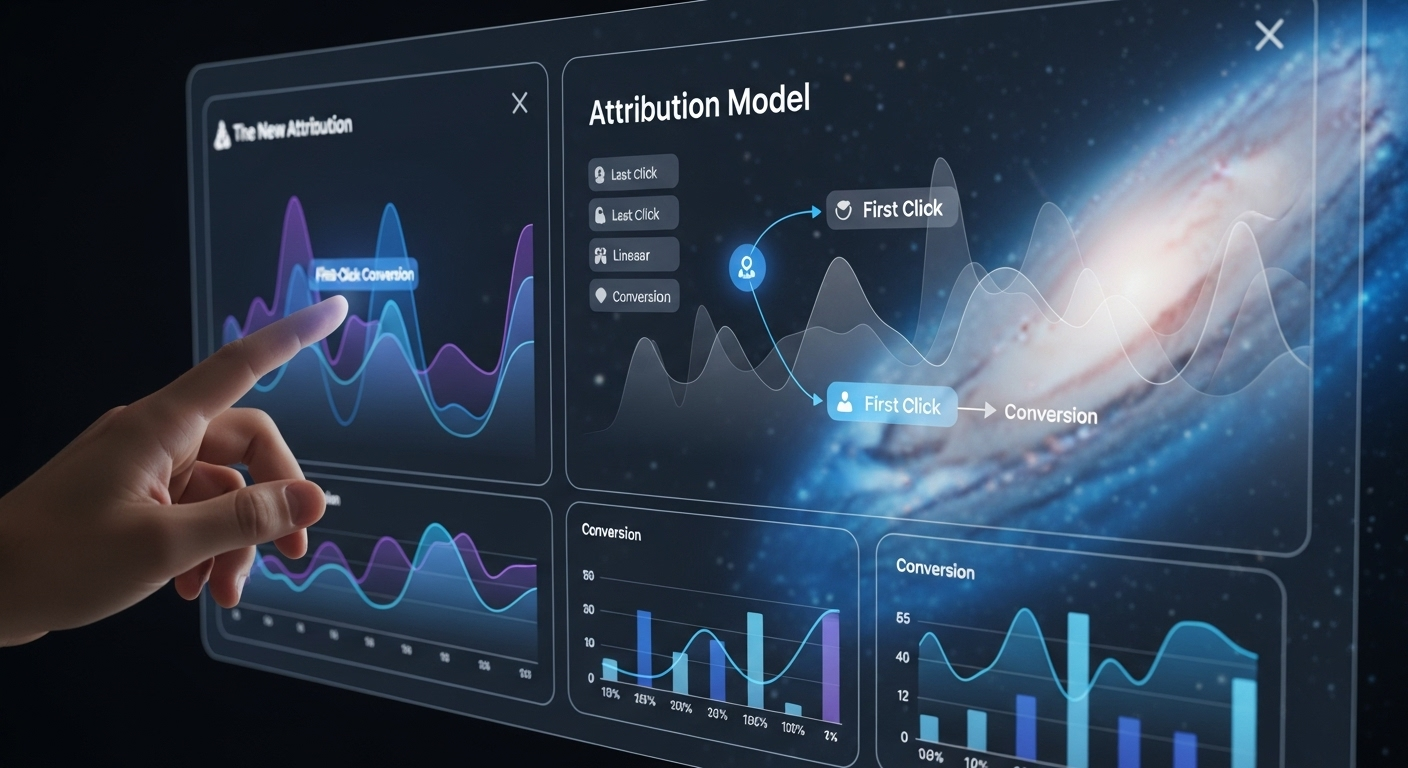
In the labyrinthine world of digital marketing, the path a customer takes from initial awareness to final purchase is rarely a straight line. It’s a winding journey of multiple touchpoints, a complex dance across various channels—a social media ad seen on a Tuesday morning, a blog post discovered through a search engine on Thursday, an email newsletter opened over the weekend, and finally, a direct visit to your website to make a purchase the following week. For entrepreneurs and marketers striving to optimize their ad spend and scale effectively, the critical question has always been: which of these touchpoints deserves the credit? For years, the industry defaulted to last-click attribution, a model that gives 100% of the conversion credit to the final interaction before a sale. While simple, this approach paints an incomplete and often misleading picture, ignoring the crucial role of earlier engagements that introduced and nurtured the lead. It’s like giving all the credit to the person who scores the goal, while ignoring the midfielder who made the game-opening pass. This is precisely where the power of first-click attribution comes into focus, and why its integration into sophisticated analytics platforms like the Andromeda Dashboard represents a pivotal shift in strategic marketing analysis.
Understanding first-click attribution is to understand the origin story of your customers. This model assigns all the credit for a conversion to the very first interaction a customer has with your brand. It answers the fundamental question: What brought this person into our world? Was it that clever TikTok campaign? The in-depth article we published on a partner blog? Or the pay-per-click ad that targeted a specific long-tail keyword? In an era where building brand awareness is paramount, knowing which channels are most effective at generating initial interest is not just a valuable insight; it’s a strategic necessity. For businesses with long sales cycles, such as B2B software or high-end consumer goods, the first touchpoint can occur weeks or even months before the final conversion. Ignoring this initial spark means you’re flying blind at the top of your funnel, potentially underfunding the very campaigns that are filling your pipeline with new prospects. The Andromeda Dashboard, by surfacing first-click conversion data, empowers marketers to move beyond the limitations of simplistic, end-of-journey metrics and embrace a more holistic view of their marketing performance. It provides a clear lens through which to evaluate top-of-funnel strategies, enabling smarter budget allocation and fostering sustainable, long-term growth by investing in channels that excel at brand discovery.
This shift in perspective is more critical now than ever. As digital advertising platforms become more crowded and competitive, the cost of acquiring customers continues to rise. Simply focusing on bottom-of-the-funnel, conversion-focused campaigns is no longer a viable long-term strategy. You must consistently attract new audiences, and to do that effectively, you need to know which of your awareness efforts are actually working. The Andromeda Dashboard’s emphasis on first-click data provides this clarity. It allows you to identify and double down on the channels and creative approaches that are most successful at capturing attention and initiating the customer journey. By analyzing this data, you can refine your messaging for new audiences, discover untapped markets, and build a more resilient and diversified marketing ecosystem. This isn’t about abandoning other attribution models—a truly sophisticated strategy often involves a mix of models—but about giving first-click the prominence it deserves as the starting point of your analysis. It lays the foundation for a deeper understanding of the entire customer lifecycle, from that first flicker of interest to the final, loyal purchase.
The Strategic Value of First-Click Attribution
In the competitive landscape of modern digital marketing, focusing solely on what closes a deal is a surefire way to miss the bigger picture. While last-click attribution tells you what sealed the conversion, first-click attribution illuminates what started the entire conversation. This is its core strategic value: it provides unparalleled insight into the effectiveness of your brand awareness and demand generation efforts. For any business aiming for scalable growth, understanding which channels are most effective at introducing the brand to new, qualified audiences is mission-critical. These top-of-funnel activities are the engine of your long-term growth, constantly feeding new prospects into your pipeline. The Andromeda Dashboard leverages first-click data to give you a clear, unvarnished look at which campaigns are succeeding at this crucial task. Imagine you’re running campaigns across multiple channels: Google Ads, organic search (SEO), social media, and content marketing partnerships. A last-click model might show that organic branded search is your top converter. While true, this is an incomplete story. The first-click data in your Andromeda Dashboard might reveal that the initial discovery point for a huge portion of those branded search converters was actually a guest post you published a month prior. Without this first-click insight, you might mistakenly devalue your content marketing efforts, seeing them as a cost center rather than a primary driver of new customer acquisition. By giving credit to the initial touchpoint, you can justify and optimize investments in channels that build long-term brand equity and recognition, rather than just chasing immediate conversions. This model is particularly powerful for businesses with longer sales cycles, where the first interaction might be separated from the final purchase by weeks or months of consideration. First-click data ensures that those vital, initial awareness-building touchpoints are not forgotten or undervalued.
Navigating the Pros and Cons in Andromeda
No single attribution model is a silver bullet, and understanding the strengths and weaknesses of first-click attribution is key to leveraging it effectively within the Andromeda Dashboard. The primary advantage is its simplicity and clarity. It provides a straightforward, easy-to-understand metric for evaluating top-of-funnel marketing activities. This clarity is invaluable for making quick, decisive budget allocation decisions, especially for campaigns explicitly designed to boost brand awareness and reach new audiences. If a new social media video campaign is generating a high volume of first-click conversions, it’s a clear signal that the content is resonating and successfully introducing your brand to potential customers. Furthermore, this model helps counteract the inherent bias of last-click attribution, which often over-credits channels like branded search and direct traffic—channels that are typically used by customers who are already aware of your brand. The Andromeda Dashboard helps you balance this perspective, ensuring your demand-generating channels receive the recognition and budget they deserve.
However, it’s crucial to acknowledge the limitations. The most significant drawback of a pure first-click model is that it gives zero credit to any of the subsequent touchpoints that nurtured the lead and guided them toward a purchase. A customer’s journey might begin with a blog post, but be influenced by retargeting ads, an email nurture sequence, and a compelling case study before they finally convert. In a first-click model, these vital middle- and bottom-of-the-funnel interactions are completely ignored. This can lead to an undervaluing of the marketing efforts that are crucial for conversion, not just for awareness. Relying solely on this model would be a mistake. The key is to use the first-click data within the Andromeda Dashboard not in isolation, but as a complementary perspective to other attribution models. By comparing first-click data with last-click or multi-touch models, you can build a more comprehensive and nuanced understanding of how your various marketing channels work together to create a successful customer journey from start to finish.
Optimizing Top-of-Funnel Campaigns
Leveraging first-click conversion data in the Andromeda Dashboard is transformative for optimizing your top-of-funnel (TOFU) marketing strategy. The primary goal at this stage is not immediate sales, but awareness and interest generation. First-click attribution is purpose-built to measure success against this specific objective. By analyzing which channels, campaigns, and even specific ad creatives are driving the most initial interactions from converting customers, you can make highly informed decisions. For instance, you might discover that your informational blog content, optimized for specific long-tail keywords, is a powerful engine for introducing new users to your ecosystem. The data may show these users don’t convert on their first visit, but they represent a significant portion of eventual customers. This insight allows you to confidently double down on your SEO and content strategy. Similarly, if a particular video ad on a social platform shows a high number of first-click conversions, it signals that the messaging and creative are effective at capturing cold traffic. You can then allocate more budget to that campaign or develop similar creative assets for other platforms. The Andromeda Dashboard allows for granular analysis, helping you identify not just the winning channels, but the specific tactics within those channels that serve as the most effective entry points for your future customers.
Informing Budget Allocation and Strategy
Perhaps the most powerful application of first-click data is its ability to inform and justify budget allocation for long-term growth. Marketing teams often face pressure to demonstrate immediate ROI, which can lead to an over-investment in bottom-of-the-funnel tactics that capture existing demand but do little to create new demand. First-click attribution provides the hard data needed to advocate for investment in brand-building activities. When the Andromeda Dashboard shows that a significant percentage of your revenue originated from customers who first discovered you through a specific awareness campaign, it builds a compelling case for sustaining or increasing that campaign’s budget. This data helps shift the conversation from short-term gains to sustainable business growth. It prevents the common mistake of cutting funding to a top-of-funnel channel because it has a low last-click conversion rate, even if it is the primary source of new customers. Over time, analyzing these trends can reveal powerful insights about your market. You might find that different customer segments are introduced to your brand through entirely different channels. This knowledge is strategic gold, allowing you to tailor your awareness campaigns and allocate budgets with a level of precision that is simply not possible when looking only at final touchpoints.
First-Click in a Multi-Touch World
While first-click attribution provides a vital perspective, its true power is unlocked when it is not viewed in isolation but as a crucial component of a broader, multi-touch attribution strategy. The modern customer journey is complex and non-linear; relying on any single-touch model, whether first or last, will inevitably create blind spots. The most sophisticated marketers understand that different touchpoints play different roles. Some channels are excellent for generating initial awareness (the first click), others excel at nurturing interest and building trust (the middle touches), and some are highly effective at driving the final conversion (the last click). The Andromeda Dashboard is designed to facilitate this holistic analysis, allowing you to compare various attribution models side-by-side. By examining the full conversion path, you can understand the symbiotic relationship between your channels. For example, you might see that a paid social campaign is a top performer for first-click conversions, while your email marketing sequence is a dominant force in last-click conversions. This doesn’t mean one is “better” than the other; it means they are working together effectively. The social campaign is filling the funnel, and the email marketing is guiding those prospects through it. This integrated view prevents costly mistakes, such as cutting the budget for the “underperforming” social campaign, which would, in turn, starve your high-converting email list of new leads. A multi-touch perspective, informed by a strong understanding of first-click data, allows for strategic optimization across the entire funnel, ensuring each stage is functioning effectively and contributing to the overall goal of sustainable growth. The Andromeda Dashboard’s capabilities encourage this nuanced approach, moving beyond the simplistic “which channel is best?” to the more strategic question of “how do our channels work together to create customers?”
Building a Complementary Model
To effectively integrate first-click data into a comprehensive strategy, it’s essential to pair it with a model that credits other parts of the customer journey. One of the most effective approaches is to use a position-based (or U-shaped) attribution model alongside your first-click analysis. The position-based model typically assigns 40% of the credit to the first touchpoint, 40% to the last touchpoint, and distributes the remaining 20% across all the interactions in between. This approach has the distinct advantage of highlighting both the channel that initiated the journey and the channel that closed it, while still acknowledging the important nurturing steps that happened along the way. When viewed in the Andromeda Dashboard, you can directly compare the pure first-click data with the results from the position-based model. This comparison can reveal which channels are strong “openers,” which are strong “closers,” and which play a consistent supporting role. For businesses with very long and complex sales cycles, a time-decay model might be another valuable complement. This model gives more credit to touchpoints that occurred closer in time to the conversion. By analyzing first-click data against a time-decay model, you can understand the initial catalyst for awareness while also appreciating the recent interactions that pushed the customer over the finish line.
From Data to Actionable Insights
The goal of using any attribution model is to generate actionable insights that lead to better marketing decisions. Within the Andromeda Dashboard, translating your multi-model analysis into action is a clear, structured process. First, use your first-click data to identify and scale your most effective awareness channels. Are certain ad platforms or content types consistently introducing new, high-value customers? Allocate more resources there. Next, use a last-click or position-based model to understand your most effective conversion channels. Are your retargeting campaigns or specific email offers driving the final decision? Optimize these for maximum impact. Finally, look at the middle touchpoints that consistently appear in the customer journey but might not get primary credit in either first- or last-click models. These are your crucial nurturing channels. Ensure they are well-funded and that their messaging effectively bridges the gap between initial awareness and the final decision to buy. For example, your data might show a common path: a customer’s first click is from a paid search ad, they then engage with several blog posts (middle touches), and the last click comes from an email promotion. This insight tells you that all three elements are critical. The actionable strategy would be to ensure your search ads lead to relevant blog content, and that your blog content has strong calls-to-action to join the email list, creating a seamless and effective journey guided by data from multiple attribution perspectives.
Beyond the Click: The Future of Attribution
As we look toward the future of marketing analytics, the conversation around attribution is evolving beyond simple, rule-based models like first-click. While it remains a foundational metric for understanding brand discovery, its limitations—namely, its inability to account for the complex web of interactions that influence a modern consumer—are becoming more apparent. The industry is moving toward more sophisticated, algorithm-based solutions, often referred to as data-driven attribution. These models use machine learning to analyze all available conversion paths, comparing converting and non-converting users to assign fractional credit to each touchpoint based on its statistical impact. The Andromeda Dashboard is already at the forefront of this evolution, integrating AI-powered insights that provide a more dynamic and accurate picture of marketing performance. This doesn’t render first-click data obsolete; rather, it enriches it. First-click conversions will continue to be a vital input for these advanced models and a crucial, human-readable metric for gauging top-of-funnel health. The future is not about choosing one model over another, but about creating a unified measurement framework where different models provide different lenses through which to view performance. This holistic approach, combining the clarity of first-click with the intelligence of data-driven attribution, allows marketers to make decisions with a level of confidence and precision that was previously unattainable. It’s about building a single source of truth that respects the complexity of the customer journey while providing the clear, actionable signals needed to drive growth and confidently navigate the ever-changing digital landscape.