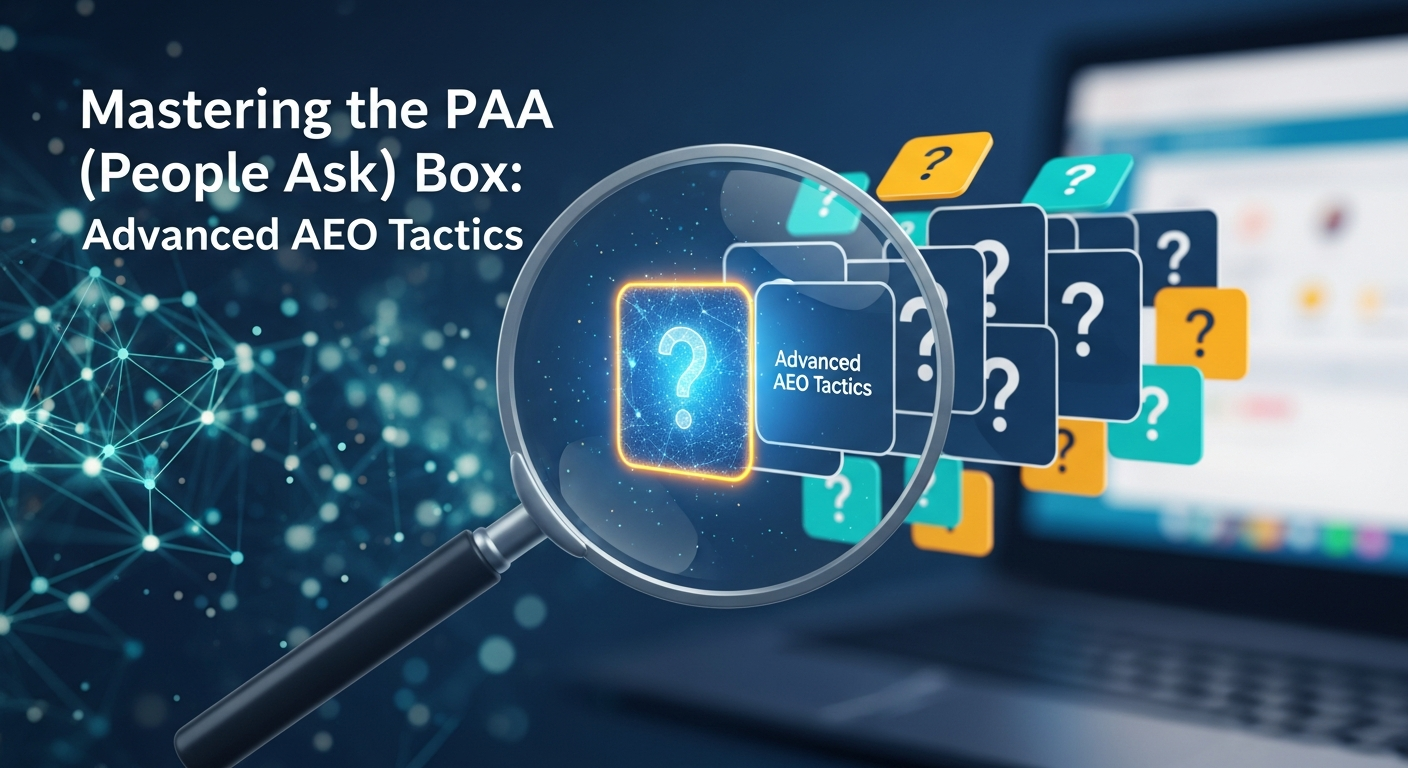
The digital landscape is undergoing a seismic shift, moving away from a simple list of links toward a more dynamic, answer-oriented ecosystem. At the heart of this transformation lies the “People Also Ask” (PAA) box, a SERP feature that has evolved from a mere curiosity into a primary battleground for visibility and authority. For entrepreneurs and marketers, ignoring the PAA box is no longer an option; it’s a strategic oversight that concedes valuable, high-intent traffic to competitors. Mastering this space requires a new discipline: Answer Engine Optimization (AEO). This isn’t just a rebranding of SEO. While traditional SEO focuses on ranking web pages for keywords, AEO is the art and science of optimizing content to directly answer user queries within search platforms themselves. It’s a response to a fundamental change in user behavior, where nearly 60% of Google searches are now “zero-click,” meaning users find their answers on the results page without ever visiting a website. The PAA box is a primary driver of this trend, offering a series of expanding questions and answers that can satisfy a user’s entire research journey.
This new paradigm presents both a challenge and a monumental opportunity. The challenge is that the old rules of keyword density and backlink volume are insufficient. The opportunity is for agile businesses to capture attention and establish trust by becoming the cited authority directly within the search results. Appearing in a PAA box isn’t just about fleeting visibility; it’s about building brand recognition at the precise moment a potential customer is seeking knowledge. It allows you to enter the conversation before your competitors even have a chance to be seen. Dominating the PAA feature means your brand becomes synonymous with helpfulness and expertise, building a foundation of trust that a traditional blue link simply cannot. To succeed, you must think less like a webmaster and more like a conversational expert, architecting your content not just to be found, but to be quoted. The tactics required are more nuanced, involving a deep understanding of semantic search, user intent, content structure, and technical signals. It’s a move from optimizing for crawlers to optimizing for direct answers, ensuring your content is so clear, concise, and authoritative that Google has no choice but to feature it as the definitive response.
Deconstructing The PAA Algorithm And User Intent
To truly master the “People Also Ask” box, one must first appreciate the sophisticated mechanisms that power it. The PAA algorithm is not a simple keyword-matching system; it’s a reflection of Google’s deep investment in understanding the semantic relationships between concepts and the typical journey a user takes when exploring a topic. Powered by advanced natural language processing models, Google doesn’t just see a search query; it understands the underlying intent and predicts the logical next questions a user will have. This is why PAA questions often appear in a logical sequence. A search for a broad topic might yield introductory PAA questions, and as a user clicks on one, the newly generated questions that appear below it often delve deeper into that specific sub-topic, mirroring a natural conversation or research process. This dynamic, expanding nature is the key to unlocking advanced AEO strategies. Your goal should not be to simply target a single, isolated question. Instead, the most effective approach is to map out these entire conversational pathways. By researching the initial set of PAA questions for a core topic and then manually clicking through them to reveal the subsequent tiers of questions, you can visualize the user’s complete journey of discovery. This allows you to create comprehensive, pillar-style content that anticipates and answers not just the first question, but the second, third, and fourth as well. By structuring your content this way, you position your website as a one-stop resource, dramatically increasing the chances that you will not only capture the initial PAA snippet but also dominate the subsequent questions that appear as the user engages further.
Advanced Content Architecture For PAA Dominance
Winning in the PAA landscape requires a deliberate and sophisticated approach to content structure. It’s not enough to simply have the right information; that information must be architected in a way that is maximally digestible for both users and search algorithms. This means moving beyond traditional blog post formats and embracing a modular, question-first methodology that aligns perfectly with how PAA boxes are populated.
From Keywords To Question Clusters
The foundational step in modern PAA strategy is shifting from a keyword-centric to a question-centric mindset. While traditional keyword research identifies what users are searching for, PAA research uncovers how they are asking about it. This is a critical distinction. Tools designed to scrape PAA results, alongside classics like AnswerThePublic, are invaluable for this process. Instead of building a content strategy around a single high-volume keyword, the advanced tactic is to identify “question clusters.” These are groups of thematically related questions that represent a user’s entire spectrum of inquiry around a topic. For instance, instead of just targeting “email marketing,” you would identify the cluster of questions like “What is email marketing?”, “How do I start an email marketing list?”, “Which email marketing software is best for small businesses?”, and “How do I measure email marketing ROI?”. The strategy is to create a central, authoritative piece of content—a pillar page or comprehensive guide—that addresses the primary topic, and then within that content, use the specific PAA questions as subheadings to organize dedicated sections. This “hub and spoke” model creates a deeply interconnected resource that Google’s algorithm can easily parse to find relevant answers for a multitude of related queries, positioning a single page to capture dozens of PAA snippets.
The Art Of The Concise, Authoritative Answer
Google does not feature entire web pages in the PAA box; it features short, clear snippets of content. Therefore, the most critical element of on-page optimization for PAA is the structure of your answer itself. The best practice is to treat every PAA question you’re targeting as a direct query that demands an immediate, self-contained response. In your content, format the target question as a heading tag (such as an H2 or H3). Immediately following that heading, provide a direct and concise answer in a single paragraph, typically within a highly scannable 40-60 word count. This brief paragraph should be written as if it could stand alone and still make complete sense. It is this succinct, direct answer that Google is most likely to extract for the snippet. After providing this immediate answer, you should then use the rest of that section to elaborate with details, examples, data, and context. This dual structure satisfies both the algorithm’s need for a quick, extractable answer and the human reader’s desire for a more comprehensive explanation should they choose to click through to your site. Furthermore, pay close attention to the format of the answers already ranking. If Google is showing a bulleted or numbered list for a “how-to” or “best of” query, structure your answer as a `
- ` or `
- ` list to match that preferred format.
Technical AEO: Schema, Structure, And Signals
While high-quality, well-structured content is the foundation of any successful PAA strategy, technical optimization provides the critical signals that help search engines understand and prioritize your answers. Answer Engine Optimization extends beyond the visible text on the page; it involves communicating directly with search crawlers in their own language through structured data and clean code. One of the most potent tools in this arsenal is Schema markup. Implementing `FAQPage` schema is a direct way to spoon-feed your question-and-answer content to Google. This structured data explicitly defines a relationship between a question and its corresponding answer, removing any ambiguity for the algorithm. While Google has adjusted the visual display of FAQ rich results in the main SERP, limiting them primarily to authoritative health and government sites, the underlying value of the markup for PAA and AI-driven search remains significant. Using it correctly helps Google more easily parse your content and see it as a structured Q&A resource, which is precisely what it seeks for PAA snippets. Beyond specific schemas, foundational technical SEO practices act as crucial trust signals. A well-organized HTML structure, with a logical hierarchy of heading tags (H1, H2, H3), provides a clear roadmap of your content’s key themes. A fast-loading, mobile-friendly website is non-negotiable, as it directly impacts user experience—a primary ranking consideration. Finally, a smart internal linking strategy is essential. When you publish a new page optimized for PAA questions, linking to it from other high-authority, relevant pages on your site passes equity and signals to Google that this new content is important and trustworthy, increasing its potential to be featured.
The PAA Flywheel: Expansion And Auditing
Securing a position in the PAA box is not a one-time achievement but the start of a continuous cycle of optimization and expansion. The most sophisticated marketers view PAA as a “flywheel,” where initial success is used to generate momentum for broader visibility and authority. This dynamic approach involves actively monitoring the ever-changing PAA landscape and strategically refining your existing content to not only maintain your current positions but also to systematically capture new ones.
Triggering And Monitoring PAA Expansion
The “People Also Ask” feature is inherently dynamic; when a user clicks on a question, the box often expands to load new, more specific questions. This behavior is the key to the PAA flywheel. Your strategy should not end with answering the initial set of questions visible on the SERP. The advanced tactic is to proactively map these expansion paths. Manually click on the PAA questions your brand already ranks for and meticulously document the subsequent questions that appear. These “second” and “third-tier” questions represent deeper, more specific user intent. By adding well-structured answers to these follow-up questions within your existing content, you create an authoritative loop. A user finds your answer, clicks, sees another relevant question, and your brand is there again with the next answer. This creates a powerful signal to Google that your page is a comprehensive resource for the entire topic cluster. To effectively manage this, you must systematically track your PAA presence. SEO platforms and rank tracking tools can monitor which keywords trigger PAA boxes and whether your domain is featured. Regularly monitoring this data allows you to spot new opportunities and defend your existing snippets from competitors.
Auditing And Optimizing Existing Content
Your highest-potential PAA opportunities often lie within the content you have already published. A crucial, ongoing activity is to conduct PAA-focused content audits. Identify pages on your site that already rank well for important keywords but do not currently own the PAA snippet for those queries. This is low-hanging fruit. The process involves analyzing the live SERP to see who currently holds the featured PAA position and, more importantly, how. Is their answer a concise paragraph? Is it a bulleted list? Is it a data table? Deconstruct the winning format and structure. Once you understand what Google is rewarding, you can “retrofit” your existing content to better compete. This optimization process often involves rewriting a section to provide a more direct answer right below a relevant subheading, adding a dedicated FAQ section to the bottom of the page, implementing `FAQPage` schema if appropriate, or reformatting a clunky paragraph into a clean, scannable list. This iterative process of auditing and enhancing existing assets is far more efficient than creating new content from scratch and is essential for building and sustaining momentum in the PAA flywheel, ensuring your content library is continuously working harder to capture valuable SERP real estate.
Beyond The Snippet: The Future Of Answer-First Search
Mastering the “People Also Ask” box is more than just a clever SEO tactic for 2025; it’s essential training for the future of search. The principles of Answer Engine Optimization—clarity, structure, conciseness, and authority—are precisely what next-generation search technologies, including Google’s AI Overviews and other generative AI platforms, are built to reward. We are rapidly moving from a search landscape of links to a landscape of direct, synthesized answers. The skills you develop by optimizing for PAA directly translate to making your content more discoverable and citable by these emerging AI systems. When you structure content to answer a specific question directly, you are creating a perfect, machine-readable data block that an AI can easily ingest and repurpose in a generated response. The ultimate goal is not simply to win a temporary spot in a PAA box. It is to strategically position your brand as the primary, authoritative source of information within your niche. By consistently providing the best, clearest answers to the questions your audience is asking, you build topical authority that transcends any single SERP feature. This creates a powerful, long-term competitive advantage. As search becomes more conversational and AI-driven, the brands that have already invested in creating deep, well-structured libraries of expert answers will be the ones that AI models trust and cite. Therefore, view every PAA optimization as a step toward future-proofing your digital strategy, ensuring your expertise remains visible and valuable no matter how the interface of search evolves.