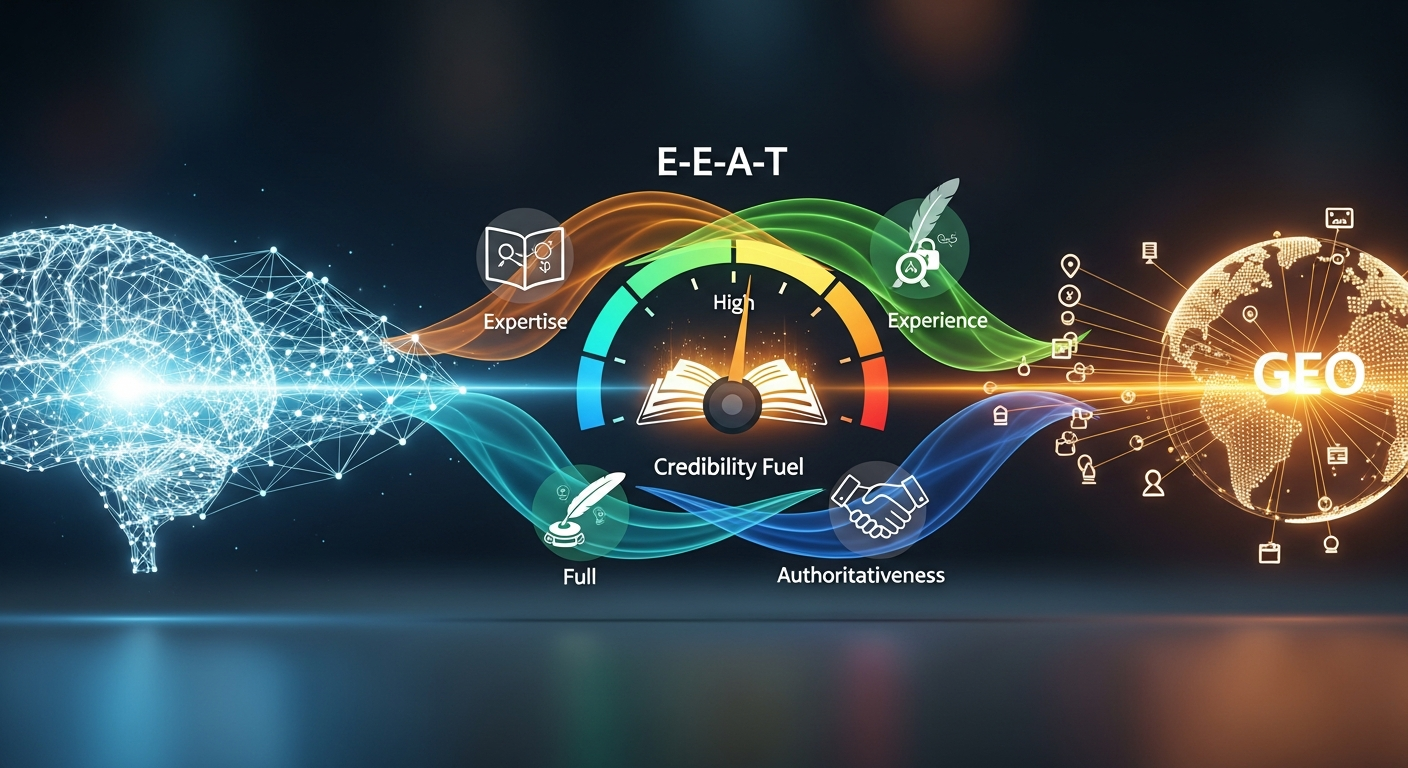
The digital landscape is undergoing a seismic shift, moving beyond the familiar territory of traditional SEO into a new era defined by artificial intelligence. At the heart of this transformation lies generative search, where AI-powered engines like Google’s AI Overviews and Perplexity don’t just provide a list of links; they synthesize information to deliver direct, conversational answers. This evolution introduces a new discipline for marketers and entrepreneurs: Generative Engine Optimization (GEO). Success in this new paradigm is not merely about keywords and backlinks anymore. Instead, it hinges on a principle that has steadily grown in importance: credibility. The core components of this credibility are encapsulated in Google’s E-E-A-T framework, which stands for Experience, Expertise, Authoritativeness, and Trustworthiness. Initially a guideline for human search quality raters, E-E-A-T has become a foundational element for algorithmic assessment, and its significance is profoundly amplified in the context of generative AI. AI models need to ground their responses in reliable, factual information to avoid generating misinformation. Consequently, they are designed to prioritize and cite sources that exhibit strong E-E-A-T signals. For your business, this means that being seen as a credible, authoritative voice in your niche is no longer just a best practice—it is the minimum threshold for visibility.
Understanding this dynamic is crucial for any forward-thinking growth strategy. Generative search engines act as information synthesizers, pulling from a multitude of sources to construct a single, cohesive answer. If your content lacks demonstrable experience, is written by an unverified author, or resides on a site with poor trust signals, it will likely be excluded from these AI-generated summaries entirely. This represents a fundamental change in how we must approach content creation. The focus shifts from simply ranking for a query to becoming a trusted, citable source that the AI deems worthy of inclusion. Generative Engine Optimization, therefore, is the practice of strategically building and showcasing your E-E-A-T to align with how these advanced AI systems evaluate and process information. It’s a holistic approach that intertwines content strategy, brand reputation, and technical optimization to ensure your brand’s voice is heard, trusted, and amplified in the new conversational search results. The stakes are higher than ever; failing to adapt means risking invisibility in an increasingly AI-driven world. The businesses that thrive will be those that invest in building genuine authority and proving their credibility at every digital touchpoint. This isn’t just about tweaking content; it’s about fundamentally proving your value in a way that both humans and intelligent machines can recognize and reward.
The Foundational Pillars Of E-E-A-T In An AI-Driven World
In the age of generative search, the principles of E-E-A-T have evolved from a set of abstract guidelines to concrete, machine-readable signals that AI models actively seek. These pillars are the bedrock of credibility, and understanding their nuances is essential for any successful GEO strategy. Experience, the newest addition to the framework, has become particularly critical. Generative AI is adept at summarizing existing information, but it cannot replicate genuine, first-hand knowledge. Content that demonstrates real-world use of a product, a visit to a location, or personal involvement in a process provides a layer of authenticity that algorithms are now designed to prioritize. This is a direct response to the proliferation of generic, AI-generated articles that lack depth. By showcasing unique insights and recounting actual experiences, you create content that is not easily replicated and signals immense value to AI engines looking for reliable source material. This means featuring case studies, customer success stories, and content from authors who have verifiably walked the walk.
Expertise and Authoritativeness are intertwined signals that AI systems evaluate through both on-page and off-page cues. Expertise is about demonstrating a high level of skill or knowledge in a particular field. For AI, this is often verified through clear author credentials, detailed biographies linking to professional profiles, and a consistent history of publishing in-depth content on a specific topic. Authoritativeness, on the other hand, is about how others in your industry perceive you. It’s the digital equivalent of a strong reputation. Generative models gauge this by analyzing backlinks from respected websites, citations in authoritative publications, and consistent brand mentions across trusted third-party platforms. Even unlinked mentions are now recognized as a trust signal by some AI tools. Finally, Trustworthiness serves as the all-encompassing umbrella. AI algorithms need to be confident that the information they present is accurate and safe. This is assessed through signals like a secure website (HTTPS), transparent contact information and policies, positive user reviews, and clear sourcing for any claims made. Together, these four pillars create a powerful digital footprint that signals to generative AI that your content is not just relevant, but also reliable, credible, and worthy of being amplified.
Strategic Content Creation For Generative Engines
Optimizing content for generative AI requires a strategic departure from older SEO tactics. While keywords remain relevant, the primary focus must shift to context, clarity, and structure. Generative Engine Optimization (GEO) prioritizes making your content easily parsable, extractable, and citable for large language models (LLMs). A key technique is to structure content to provide direct answers upfront, often using an inverted pyramid style where the most critical information appears in the first few sentences. AI systems favor content that immediately addresses a user’s query before elaborating with deeper context. This means formatting articles with clear, conversational headings that mimic the long-tail questions users are likely to ask. For example, instead of a heading like “Our Services,” a more effective approach would be “What Are the Core Services Offered for Small Businesses?” This aligns directly with the natural language processing capabilities of modern search engines.
Beyond the initial answer, the depth and verifiability of your content are paramount. Generative engines are designed to synthesize information from multiple sources, and they place a high value on content that offers unique insights backed by sourceable evidence. This involves enriching your articles with recent statistics, expert quotes, original research findings, and outbound links to other authoritative sources like .gov or .edu sites. Every claim should be substantiated, as this builds algorithmic confidence and positions your content as a reliable source for AI-generated summaries. Furthermore, the use of structured data and multimedia is no longer optional. Schema markup helps AI engines understand the entities and relationships within your content, making it easier to process and categorize. Multimedia elements like videos, infographics, and high-quality images provide additional context and cater to the multimodal capabilities of advanced AI, increasing the chances that your content will be featured in visually rich answers.
Demonstrating First-Hand Experience
In the battle against generic, regurgitated information, first-hand experience has become a definitive competitive advantage. Google and other AI-driven platforms are actively prioritizing content that demonstrates authentic, lived experience because it provides a level of detail and nuance that is difficult to replicate artificially. To effectively demonstrate this, you must move beyond theoretical discussions and embed tangible proof of your involvement. This can be achieved by integrating unique photos or videos that you have personally taken, such as showcasing a product in use or documenting a process step-by-step. Recounting specific, personal anecdotes and sharing lessons learned from real-world challenges adds a layer of originality that signals deep engagement with the topic. For instance, a marketing agency could publish a detailed case study that outlines the specific strategies implemented for a client, including the initial obstacles, the actions taken, and the data-driven results. This narrative is far more powerful and credible than a generic list of marketing tips. Detailed author bios are another crucial element, allowing you to highlight the creator’s relevant background and hands-on experience, complete with links to their professional profiles or other published works. This transparency builds trust and provides verifiable proof that the content is authored by someone with genuine experience in the field.
Structuring Content For AI Readability
For generative AI to effectively use your content, it must be able to parse and understand it with absolute clarity. This requires a deliberate approach to structure and formatting that goes beyond human readability. The goal is to make key information easily extractable for large language models. Start by breaking down complex topics into smaller, digestible sections with descriptive headings and subheadings (H2s, H3s). These headers should be phrased as natural language questions wherever possible, as this aligns with the conversational queries that drive generative search. Within these sections, use formatting elements that create scannable, data-rich content. Numbered lists, bullet points, and tables are incredibly effective because they organize information into a logical, machine-readable format. For example, instead of describing a multi-step process in a dense paragraph, present it as a numbered list. This not only improves user experience but also makes it simple for an AI to extract the sequence of actions. Furthermore, keep paragraphs concise, ideally limited to two or three sentences, to maintain information density and clarity. This lean structure ensures that AI crawlers can quickly identify the core message of each section without getting lost in verbose explanations. By adopting this structured, AI-friendly format, you are essentially providing a clear roadmap for generative engines, signaling precisely where the most valuable and citable information can be found.
Building Authority Beyond Your Website
In the ecosystem of generative search, your brand’s authority is not confined to the pages of your own website. AI models assess credibility by looking at your entire digital footprint, evaluating the quality and consistency of your presence across the web. This means that building a strong brand entity and earning recognition from other reputable sources is a cornerstone of modern GEO. Your brand itself is treated as an entity, and its perceived trustworthiness plays a direct role in visibility. Actively managing your presence on third-party platforms is therefore essential. This includes ensuring your profiles on professional networks like LinkedIn and industry-specific directories are complete, accurate, and consistent with the information on your site. Positive mentions and high ratings on trusted review sites also serve as powerful trust signals that AI algorithms can interpret.
Furthermore, the value of traditional public relations and outreach is magnified in the generative era. Securing guest posts on authoritative industry publications, being featured on respected podcasts, or getting quoted in news articles all contribute to your entity’s perceived authority. These external validations act as digital referrals, signaling to AI engines that your brand is a recognized and respected voice in its field. Even unlinked brand mentions on reputable websites can be picked up by AI models as a positive signal of influence and credibility. The goal is to create a consistent and compelling narrative about your brand’s expertise that is reinforced across multiple trusted domains. This distributed authority makes it easier for AI systems to recognize your brand as a legitimate and reliable source of information, significantly increasing the likelihood that your content will be used to inform and construct generative answers. It’s about building a reputation that is so strong and widespread that AI simply can’t ignore it.
The Technical Foundation For Trust
While content quality and off-page authority are critical, they must be supported by a technically sound website. Technical optimization in the context of GEO is about removing any friction that could prevent AI crawlers from easily accessing, interpreting, and trusting your content. A seamless user experience (UX) is a foundational element of this trust. Websites that are slow to load, difficult to navigate, or not optimized for mobile devices create a poor user experience, which can be interpreted by search algorithms as a negative quality signal. Factors such as fast page load speeds, a stable layout, and mobile-friendliness are all quantifiable metrics that contribute to how both users and AI perceive your site’s reliability. A clunky or unprofessional design can lead to user distrust, and these behavioral cues are factored into visibility.
Beyond core web vitals, structured data (or schema markup) is perhaps the most direct way to communicate with AI systems. By implementing schema for elements like articles, authors, organizations, and FAQs, you are essentially translating your content into a language that machines can readily understand. This provides clear, machine-readable information that helps AI connect the dots between your brand, your content, and your authors, reinforcing your entity’s credibility. Another crucial technical aspect is ensuring your site is secure, utilizing HTTPS to encrypt data and protect user privacy. This is a fundamental trust signal for all search engines. Finally, maintaining a clean and logical site architecture with intuitive internal linking helps AI crawlers understand the hierarchical structure of your content, showcasing the depth of your expertise on key topics. A technically optimized website is the vessel that carries your high-quality, authoritative content, ensuring it is delivered to both users and AI with maximum clarity and credibility.
Optimizing Your Digital Footprint
A brand’s digital footprint is the collection of all its online activities and mentions, and in the age of generative AI, this footprint is meticulously analyzed to determine authority and trustworthiness. Optimizing it requires a proactive and consistent strategy. The first step is to establish and claim your brand’s entity across all relevant platforms, including Google Business Profile, industry directories, and major data aggregators. Information such as your business name, address, phone number, and website must be perfectly consistent across every single listing. Inaccuracies or inconsistencies can create confusion for AI models and erode trust. Maintaining this brand consistency is an ongoing process that requires regular audits to ensure all information remains accurate and up-to-date. Furthermore, it is vital to build and manage your presence in knowledge graphs. This involves ensuring your brand has a presence on platforms like Wikidata, which helps AI systems understand who you are, what you do, and what topics you are an authority on. A well-defined entity in these knowledge graphs acts as a digital passport, verifying your identity and expertise for AI-driven search engines. By meticulously managing these foundational elements, you create a clear, consistent, and verifiable digital identity that AI can easily recognize and trust.
The Role Of User Experience Signals
User experience (UX) has become an undeniable factor in establishing credibility for generative engines. While AI doesn’t perceive design aesthetically, it does measure the consequences of a poor user experience through behavioral signals. When users land on a website and quickly leave—a behavior known as pogo-sticking—it signals to search algorithms that the content was not relevant or the experience was frustrating. High bounce rates and low time-on-site are metrics that indicate a lack of engagement, which can negatively impact how AI systems evaluate the helpfulness and trustworthiness of your content. Therefore, designing for a seamless and intuitive user journey is a critical component of GEO. This includes ensuring your site has clear navigation, readable typography, and a layout that guides users toward the information they seek without friction. A website that feels professional and is easy to use encourages longer engagement and signals to search engines that users are finding value. As AI continues to evolve, the ability to satisfy and retain user attention will become an even stronger proxy for content quality and trustworthiness, making UX an indispensable pillar of any successful credibility-building strategy.
Thriving In The New Era Of Search
The transition to a search landscape dominated by generative AI is not a distant future—it is the present reality. For entrepreneurs and marketers, this shift demands a fundamental re-evaluation of how we approach online visibility. Success is no longer measured solely by a position in the ten blue links, but by the ability to become a cited, trusted source within AI-generated answers. This new paradigm elevates the importance of E-E-A-T from a set of best practices to the very foundation of a sustainable digital strategy. Generative Engine Optimization is not about chasing fleeting algorithmic trends; it is about building a brand with such undeniable credibility that both human users and AI systems recognize its authority. This requires a holistic and sustained commitment. It involves creating content that is not just informative, but rich with genuine experience and verifiable facts. It means building a digital presence that extends far beyond your own domain, earning mentions and validation from other respected entities in your field. And it requires a flawless technical foundation that ensures a seamless and trustworthy experience for every visitor.
The path forward is clear: invest in authenticity. Develop content that showcases your unique, first-hand expertise. Cultivate a brand reputation that is consistent, transparent, and reinforced across multiple platforms. Ensure your website is a beacon of quality and reliability. Businesses that treat E-E-A-T as a core operational principle will not only withstand the disruptions of AI but will thrive within them. They will become the go-to sources that AI models rely on, ensuring their voice is amplified in the conversational search results of today and tomorrow. The era of shortcuts is over. The future belongs to those who earn trust, demonstrate genuine value, and build their brand on the unshakable foundation of credibility.