The digital marketing landscape is in the midst of a seismic shift, a transformation as profound as the advent of mobile search or the rise of social media. At the heart of this revolution is the evolution of search engines from simple information retrievers to sophisticated answer engines. Propelled by advancements in artificial intelligence and machine learning, platforms like Google are no longer just pointing users to a list of blue links; they are increasingly providing direct answers and summaries at the very top of the search results page. This coveted spot, often referred to as “Position Zero,” is the new frontier for digital visibility. For entrepreneurs and marketers, this isn’t just another trend to monitor; it’s a fundamental change in how customers discover and interact with brands online. The era of simply optimizing for keywords and backlinks is fading. Welcome to the age of Answer Engine Optimization (AEO), a strategic imperative for anyone serious about capturing audience attention and driving growth in an AI-driven world.
Understanding this new paradigm is critical. Zero-click searches, where the user’s query is answered directly on the search engine results page (SERP), are becoming the norm. Recent data indicates that a significant and growing percentage of all searches now end without a click through to a website. This means that even if you rank number one in the traditional organic listings, you may still be invisible to a large portion of your target audience. Their questions are being answered by AI-powered features like Google’s AI Overviews, featured snippets, People Also Ask boxes, and knowledge panels. These rich results, which occupy the prime real estate of Position Zero, are generated by algorithms designed to understand user intent and deliver the most relevant, concise, and authoritative answer directly. This reality presents both a daunting challenge and a tremendous opportunity. The challenge lies in adapting your entire digital strategy to this new reality. The opportunity is for those who can master the principles of AEO to leapfrog competitors, establish themselves as the definitive authority in their niche, and connect with customers at the very moment their intent is highest. This isn’t about gaming an algorithm; it’s about fundamentally aligning your content with the way modern search engines think and the way modern users seek information. It requires a deeper, more strategic approach to content creation, technical optimization, and brand authority that goes far beyond the traditional SEO playbook.
AEO is the practice of optimizing your digital assets to be the source of the answers that AI-powered search engines provide. It’s about structuring your information in a way that is easily digestible and verifiable by machines, while still being engaging and valuable to humans. This means focusing on clarity, precision, and authority. It involves anticipating the specific questions your audience is asking and crafting content that provides direct, comprehensive, and trustworthy answers. The goal is no longer just to rank, but to be the chosen source for the answer itself. This requires a holistic approach that integrates technical SEO, content strategy, and a deep understanding of your audience’s needs and pain points. As we delve deeper into the strategies and tactics that underpin AEO, remember that the ultimate objective is to build a direct line of communication with your audience, with the search engine acting as the intermediary. By mastering AEO, you are not just optimizing for a search engine; you are optimizing for the future of digital discovery and positioning your business for sustained success in the AI era.
The Evolution From Search Engines To Answer Engines
The transition from search engines to answer engines represents a fundamental shift in the philosophy and technology underpinning how we access information. For decades, the dominant model of search, pioneered and perfected by Google, was based on the principle of indexing the web and providing a ranked list of links deemed most relevant to a user’s query. The user’s task was to then sift through these results, visit various websites, and synthesize the information to find their answer. This “ten blue links” model, while revolutionary for its time, is rapidly being superseded by a more direct and efficient paradigm. Today’s search engines, powered by sophisticated artificial intelligence, natural language processing, and vast knowledge graphs, are increasingly focused on understanding the intent behind a query and delivering a single, definitive answer directly on the results page. This move from a navigational tool to a destination in its own right is the core of the evolution to an answer engine.
This transformation is not merely an incremental update; it’s a complete reimagining of the user experience. The driving force behind this change is the ever-increasing user expectation for speed and convenience. In a world of instant gratification, users want answers, not just links. They are asking more complex, conversational questions and expect immediate, accurate responses. AI technologies like Google’s RankBrain, BERT, and the more recent Multitask Unified Model (MUM) have enabled search engines to comprehend the nuances of human language and the context surrounding a query with unprecedented accuracy. This allows them to pull information from multiple sources, synthesize it, and present it in a digestible format, such as a featured snippet, a direct answer in a knowledge panel, or a comprehensive summary in an AI Overview. The consequence for businesses is profound: the battle for visibility has moved from the main search results page to the coveted Position Zero. Being the source of that direct answer means capturing the user’s attention before they even have a chance to consider a competitor’s link. It’s about becoming the default authority in your space, not just another option in a long list of possibilities.
Strategically Restructuring Content For AEO
In the age of answer engines, content structure is no longer a secondary consideration; it is a primary driver of visibility. To win at AEO, you must move beyond simply writing long-form blog posts and think like an information architect. The goal is to make your content as easy as possible for AI to parse, understand, and extract as the definitive answer to a user’s query. This requires a deliberate and strategic approach to how you organize and format your information, breaking it down into logical, digestible components that directly address specific user intents. Think less about a single, monolithic article and more about a collection of interconnected, answer-focused content modules. This modular approach allows search engines to easily identify and surface the most relevant piece of information for a given question, increasing your chances of being featured in a rich snippet or AI-generated summary.
This strategic restructuring involves several key tactical shifts. Prioritizing a question-and-answer format is paramount. Identify the most common questions your target audience is asking and dedicate specific sections of your content to answering them directly and concisely. Utilizing clear, descriptive headings (H2s, H3s) to segment your content is crucial, as these act as signposts for both users and search engine crawlers. Furthermore, the effective use of lists, both ordered and unordered, can significantly improve your chances of appearing in featured snippets, as they present information in a highly structured and easily scannable format. Every piece of content should be viewed as a potential answer, and its structure should reflect that. By deconstructing complex topics into a series of clear, well-defined answers, you are not only improving the user experience but also aligning your content with the way answer engines process and rank information. This meticulous attention to structure is what separates content that merely ranks from content that dominates Position Zero.
Harnessing The Power Of Structured Data
Structured data, specifically through the implementation of Schema.org markup, is the technical backbone of Answer Engine Optimization. It is a standardized vocabulary that you add to your website’s HTML to provide explicit context about the meaning of your content to search engines. While search AI is incredibly advanced, it still benefits from clear, unambiguous signals. Structured data acts as a translator, telling search engines not just what your content says, but what it is. For example, you can use schema to explicitly identify a product’s name, price, and availability, an event’s date and location, or the steps in a how-to guide. This clarity is invaluable for answer engines, as it allows them to confidently extract and display your information in rich results like product carousels, event listings, and recipe cards, which often command Position Zero. Without structured data, you are forcing the search engine to guess and interpret your content, which significantly reduces your chances of being featured.
Implementing structured data effectively requires a granular approach. It’s not enough to simply add basic “Article” or “WebPage” schema. To truly excel at AEO, you need to be as specific as possible. If you have a frequently asked questions section, use “FAQPage” schema to mark up each question and answer. If you are writing a how-to article, use “HowTo” schema to define each step and the necessary tools or materials. The more detailed and accurate your schema markup, the more opportunities you create for your content to be featured in a variety of rich snippet formats. This meticulous application of structured data removes ambiguity and provides the search engine with the confidence it needs to present your information as a direct answer. It’s a critical, behind-the-scenes element that transforms your content from a simple webpage into a rich, machine-readable data source, perfectly primed for the answer engine era. Think of it as spoon-feeding the AI exactly what it needs to know to recognize you as the best possible answer.
Optimizing For Conversational And Long-Tail Keywords
The rise of voice search and the increasing sophistication of AI have fundamentally changed keyword strategy. While broad, high-volume keywords still have their place, the real opportunity in AEO lies in optimizing for conversational, long-tail keywords. These are longer, more specific search queries that mimic the way people naturally ask questions. Think “how do I set up a small business budget for the first time?” instead of just “business budget.” These long-tail queries signal a much higher level of user intent. The person asking that detailed question is not just browsing; they are actively seeking a specific solution to a problem. By creating content that directly answers these highly specific questions, you are positioning your brand as a helpful expert at a critical moment in the customer journey. This is a significant departure from the old model of targeting broad, competitive keywords and hoping to capture a wide but often unfocused audience.
To effectively optimize for these conversational queries, you must first have a deep understanding of your audience’s pain points, challenges, and curiosities. Tools like “People Also Ask” sections on Google, social media listening, and customer service logs are invaluable resources for uncovering the exact language your customers are using. Once you have identified these long-tail keywords, you need to integrate them naturally into your content. This means using them in your headings, subheadings, and throughout the body of your text. The goal is not to stuff keywords, but to create a comprehensive resource that thoroughly addresses the user’s question from multiple angles. For example, a single article could be structured to answer a primary long-tail question in the main heading, with subheadings that address related follow-up questions. This approach not only makes your content highly relevant for a specific query but also increases its potential to rank for a wide range of related long-tail searches, establishing a strong topical authority that answer engines will reward.
Building Authority And Trust In The AI Era
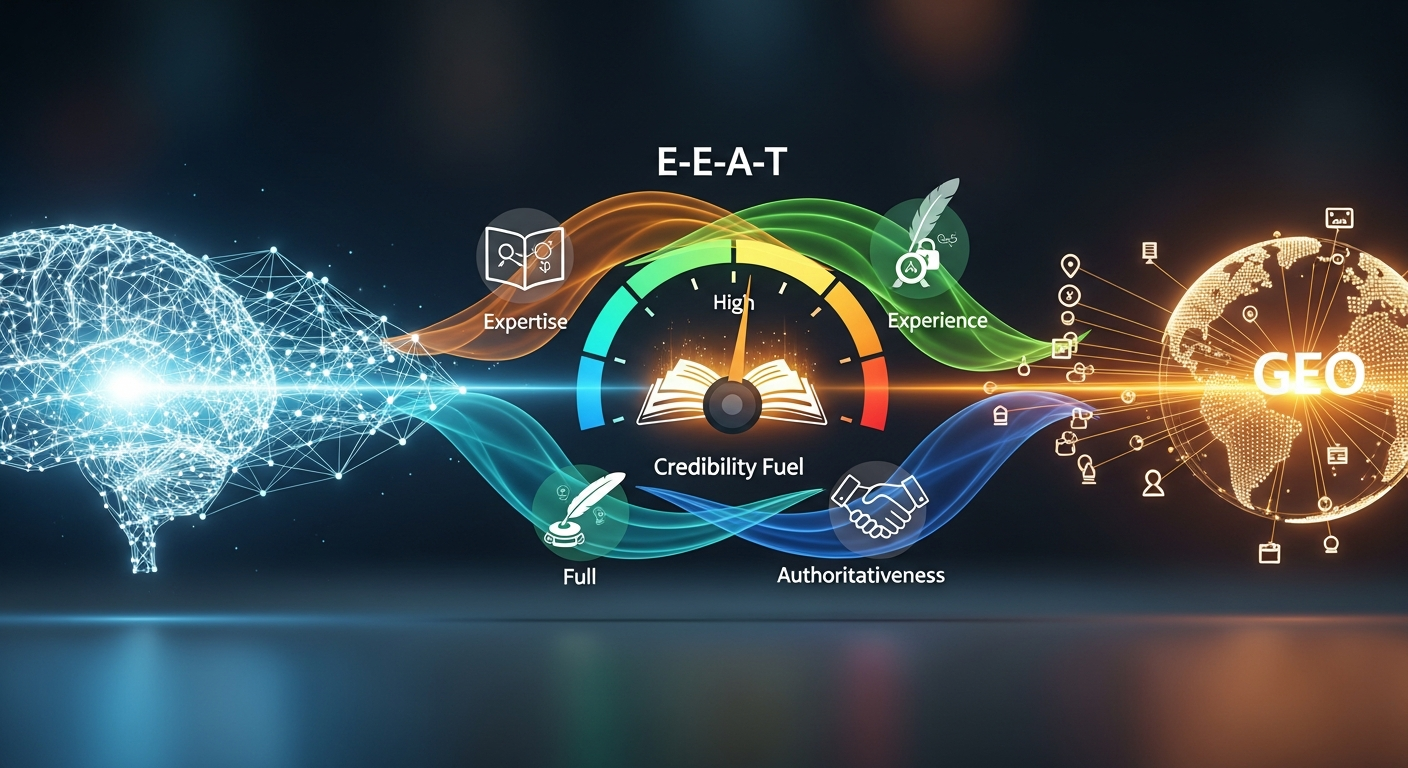
In an information landscape increasingly curated by AI, establishing and demonstrating authority and trustworthiness has never been more critical. Answer engines are designed to surface the most reliable and credible information possible. They are actively looking for signals that indicate your content is produced by a genuine expert and that your brand is a trusted entity in its field. This is where the concept of E-E-A-T (Experience, Expertise, Authoritativeness, Trustworthiness) becomes central to your AEO strategy. It’s not enough to simply provide a correct answer; you must prove that you are a credible source for that answer. This means going beyond the content itself and focusing on building a strong brand reputation, both on and off your website. Every piece of content you produce should be a clear demonstration of your deep knowledge and firsthand experience in your subject area.
Building this level of authority requires a multi-faceted and sustained effort. Creating comprehensive, well-researched, and accurate content is the foundation. But you must also focus on off-page signals that validate your expertise. This includes earning backlinks from other reputable websites in your industry, securing positive mentions in the press, and encouraging customer reviews on trusted third-party platforms. Author bios that clearly state the writer’s credentials and experience are also crucial, as they provide a direct signal of expertise to both users and search engines. Furthermore, maintaining a consistent and professional brand presence across all digital channels, from your website to your social media profiles, helps to reinforce your trustworthiness. In the AI era, where the search engine is a key gatekeeper of information, your brand’s reputation is one of your most valuable assets. By consistently demonstrating your expertise and building a foundation of trust, you are sending a powerful signal to answer engines that you are a source worthy of being featured at Position Zero.
The Symbiotic Relationship Between AEO And User Experience
Answer Engine Optimization and User Experience (UX) are not separate disciplines; they are two sides of the same coin. The core objective of an answer engine is to provide the user with the best possible experience by delivering a fast, accurate, and satisfying answer to their query. Therefore, any strategy that improves the user experience on your website is also, by its very nature, a powerful AEO strategy. A website that is slow, confusing to navigate, or cluttered with intrusive ads is sending strong negative signals to the search engine. It suggests that even if the content is good, the overall experience for the user will be poor. Consequently, the answer engine will be less likely to feature your content in a prominent position, as it prioritizes a seamless and positive user journey.
To create this symbiotic relationship, you must focus on the technical and structural elements of your site. This includes ensuring fast page load times, particularly on mobile devices, as a significant portion of searches happen on the go. A mobile-first design is non-negotiable. Your website must be easy to read and navigate on a small screen. Clear and intuitive site architecture, with a logical hierarchy of information, is also essential. This helps both users and search engine crawlers understand the relationship between different pieces of content and find what they are looking for with minimal effort. Furthermore, making your content highly readable, with short paragraphs, clear headings, and plenty of white space, enhances the user experience and makes it easier for AI to extract key information. Ultimately, the brands that will win in the era of answer engines are those that are obsessively focused on their users. By prioritizing a superior user experience, you are creating a virtuous cycle: satisfied users lead to positive signals for the search engine, which in turn leads to greater visibility at Position Zero, attracting even more users.
Beyond The Click: Thriving In The New Search Landscape
The rise of zero-click searches and the dominance of Position Zero may seem like an existential threat to the traditional model of driving traffic to a website. However, for forward-thinking entrepreneurs and marketers, it represents a powerful new opportunity to build brand awareness and establish authority on an unprecedented scale. The key is to shift your mindset from a myopic focus on clicks to a broader strategy of being the most visible and helpful answer wherever your audience is searching. When your brand consistently appears as the source of the answer in AI Overviews and featured snippets, you are building invaluable brand equity. You are becoming synonymous with expertise in your niche. This top-of-funnel awareness is incredibly powerful, as it positions you as the default choice when that user is ready to move further down the purchasing funnel.
Thriving in this new landscape requires a re-evaluation of how you measure success. While website traffic remains an important metric, it is no longer the only one that matters. You must also track metrics like brand impressions, share of voice in the search results, and the number of times your content is featured in Position Zero. The goal is to maximize your brand’s visibility at the point of inquiry. This may mean that a user gets the answer they need directly from the search results page and never clicks through to your site. In the old way of thinking, this would be a failure. In the new AEO paradigm, this is a win. You have successfully answered the user’s question, established your brand as an authority, and created a positive touchpoint that will pay dividends in the long run. The future of search is not about tricking users into clicking a link; it’s about providing so much value upfront that you become their trusted resource. By embracing AEO and focusing on being the best answer, you are not just optimizing for an algorithm; you are future-proofing your business and positioning it for sustained growth in the AI-powered world.