The 10-Year Brand: Balancing Short-term ROAS with Long-term Equity
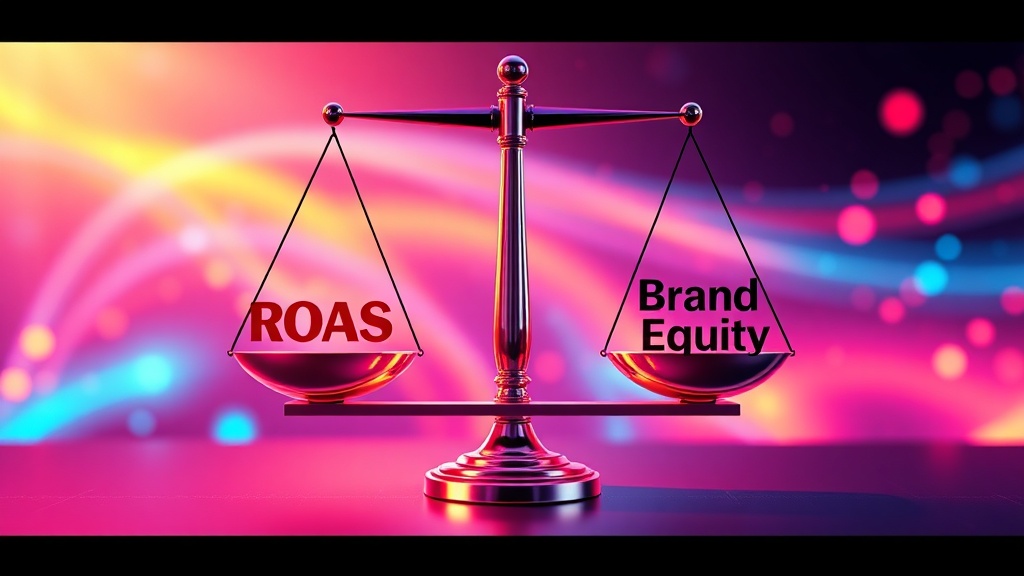
In the relentless pursuit of market dominance, brands face a perpetual dilemma: how to satisfy immediate demands for Return on Ad Spend (ROAS) while simultaneously nurturing the long-term, intangible asset that is brand equity. This isn’t merely a strategic choice but a fundamental balancing act that defines a brand’s resilience and potential for sustained growth over a decade or more. The digital era, characterized by hyper-targeted advertising and instant performance metrics, has often skewed focus towards short-term gains, sometimes at the expense of deeper, more enduring brand building. However, true market leaders understand that ephemeral spikes in sales are no substitute for the compounding power of a strong brand that commands loyalty, trust, and premium pricing power for years to come. Navigating this dichotomy requires a sophisticated understanding of both performance marketing mechanics and brand strategy fundamentals, integrating them into a cohesive, forward-looking marketing framework.
The Short-Term Imperative: Understanding Return on Ad Spend (ROAS)
ROAS is a critical metric for evaluating the efficiency of advertising expenditures, calculated by dividing the revenue generated from ad campaigns by the cost of those campaigns. It provides immediate feedback on the profitability of marketing efforts, guiding budget allocation in performance marketing channels.
Return on Ad Spend (ROAS) is a primary financial metric used by performance marketers to gauge the effectiveness of their advertising spend. A high ROAS indicates efficient ad campaigns that convert ad dollars into revenue, often reflecting optimization in areas like ad creatives, targeting, bidding strategies, and landing page experience. For many organizations, especially those heavily reliant on direct response marketing, achieving and maintaining a specific ROAS threshold is paramount for profitability and scalability. Common tactical approaches to maximize ROAS include granular audience segmentation, A/B testing ad copy and visuals, continuous bid management, and optimizing conversion funnels to reduce Cost Per Acquisition (CPA). Platforms like Google Ads and Meta Ads provide robust analytics to track these metrics in real-time, facilitating rapid iteration and campaign adjustments. However, an overemphasis on ROAS can lead to a narrow focus on lower-funnel activities, potentially cannibalizing future brand health for immediate transactional gains.
Calculating and Interpreting ROAS
ROAS is typically expressed as a ratio or a percentage. For instance, a ROAS of 4:1 or 400% means that for every dollar spent on advertising, four dollars in revenue were generated. Understanding what constitutes a ‘good’ ROAS is industry-dependent, but generally, a ratio above 2:1 is considered viable for many businesses, accounting for Cost of Goods Sold and other operational expenses. It is crucial to distinguish between Gross ROAS, which measures total revenue, and Net ROAS, which considers profit margins, offering a more accurate picture of profitability.
The Long-Term Vision: Cultivating Brand Equity
Brand equity represents the total value that a brand adds to a product or service beyond its functional benefits, encompassing consumer perceptions, associations, and loyalty built over time. It is a strategic asset that contributes significantly to a company’s long-term financial health and market position.
Building brand equity is a marathon, not a sprint. It involves strategically shaping how consumers perceive and interact with a brand, fostering deep emotional connections that transcend mere transactional exchanges. Leading brand strategists like David Aaker and Kevin Lane Keller have provided comprehensive frameworks, such as Keller’s Brand Equity Model, which highlights the progression from brand salience to brand performance, brand imagery, brand judgments, brand feelings, and ultimately, brand resonance. This journey is nurtured through consistent brand messaging, high-quality product delivery, exceptional customer experience, and sustained brand advertising that reinforces a clear brand purpose and value proposition. A strong brand reduces customer acquisition cost, enables premium pricing, facilitates market expansion, and builds a loyal customer base that acts as advocates, driving organic growth through word-of-mouth marketing. It provides a strategic moat, protecting the brand from competitive pressures and market volatility.
Components of Enduring Brand Equity
- Brand Awareness: The extent to which consumers are familiar with the brand.
- Perceived Quality: Consumers’ subjective assessment of the brand’s overall quality.
- Brand Associations: The attributes and benefits consumers connect with the brand.
- Brand Loyalty: The propensity of customers to repeatedly purchase and choose the brand.
- Brand Personality: The human characteristics associated with the brand (e.g., innovative, sophisticated, rugged).
The Inherent Tension: Why the Conflict Exists
The conflict between short-term ROAS and long-term brand equity arises from differing objectives, measurement methodologies, and organizational pressures, where immediate revenue targets often overshadow strategic, sustained investment in brand building.
This tension is deeply rooted in the distinct nature of performance marketing versus brand marketing. Performance marketing, by design, focuses on immediate conversions, utilizing direct response tactics, trackable metrics like Cost Per Click (CPC), Cost Per Lead (CPL), and Conversion Rate. Its effectiveness is easily quantifiable in the short term. Brand marketing, conversely, aims to build mental availability and emotional connection, influencing perception over an extended period. Metrics like Brand Lift, Brand Sentiment, and Share of Voice are often lagged indicators and more challenging to directly link to quarterly revenue figures. This disparity in measurability and reporting often puts brand budgets at a disadvantage, especially in public companies driven by quarterly earnings reports. Marketing Mix Modeling (MMM) and advanced econometric analysis are attempting to bridge this gap, but the immediate gratification of ROAS often wins out against the patient investment required for brand building.
Key Drivers of the Conflict
- Measurement Horizon: Performance metrics are immediate; brand metrics are long-term.
- Attribution Models: Often favor last-touch interactions, undervaluing upper-funnel brand efforts.
- Budget Allocation: Tendency to shift funds to ‘proven’ short-term channels during economic pressures.
- Organizational Structure: Siloed teams for performance vs. brand marketing can hinder collaboration.
Bridging the Divide: Strategies for Harmonization
Harmonizing short-term ROAS with long-term brand equity requires an integrated marketing approach, leveraging full-funnel strategies, sophisticated attribution models, and unifying metrics like Customer Lifetime Value (CLTV).
Achieving a harmonious balance necessitates a holistic view of the marketing ecosystem. This begins with an Integrated Marketing Communications (IMC) strategy, ensuring consistent messaging and brand experience across all touchpoints, from broad awareness campaigns to precise conversion ads. A full-funnel marketing approach is crucial, recognizing that different channels and tactics contribute at various stages of the customer journey. Upper-funnel brand advertising creates demand and familiarity, making lower-funnel performance campaigns more efficient and effective. Modern attribution models, moving beyond simplistic Last-Click Attribution to include Multi-Touch Attribution and Data-Driven Attribution, can help allocate credit more fairly across the entire customer journey, demonstrating the cumulative impact of brand touchpoints. Ultimately, Customer Lifetime Value (CLTV) emerges as a powerful unifying metric, illustrating how brand loyalty and repeat purchases, fostered by brand equity, contribute significantly to long-term profitability, even if initial ROAS for a brand-building campaign appears lower.
Key Harmonization Strategies
- Full-Funnel Marketing: Orchestrating campaigns from Brand Awareness to Conversion and Loyalty.
- Marketing Mix Modeling (MMM): Quantifying the incremental impact of both brand and performance channels on sales.
- Blended Attribution Models: Moving beyond single-touch to multi-touch and algorithmic attribution.
- Customer Lifetime Value (CLTV) Focus: Prioritizing the long-term value of customers acquired through brand building.
Tactical Implementation for the 10-Year Brand
Building a 10-year brand requires strategic allocation of resources across diverse marketing efforts, prioritizing both immediate conversion and sustained brand development, supported by continuous innovation and superior customer experiences.
Implementing a strategy that supports a 10-year brand means resisting the urge to exclusively chase quick wins. It involves a deliberate and measured approach to media planning and creative strategy. For instance, dedicating a portion of the marketing budget to brand-building channels like television, out-of-home, podcast advertising, or content marketing, even if their direct ROAS is harder to immediately track. Simultaneously, performance marketing channels, such as paid search, social media advertising, and email marketing, should be optimized for efficiency, but also informed by brand guidelines to maintain consistency. Continuous product innovation, driven by market research and customer feedback, ensures the brand remains relevant and superior. Furthermore, investing in exceptional Customer Experience (CX) is paramount, as positive interactions build loyalty and reduce churn, which directly contributes to higher CLTV and strengthens brand equity over time. This dual focus ensures that the brand not only acquires customers efficiently but retains them for the long haul.
Practical Pillars of a Long-Term Brand Strategy
- Balanced Media Allocation: Allocate budgets strategically between demand generation (brand) and demand capture (performance) channels.
- Consistent Brand Messaging: Ensure all communications, regardless of channel, reinforce the core brand purpose and values.
- Exceptional Customer Experience: Invest in service, support, and product quality to foster loyalty.
- Data-Driven Insights: Use analytics not just for performance optimization, but also for understanding brand health trends.
Measuring Both Worlds: Key Metrics and Analytics
Effective measurement for the 10-year brand extends beyond simple ROAS to include a suite of brand health metrics, employing advanced analytics to understand the synergistic relationship between performance and brand-building activities.
To truly understand the return on marketing investment for a 10-year brand, a comprehensive dashboard of metrics is essential. On the performance side, marketers will track granular metrics like Cost Per Click (CPC), Click-Through Rate (CTR), Conversion Rate, and overall ROAS per campaign. For brand equity, a different set of indicators is required: Brand Awareness (via surveys, search volume for brand terms), Brand Sentiment (social listening, review analysis), Brand Preference (choice share, top-of-mind awareness), and Net Promoter Score (NPS) for loyalty. Advanced analytical techniques like incrementality testing can help determine the true causal impact of brand campaigns on sales, rather than merely correlational data. Furthermore, Marketing Mix Modeling (MMM) can demonstrate how investments in brand advertising can lower the effective CPA of performance channels over time by increasing brand recall and trust. The interplay between these two sets of metrics paints a more accurate picture of holistic marketing effectiveness.
Key Measurement Frameworks
| Metric Category | Examples | Purpose |
|---|---|---|
| Short-Term Performance | ROAS, CPA, CPL, CTR, Conversion Rate | Evaluate immediate campaign efficiency and profitability. |
| Long-Term Brand Equity | Brand Awareness, NPS, Brand Sentiment, Share of Voice, Brand Mentions, Purchase Intent, Brand Lift | Assess consumer perception, loyalty, and brand health over time. |
| Harmonizing Metrics | Customer Lifetime Value (CLTV), Marketing Mix Modeling (MMM), Incrementality Testing | Connect short-term actions to long-term value and attribute impact across the funnel. |
The Future-Proof Brand: A Strategic Mandate
Future-proofing a brand involves consistently investing in brand equity alongside performance marketing, creating resilience against market shifts, fostering premium pricing power, and ensuring sustainable growth for decades to come.
A brand built with a 10-year horizon is inherently more resilient and adaptable. Strong brand equity acts as a buffer during economic downturns, allowing brands to maintain market share and pricing power where lesser brands falter. It significantly reduces the Customer Acquisition Cost (CAC) over time because customers are more likely to seek out and trust a known entity, requiring less persuasion. This translates into healthier profit margins and greater opportunities for innovation and expansion into new product categories or markets. Furthermore, a strong brand attracts top talent, influences investor confidence, and can even command a premium valuation in M&A activities. Brands like Coca-Cola, Apple, and Nike exemplify this enduring power, demonstrating that a deep, consistent investment in brand purpose, value, and emotional connection yields exponential returns far beyond immediate ROAS calculations. This strategic mandate ensures that the brand doesn’t just survive but thrives through evolving consumer landscapes and technological shifts.
Conclusion
The pursuit of short-term ROAS and the cultivation of long-term brand equity are not mutually exclusive but rather interdependent facets of a successful, enduring marketing strategy. Brands that master this balance are those that navigate the complexities of modern markets with agility and foresight, securing both immediate profitability and a resilient foundation for future growth. By integrating performance marketing with strategic brand building, leveraging comprehensive measurement frameworks, and committing to a customer-centric approach, companies can transform transient market presence into a powerful, decade-spanning legacy. The 10-year brand is not merely an aspiration; it is a strategic imperative for any enterprise aiming for true market leadership and sustained value creation.