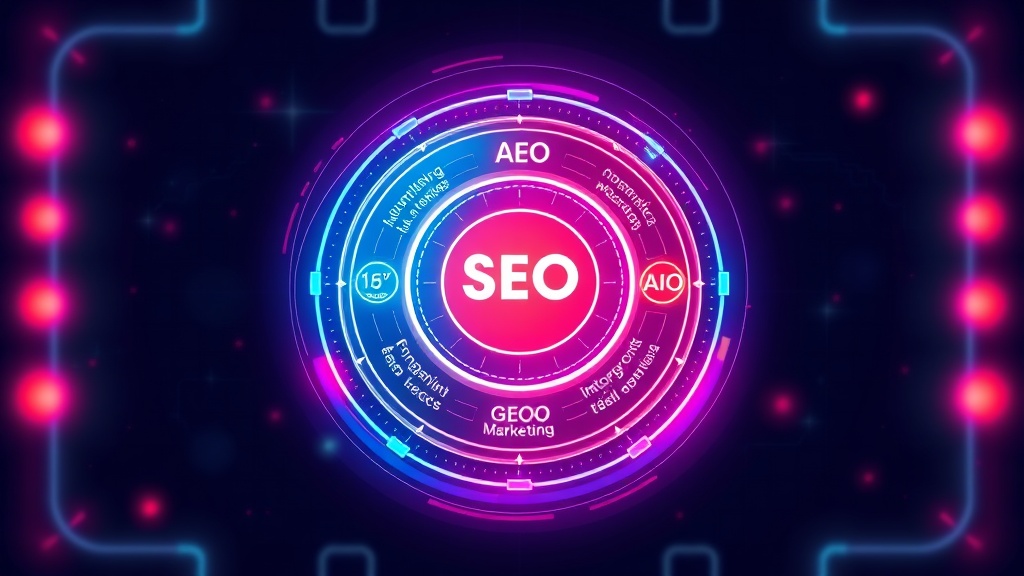
In today’s hyper-connected world, a fragmented digital strategy is a failing strategy. The landscape of online discovery and engagement has evolved far beyond traditional keyword matching, now encompassing conversational interfaces, localized intent, and sophisticated artificial intelligence algorithms. Businesses and brands striving for unparalleled visibility and sustained growth must adopt an integrated approach, meticulously blending Search Engine Optimization (SEO), Answer Engine Optimization (AEO), Geographic Optimization (GEO), and Artificial Intelligence Optimization (AIO). This comprehensive article delves into the synergistic principles and advanced tactics required to master this complex digital ecosystem, transforming disparate efforts into a powerful, cohesive force for digital dominance.
Understanding the Core Pillars: SEO, AEO, GEO, and AIO
These core pillars represent distinct yet interconnected optimization strategies essential for digital visibility. SEO focuses on traditional web search, AEO targets direct answers and conversational interfaces, GEO optimizes for local relevance, and AIO leverages artificial intelligence for smarter content and personalization, forming a holistic approach.
Search Engine Optimization (SEO): The Foundation
SEO remains the bedrock of digital visibility, ensuring that web content is discoverable and ranks highly in traditional search engine results pages (SERPs). Modern SEO transcends mere keyword stuffing, focusing on comprehensive technical excellence, user experience, and authoritative content. Technical SEO involves optimizing Core Web Vitals, site architecture, crawlability, indexability, and implementing precise structured data using Schema.org to help search engines understand content contextually. On-page SEO emphasizes deep keyword intent analysis, creating high-quality, semantically rich content that addresses user queries comprehensively, optimizing titles, meta descriptions, and headings. Off-page SEO builds domain authority and trust through earned backlinks, brand mentions, and demonstrating E-E-A-T (Experience, Expertise, Authoritativeness, Trustworthiness) signals across the web.
Answer Engine Optimization (AEO): Beyond Keywords
AEO is the strategic discipline of optimizing content to be chosen by answer engines, voice assistants, and large language models (LLMs) to directly answer user queries. This involves a profound shift from keyword optimization to intent optimization, focusing on natural language processing and question-answer pairing. Content must be structured to provide concise, definitive answers suitable for featured snippets, knowledge panels, and direct voice search responses. Understanding the nuances of conversational AI, anticipating natural language queries, and preparing content for platforms like Google Assistant, Amazon Alexa, and Apple Siri are paramount. This often means adopting a Q&A format, summarizing key information upfront, and using schema like HowTo and FAQPage to signal answerable content.
Geographic Optimization (GEO): Localized Dominance
GEO focuses on enhancing visibility for location-specific searches, crucial for businesses with physical presence or those targeting a local customer base. The cornerstone of GEO is a meticulously optimized Google Business Profile, ensuring accurate, consistent information across all local directories and platforms. This includes business name, address, phone number (NAP data), operating hours, services, and high-quality images. Local citation building, actively managing online reviews, and responding to customer feedback significantly influence local pack rankings. Proximity signals, hyper-local content strategies targeting specific neighborhoods or regions, and optimizing for ‘near me’ searches are critical. Mobile optimization is also inherently linked to GEO, as most local searches occur on mobile devices.
Artificial Intelligence Optimization (AIO): Future-Proofing
AIO is the proactive strategy of preparing and optimizing digital assets for consumption and processing by artificial intelligence systems, including search algorithms, content generation tools, and personalization engines. This involves understanding how LLMs interpret, summarize, and generate content, and structuring information for maximum machine readability and relevance. Techniques include creating highly semantic content, leveraging AI-powered content analysis tools, and designing for personalized user experiences driven by predictive analytics. AIO also considers how AI models like BERT, MUM, and future iterations influence ranking factors, focusing on deep contextual understanding, entity recognition, and information retrieval accuracy. Proactive adaptation to emerging AI technologies like Retrieval-Augmented Generation (RAG) is key.
Integrating SEO, AEO, GEO, and AIO for Maximum Impact
Integrating these strategies maximizes digital impact by creating a unified, coherent online presence. This synergy enhances discoverability across search engines, voice assistants, and local listings, while AI optimizes content delivery and user experience, driving superior engagement and conversion rates across all platforms.
Cross-Channel Content Architectures
A unified content strategy is essential for an integrated approach. This involves developing universal content hubs that can be repurposed and adapted across various platforms. Modular content, designed in atomic units, allows for easy distribution to websites, voice interfaces, local listings, and AI knowledge bases. Implementing semantic content clustering around core topics ensures comprehensive coverage and interconnectedness, signaling deep expertise to both traditional search engines and AI models. This avoids content silos and promotes consistent messaging, regardless of the user’s entry point.
Data-Driven Decision Making
Effective integration relies heavily on robust data analysis. Utilizing unified analytics dashboards, such as Google Analytics 4, combined with Google Search Console data, provides a holistic view of user behavior across all channels. Predictive modeling helps identify emerging trends and anticipate algorithmic shifts, allowing for proactive strategy adjustments. Continuous A/B testing and experimentation across content formats, CTAs, and user flows are crucial for optimizing performance and refining the integrated strategy. Understanding attribution across these diverse touchpoints is key to accurately measuring ROI.
User Experience (UX) as the Unifying Factor
At the heart of all successful optimization strategies is an exceptional user experience. Core Web Vitals—Largest Contentful Paint (LCP), Interaction to Next Paint (INP), and Cumulative Layout Shift (CLS)—are foundational for all platforms, impacting traditional SEO, mobile responsiveness, and even how voice assistants perceive content quality. Mobile-first indexing dictates that all content must be optimized for mobile devices, including fast loading times and intuitive navigation. Ensuring web accessibility standards, such as WCAG (Web Content Accessibility Guidelines), broadens audience reach and signals quality to search engines and AI.
Technical Deep Dive: Implementing Advanced Optimization
Advanced implementation demands meticulous structured data markup, intelligent content systems, robust technical infrastructure, and continuous monitoring. This ensures optimal machine readability for search engines and AI, superior user satisfaction across diverse platforms, and future-proofs digital assets against evolving algorithmic demands and user behaviors.
Structured Data and Schema Markup Mastery
The precise implementation of JSON-LD schema markup is non-negotiable for advanced optimization. This involves marking up various content types, including Product, Article, FAQPage, HowTo, LocalBusiness, and VideoObject, to provide explicit context to search engines and AI. For AEO, specific schema types like speakable and QAPage are vital for voice search and featured snippets. Dynamic schema generation, often integrated with Content Management Systems (CMS), ensures that markup is always up-to-date and accurate across a large content inventory. Regularly validating schema with Google’s Rich Results Test is crucial.
Optimizing for Voice and Conversational AI
Optimizing for voice search and conversational AI requires a nuanced approach to keyword research and content creation. Focus on long-tail conversational keywords that mirror natural language queries. FAQ pages should be structured with clear, concise answers that can be easily extracted as direct answers. Content must anticipate follow-up questions and provide comprehensive contextual understanding. Mapping user intent to specific information needs ensures that conversational interfaces can effectively guide users to the desired information or action. Prioritizing clarity and conciseness helps AI summarize and present information effectively.
Hyperlocal Targeting with Precision
Advanced GEO strategies extend beyond basic NAP data. Integrating geo-fencing capabilities and leveraging location-based services can deliver highly personalized content and offers. Creating optimized local landing pages for each service area, complete with unique local content, service-specific keywords, and embedded Google Maps, significantly boosts relevance. Engaging with niche local directories, industry-specific review sites, and local partnerships further amplifies local search signals. Developing content that speaks directly to local events, news, and community interests solidifies local authority.
Leveraging AI Tools and Platforms
The modern digital strategist must harness the power of AI tools. Natural Language Processing (NLP) technologies can analyze content for semantic richness, identify gaps, and suggest optimizations for better contextual understanding. Machine learning algorithms can be employed for predictive SEO, forecasting trends, and identifying content opportunities. AI-driven content personalization engines dynamically adapt content delivery based on user behavior, demographics, and real-time interactions, enhancing engagement and conversion rates. Experimenting with generative AI for content idea generation and drafting can also accelerate content velocity, but human oversight for quality and E-E-A-T remains critical.
Key Performance Indicators and Future-Proofing Your Strategy
Measuring success involves tracking organic visibility, voice search answer rates, local pack rankings, and AI-driven personalization efficacy. Future-proofing requires continuous adaptation to evolving AI models, new device interfaces, and anticipating shifts in user behavior to maintain competitive advantage and long-term digital relevance.
Relevant KPIs for an Integrated Strategy
Measuring the success of an integrated strategy requires a comprehensive set of Key Performance Indicators (KPIs). Beyond traditional organic traffic and keyword rankings, focus on metrics like organic visibility score, which reflects overall SERP presence, and impressions for rich results. Track local pack rankings, ‘near me’ search performance, and local search queries. For AEO, monitor voice search answer rates, direct answer capture (featured snippets, knowledge panels), and engagement with conversational interfaces. Ultimately, evaluate conversion rates and revenue generated from each integrated channel, understanding the cross-channel attribution models in place.
Continuous Auditing and Adaptation
The digital ecosystem is dynamic, necessitating a proactive approach to auditing and adaptation. Regular technical audits using tools like Screaming Frog, Semrush, or Ahrefs are essential to identify and rectify crawl errors, broken links, and site performance issues. Implement a content freshness and relevance cycle, periodically reviewing and updating existing content to maintain its E-E-A-T and alignment with current search intent. Staying abreast of major algorithm updates, such as Google Core Updates, and adapting strategies accordingly is crucial for maintaining rankings and visibility. Agility and continuous learning are paramount.
Embracing Emerging Technologies
Future-proofing demands a keen eye on emerging technologies. Explore the implications of Web3 and the decentralized web on search and content discovery. Consider how Augmented Reality (AR) and Virtual Reality (VR) might transform search experiences, leading to new forms of content optimization for immersive environments. Proactively address ethical AI considerations, ensuring transparency, fairness, and accountability in AI-driven content and personalization. Investing in understanding these nascent technologies will position your brand at the forefront of the next wave of digital innovation.
Mastering the digital ecosystem is not a one-time achievement but an ongoing journey. By strategically integrating SEO, AEO, GEO, and AIO, businesses can build a resilient, adaptable, and highly visible online presence. This holistic approach ensures discoverability across all touchpoints, from traditional web searches to conversational AI, local queries, and personalized content delivery. The key lies in continuous learning, meticulous technical execution, and an unwavering focus on delivering value and exceptional experiences to the end-user, regardless of how they choose to interact with your digital footprint.