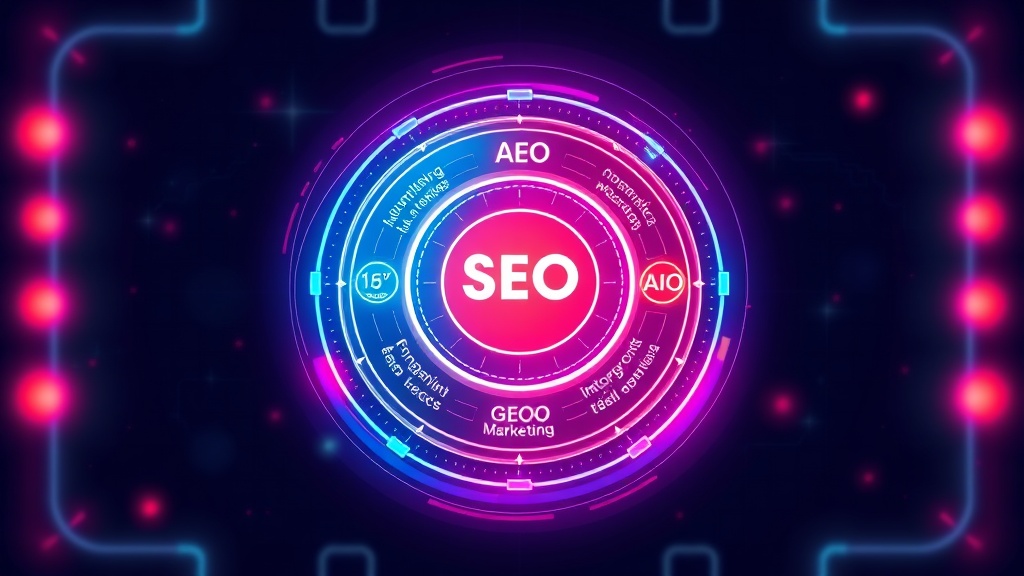
In the relentlessly evolving digital landscape, a fragmented approach to online visibility is no longer sufficient. Businesses and brands must adopt a comprehensive, integrated strategy to secure and expand their digital presence effectively. This article delves into a holistic framework that intertwines Search Engine Optimization (SEO), Answer Engine Optimization (AEO), Geographical Optimization (GEO), and Artificial Intelligence Optimization (AIO), presenting them not as disparate tactics but as synergistic pillars of a unified digital strategy. Mastery across these domains is crucial for achieving sustained visibility, deeper engagement, and superior conversion rates in an omnichannel environment where user intent, context, and personalized experiences dictate success.
Introduction to Holistic Digital Presence
A holistic digital presence refers to a unified, cohesive, and optimized strategy across all relevant digital channels and search modalities, ensuring maximum visibility and relevance for target audiences. It integrates various optimization disciplines to create a seamless user journey, from initial discovery to conversion and loyalty, adapting to current technological shifts and future trends like conversational AI and localized search intent.
The convergence of advanced algorithms, sophisticated user interfaces, and an increasingly discerning audience demands more than just keyword stuffing or basic technical fixes. Modern digital success hinges on understanding the user’s journey comprehensively, anticipating their needs, and delivering precise, contextualized value at every touchpoint. This necessitates a strategic pivot towards a multi-faceted optimization model that considers not just where users search, but how, why, and what format of answer they expect. By meticulously integrating SEO, AEO, GEO, and AIO, organizations can construct a robust digital foundation capable of navigating algorithmic shifts and capitalizing on emerging consumer behaviors.
The Cornerstone: Search Engine Optimization (SEO)
Search Engine Optimization (SEO) is the practice of increasing the quantity and quality of traffic to your website through organic search engine results, primarily by making your website more attractive and relevant to search engine algorithms and user queries. It encompasses a vast array of technical, on-page, and off-page tactics designed to improve search engine rankings.
Technical SEO Foundations
Technical SEO involves optimizing the backend elements of a website to improve its crawlability and indexability by search engine spiders like Googlebot. Key aspects include optimizing site speed through content delivery networks (CDNs), efficient server responses, and image compression; ensuring mobile-friendliness with responsive design; implementing structured data markup using schema.org vocabulary for rich snippets; maintaining a clear site architecture with logical internal linking; managing canonicalization to prevent duplicate content issues; and submitting XML sitemaps to webmaster tools such as Google Search Console for efficient indexing. Proper implementation of robots.txt directives and HTTP status codes (e.g., 301 redirects) are also critical for directing crawlers effectively.
On-Page and Off-Page SEO Synergy
On-page SEO focuses on optimizing individual web pages to rank higher and earn more relevant traffic in search engines. This includes strategic keyword research and placement within title tags, meta descriptions, header tags (H1, H2, H3), and body content; optimizing image alt text; improving content quality, relevance, and depth; and ensuring user experience (UX) metrics like dwell time and bounce rate are favorable. Off-page SEO, conversely, refers to actions taken outside of your website to impact your rankings within search engine results pages (SERPs). The primary driver is high-quality backlink acquisition from authoritative domains, which signals trust and credibility to search engines. Other factors include social media signals, brand mentions, and local citations, all contributing to domain authority and overall search visibility.
Beyond Text: Answer Engine Optimization (AEO)
Answer Engine Optimization (AEO) is the process of optimizing content to be directly answerable by search engines and voice assistants, moving beyond traditional text-based results to focus on direct answers, featured snippets, and conversational interfaces. It prioritizes clarity, conciseness, and directness in content presentation.
Understanding Conversational Search
Conversational search represents a significant paradigm shift, driven by the proliferation of voice search devices like Google Assistant, Amazon Alexa, and Apple Siri, alongside advanced chatbot interfaces. Users interact with these systems using natural language queries, often asking questions directly rather than typing keywords. AEO necessitates optimizing for long-tail keywords and semantic search, understanding the nuances of how people speak versus how they type. This involves crafting content that directly answers specific questions, anticipating follow-up questions, and utilizing question-and-answer formats. The goal is to be the ‘best answer’ that an answer engine can confidently extract and deliver without requiring the user to click through to a website.
Data Structuring for AEO
Effective AEO relies heavily on structured data markup, specifically schema.org vocabulary, to explicitly communicate the meaning and context of content to search engines. Implementing schemas for QAPage, FAQPage, HowTo, Product, Event, and LocalBusiness allows search engines to easily identify key information such as answers to common questions, step-by-step instructions, product specifications, or business operating hours. This structured data facilitates the creation of rich results and featured snippets, which appear prominently in SERPs and are often the direct source for voice search answers. By clearly defining entities and their relationships, content becomes machine-readable, enhancing its chances of being selected as a direct answer by answer engines.
Localizing Impact: Geographical Optimization (GEO)
Geographical Optimization (GEO) involves tailoring digital strategies to target users within specific geographic areas, enhancing local search visibility and driving foot traffic or localized conversions. It’s crucial for businesses with physical locations or those serving distinct regional markets.
Hyperlocal Targeting Strategies
Hyperlocal targeting involves focusing on extremely specific geographic areas, such as neighborhoods, zip codes, or even specific street radii. Strategies include creating location-specific landing pages with unique content tailored to local demographics, services, or events. Optimizing for ‘near me’ searches is paramount, requiring content to explicitly mention local landmarks, community events, and service areas. Utilizing geo-targeted ad campaigns on platforms like Google Ads and social media, precise location tagging in social posts, and fostering local online reviews are all critical components. This granular approach ensures that local search queries directly connect users with the most relevant local business information.
Google Business Profile and Local Citations
Google Business Profile (formerly Google My Business) is the cornerstone of GEO. Maintaining a fully optimized and verified Google Business Profile listing, complete with accurate business name, address, phone number (NAP), website, hours of operation, photos, services, and regular posts, is non-negotiable. Encouraging and responding to customer reviews on Google Business Profile significantly impacts local search rankings and trust. Beyond Google, consistent NAP information across various online directories and citation sites (e.g., Yelp, Yellow Pages, industry-specific directories) is essential. These ‘local citations’ build authority and confirm business legitimacy to search engines, bolstering local search visibility and establishing credibility within the community.
The Future: Artificial Intelligence Optimization (AIO)
Artificial Intelligence Optimization (AIO) is the practice of leveraging AI technologies and insights to enhance various aspects of a digital presence, from content creation and personalization to predictive analytics and automation, for superior performance and user experience. It’s about optimizing for and with AI.
AI-Powered Content Generation and Curation
AI-powered tools are revolutionizing content creation by assisting with idea generation, drafting outlines, writing initial drafts, optimizing for keywords and readability, and even translating content. Natural Language Generation (NLG) models can produce high-volume, personalized content like product descriptions or news summaries. AI also excels in content curation, analyzing vast datasets to identify trending topics, gaps in existing content, and user preferences, thereby enabling marketers to create highly relevant and engaging content strategies. However, human oversight remains critical to ensure accuracy, originality, and the maintenance of brand voice and ethical standards, positioning AI as a powerful assistant rather than a complete replacement for human creativity.
Predictive Analytics and Personalization
AIO leverages machine learning algorithms to analyze vast amounts of user data, identifying patterns and predicting future behaviors. Predictive analytics can forecast customer churn, identify cross-selling opportunities, and optimize marketing spend by predicting the effectiveness of different campaigns. This foresight enables highly personalized user experiences, where content, product recommendations, and advertising are dynamically tailored to individual user preferences and historical interactions. AI-driven personalization extends to dynamic website content, email marketing automation, and customized user journeys, significantly improving conversion rates and customer satisfaction. The ability to anticipate user needs and deliver hyper-relevant experiences is a key differentiator in competitive digital markets.
Integrating the Pillars: A Unified Strategy
Integrating SEO, AEO, GEO, and AIO involves a strategic synthesis of their individual strengths into a cohesive, omnichannel digital strategy that maximizes overall impact and efficiency. This unified approach ensures all optimization efforts work in concert to achieve overarching business objectives.
Cross-Platform Data Synthesis
A truly holistic strategy demands the synthesis of data from all digital touchpoints. This involves collecting and analyzing data from website analytics (e.g., Google Analytics 4), search console insights, social media platforms, CRM systems, advertising platforms, and local listing management tools. By consolidating this data, organizations gain a 360-degree view of their customer journey and digital performance. Machine learning algorithms can then process these diverse datasets to uncover deeper insights into user behavior, identify correlations between different optimization efforts, and highlight opportunities for improvement that might be missed in siloed analyses. This integrated data approach is foundational for informed decision-making and continuous optimization.
The Optimization Feedback Loop
A successful integrated strategy operates on a continuous feedback loop. Insights gained from AIO (e.g., predictive analytics on user intent) can inform SEO keyword strategies and content gaps. AEO efforts focusing on structured data for voice search also enhance SEO by improving rich result visibility. GEO strategies for local citations bolster overall domain authority for SEO. Conversely, improved SEO rankings drive more traffic, providing more data for AIO to analyze. This cyclical process of data collection, analysis, strategic adjustment, and performance monitoring ensures that the digital presence remains agile, responsive, and continuously optimized against evolving algorithms and user behaviors. Tools like enterprise search platforms and advanced analytics dashboards are critical for monitoring and adjusting this feedback loop.
Implementation Challenges and Future Trends
Implementing a holistic digital presence strategy faces challenges such as rapidly evolving algorithms, managing vast datasets, and ensuring ethical AI use, while future trends point towards even greater personalization and automation. Staying ahead requires continuous learning and adaptive strategies.
Evolving Algorithms and User Behavior
Search engine algorithms, particularly Google’s RankBrain, BERT, and MUM updates, are constantly evolving to better understand user intent and deliver more relevant results. These changes necessitate continuous monitoring of SERP dynamics, adapting keyword strategies from exact match to thematic relevance, and focusing on comprehensive, authoritative content. User behavior is also shifting rapidly, with increasing reliance on voice search, visual search, and immersive experiences like augmented reality. Digital strategists must anticipate these shifts, incorporating new formats and interaction models into their optimization frameworks. The challenge lies in maintaining agility and flexibility to pivot strategies in response to these ongoing changes, avoiding a ‘set it and forget it’ mentality that leads to obsolescence.
Ethical AI and Data Privacy
The increasing reliance on AI for optimization brings critical ethical considerations and data privacy concerns. Issues such as algorithmic bias, data security, and the transparent use of personal data must be addressed proactively. Organizations must adhere to regulations like GDPR and CCPA, ensuring user consent, providing clear privacy policies, and implementing robust data anonymization and security protocols. Developing AI models that are fair, accountable, and transparent is paramount to maintaining user trust and avoiding reputational damage. Future trends will see a greater emphasis on privacy-preserving machine learning techniques, explainable AI (XAI), and consent-driven personalization, requiring strategists to balance innovative AI applications with stringent ethical guidelines.
Conclusion: Mastering the Omnichannel Digital Landscape
Mastering the omnichannel digital landscape requires a strategic shift from siloed marketing efforts to a deeply integrated, holistic framework encompassing SEO, AEO, GEO, and AIO. This synergistic approach ensures comprehensive visibility, precise targeting, and superior user experiences across all digital touchpoints. By continuously adapting to technological advancements and prioritizing user intent, businesses can achieve unparalleled digital dominance and sustained growth.