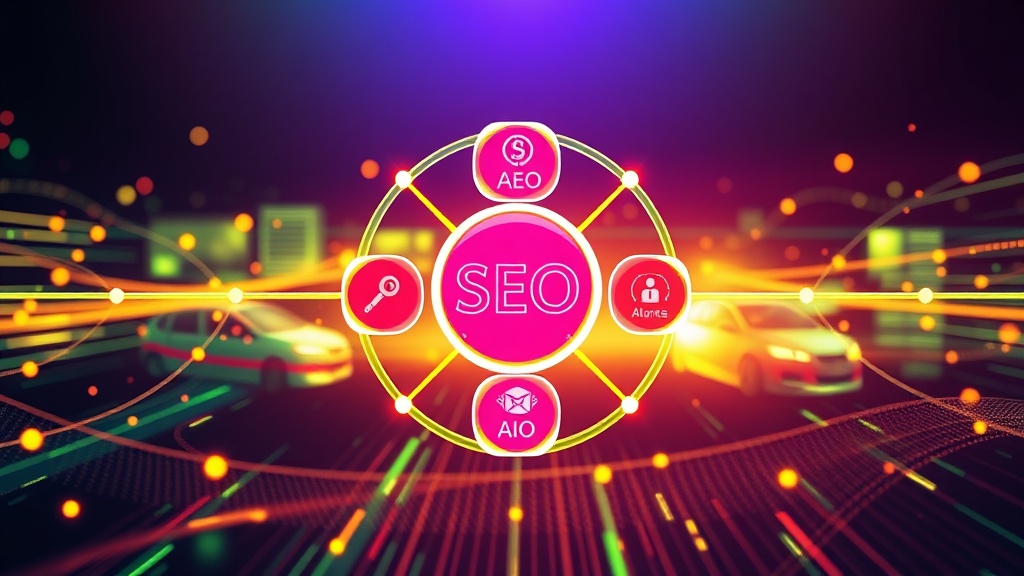
In today’s hyper-connected digital ecosystem, achieving true online dominance requires more than a single-channel approach. Businesses and content creators must navigate a complex landscape shaped by evolving search algorithms, conversational AI, hyper-local user intent, and increasingly sophisticated machine learning models. The traditional focus on Search Engine Optimization (SEO) alone is no longer sufficient. To truly thrive, organizations must embrace a synergistic strategy that integrates SEO with Answer Engine Optimization (AEO), Geographic Optimization (GEO), and Artificial Intelligence Optimization (AIO).
This comprehensive article delves into each of these critical optimization pillars, explaining their individual mechanisms and, more importantly, illuminating how their combined application creates an unparalleled framework for digital visibility. By understanding and strategically interweaving these disciplines, enterprises can future-proof their digital presence, capture diverse user intents, and establish enduring authority across all relevant digital touchpoints.
Understanding the Pillars of Digital Visibility
This section delineates the core definitions and fundamental principles of Search Engine Optimization (SEO), Answer Engine Optimization (AEO), Geographic Optimization (GEO), and Artificial Intelligence Optimization (AIO), setting the stage for their synergistic application in modern digital strategy.
Search Engine Optimization (SEO): The Foundation
SEO remains the bedrock of digital visibility, focusing on improving a website’s ranking in organic search results. It encompasses a vast array of techniques, from on-page optimization like keyword research, content quality, and internal linking, to technical SEO elements such as site speed, mobile-friendliness, Core Web Vitals, and the implementation of Schema Markup. Off-page SEO, primarily through quality backlinks and domain authority building, also plays a crucial role. Modern SEO prioritizes user experience, E-E-A-T (Experience, Expertise, Authoritativeness, Trustworthiness), and semantic relevance over mere keyword stuffing. Google’s algorithm updates, like the Helpful Content System and various core updates, continually reinforce the importance of creating valuable, human-first content while ensuring technical excellence for discoverability by web crawlers.
Answer Engine Optimization (AEO): Catering to Conversational AI
AEO is a specialized form of optimization designed to improve a website’s chances of providing direct answers to user queries, particularly those posed to conversational AI systems like Google Assistant, Amazon Alexa, and large language models (LLMs) integrated into search interfaces. This involves structuring content to be easily extractable and interpretable. Key strategies include creating concise, definitive answer capsules within content, leveraging structured data markup (such as JSON-LD for FAQPage, HowTo, and QAPage schema types), and building out robust knowledge graphs. AEO heavily relies on Natural Language Processing (NLP) to understand user intent and deliver the most precise information, often resulting in featured snippets, rich results, and direct voice search answers.
Geographic Optimization (GEO): Local Relevance and Reach
Geographic Optimization, or Local SEO, is vital for businesses serving specific local communities. It aims to increase visibility for location-based searches, such as ‘restaurants near me’ or ‘plumber in [city name]’. The cornerstone of GEO is the optimization of a Google Business Profile listing, ensuring accurate and comprehensive information regarding business hours, services, photos, and customer reviews. Other critical components include local keyword integration into website content, creation of dedicated location pages, building local citations (consistent Name, Address, Phone number – NAP), and actively managing online reviews on platforms like Yelp and TripAdvisor. The proximity of the searcher, query intent, and business relevance are key ranking factors in local search algorithms.
Artificial Intelligence Optimization (AIO): Future-Proofing for AI Systems
AIO is the emergent discipline focused on optimizing content and digital assets for consumption and processing by artificial intelligence systems, including machine learning algorithms and generative AI models. It goes beyond traditional search engines to prepare content for diverse AI applications, from personalized recommendations to content generation and summarization. AIO involves ensuring data quality, creating machine-readable content structures, and focusing on entity recognition and disambiguation. It also considers the ethical implications of AI, focusing on transparency and fairness. As LLMs become more integrated into information retrieval, optimizing for their training data consumption, factual accuracy, and context comprehension becomes paramount. Content adaptability for diverse AI applications, through modular design and clear semantic relationships, is a core AIO principle.
The Synergistic Blueprint: Weaving Strategies Together
Achieving truly dominant digital visibility necessitates integrating SEO, AEO, GEO, and AIO into a cohesive strategy, where each element amplifies the others to create a robust and resilient online presence capable of reaching diverse user intents across multiple platforms.
Integrating Technical SEO with AEO for Featured Snippets and Knowledge Panels
The synergy between technical SEO and AEO is particularly powerful for securing high-visibility placements like featured snippets and knowledge panels. By implementing advanced Schema.org markup, such as Article, FAQPage, HowTo, and Product schemas, webmasters explicitly tell search engines and AI what their content is about and what specific answers it provides. This structured data, combined with clean, semantic HTML5 and a well-optimized site architecture, makes it easier for search algorithms and AI models to parse, understand, and directly extract information. Entity recognition, ensuring that key concepts, people, and places are consistently identified and linked within content, further strengthens AEO efforts, building towards comprehensive knowledge graph integration.
Leveraging GEO Data for Hyper-Local AEO and SEO
Geographic data provides a powerful layer of context for both AEO and SEO. For local businesses, optimizing for ‘near me’ queries using GEO techniques dramatically improves the likelihood of appearing in localized search results. This local relevance extends to AEO when users ask voice assistants ‘where is the nearest [service]?’ or ‘what’s open now in [city]?’. By ensuring NAP consistency, maintaining an updated Google Business Profile, and integrating localized keywords and content, businesses can capture hyper-local intent. The integration of location-based services, potentially leveraging Google Maps API or OpenStreetMap, can provide real-time relevance and direct user guidance, enhancing the overall local user experience and improving visibility in geo-filtered answer queries.
AIO as the Orchestrator: Enhancing All Other Optimizations
AIO serves as the meta-layer that orchestrates and enhances SEO, AEO, and GEO. AI-powered tools can revolutionize keyword research by identifying emerging trends and semantic clusters that human analysts might miss. Natural Language Generation (NLG) can assist in scaling content creation, generating variations of product descriptions or local service pages while maintaining quality. Predictive analytics, driven by machine learning, can forecast search demand, identify content gaps, and personalize user experiences based on past behavior and inferred intent. AI also excels at anomaly detection, quickly flagging drops in ranking or shifts in user engagement. By feeding high-quality, structured data into AI systems, businesses not only improve their own internal processes but also train the broader AI ecosystem to better understand and surface their content for users.
Implementation Strategies for a Unified Digital Presence
Effective implementation of a unified SEO, AEO, GEO, and AIO strategy involves meticulous planning, leveraging advanced analytics, continuous monitoring, and iterative refinement to ensure content remains discoverable, relevant, and authoritative across all evolving digital channels and user interaction models.
Content Architecture for Multi-Platform Consumption
To support a unified strategy, content must be designed for flexibility and multi-platform consumption. An atomic design approach, where content is broken down into its smallest, reusable components, enables easy adaptation across websites, voice assistants, mobile apps, and generative AI interfaces. Modular content ensures that answers are easily extractable for AEO, local details are readily available for GEO, and semantic consistency is maintained for SEO. An API-first approach for content delivery allows for seamless content syndication and dynamic presentation, ensuring that the same authoritative information can be served to various front-end experiences and AI systems without duplication or inconsistency.
Data-Driven Decision Making with AI Analytics
Central to effective implementation is leveraging AI-powered analytics for data-driven decision making. Predictive modeling can anticipate shifts in search behavior or market trends, allowing for proactive content adjustments. Sentiment analysis of customer reviews and social media mentions informs brand reputation management, crucial for E-E-A-T signals. User journey mapping, facilitated by machine learning, identifies conversion bottlenecks and optimization opportunities across complex pathways involving traditional search, voice interactions, and local discovery. Real-time performance dashboards, integrating data from Google Search Console, Google Analytics 4, and proprietary AI tools, provide a holistic view of content performance across all optimization pillars, enabling rapid iterative improvements.
Building Authority and Trust in the AI Era
In an era where AI can synthesize and present information from countless sources, establishing and maintaining authority and trust is paramount. E-E-A-T signals, which encompass a site’s Experience, Expertise, Authoritativeness, and Trustworthiness, become even more critical. This means consistently publishing factually accurate, well-researched content from credible authors. Transparent AI usage, where applicable, and robust brand reputation management, including actively soliciting and responding to customer feedback, builds trust. For AIO, ensuring the provenance and reliability of data fed into AI models, and clearly attributing sources for generative AI outputs, is essential to prevent misinformation and maintain credibility.
Measuring Success in a Converged Digital Ecosystem
Measuring the success of a converged SEO, AEO, GEO, and AIO strategy requires a comprehensive analytics framework that tracks traditional search metrics alongside new indicators like voice search completion rates, local discovery metrics, and AI-driven content consumption patterns to quantify holistic digital performance.
Key Performance Indicators (KPIs) Beyond Traditional Rankings
While traditional KPIs like organic traffic, keyword rankings, and conversion rates remain important, a holistic strategy demands expanded metrics. For AEO, key metrics include direct answer rates, featured snippet acquisition, and voice search success rates (e.g., successful query completion via voice assistant). For GEO, local pack rankings, Google Business Profile views, clicks to call, direction requests, and actual local store visits (through geo-fencing or other attribution models) are crucial. For AIO, metrics might include entity recognition score, content adaptability index, and engagement rates with AI-generated content or AI-powered features. A balanced scorecard approach provides a complete picture of digital performance across all integrated strategies.
Attribution Models for Complex User Journeys
Modern user journeys are rarely linear. Users might discover a business via a local voice search, then click a paid ad, later revisit via an organic search result, and finally convert. Traditional last-click attribution models fail to capture the nuances of such paths. Implementing advanced attribution models, particularly data-driven attribution (DDA) or multi-touch attribution models, becomes essential. These models, often leveraging machine learning, assign credit to various touchpoints along the user’s path, providing a more accurate understanding of how SEO, AEO, GEO, and AIO collectively contribute to conversions and overall business objectives. Understanding user path analysis is vital to optimize for the most impactful interactions.
Conclusion
The digital landscape is in a perpetual state of evolution, driven by advancements in artificial intelligence and shifting user behaviors. Relying on a singular optimization strategy is a recipe for stagnation. The true power lies in the synergistic integration of Search Engine Optimization, Answer Engine Optimization, Geographic Optimization, and Artificial Intelligence Optimization. By adopting a unified, intelligent approach, organizations can build a resilient and dominant digital presence that is discoverable, relevant, authoritative, and future-proof. This holistic strategy is not merely an advantage; it is a fundamental requirement for sustained success in the increasingly complex and AI-driven digital realm, ensuring content reaches humans and machines alike, wherever and however they seek information.