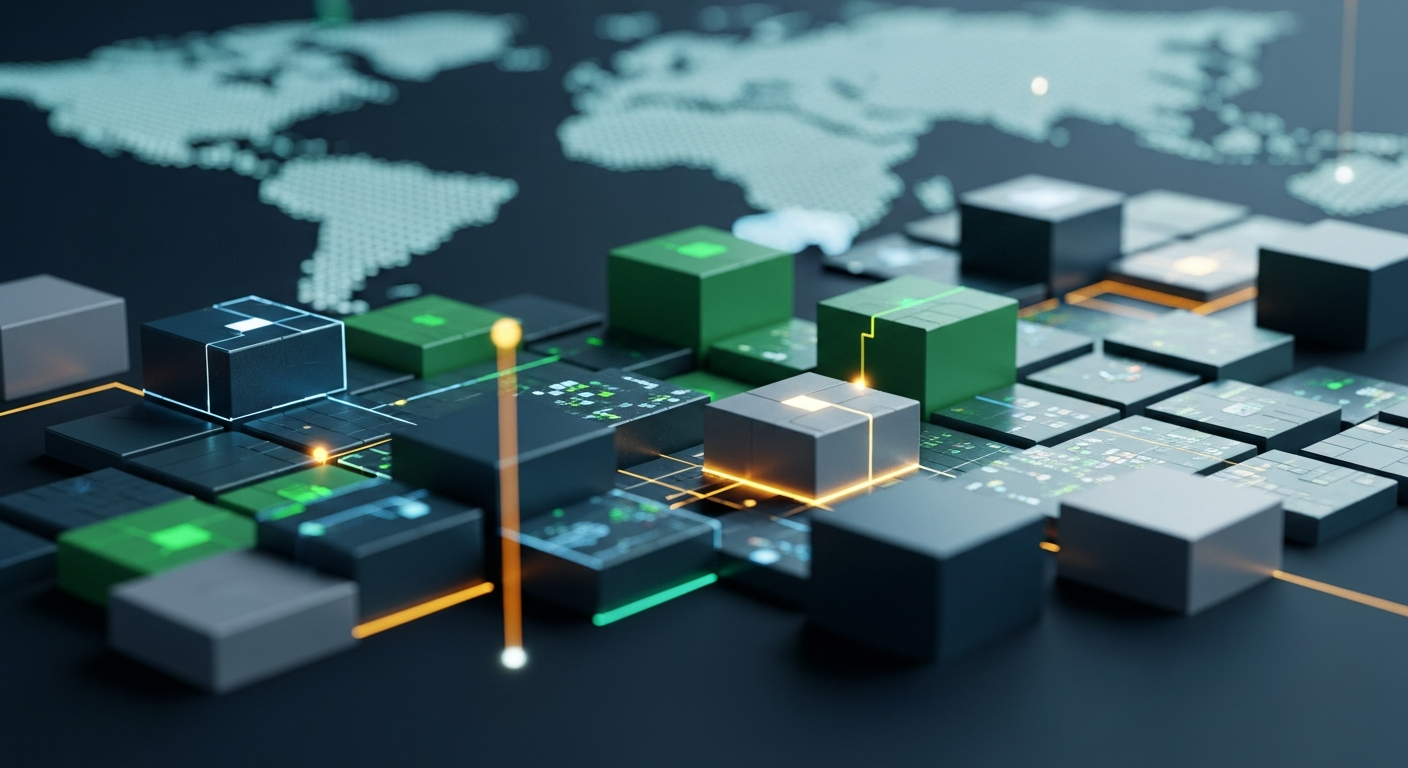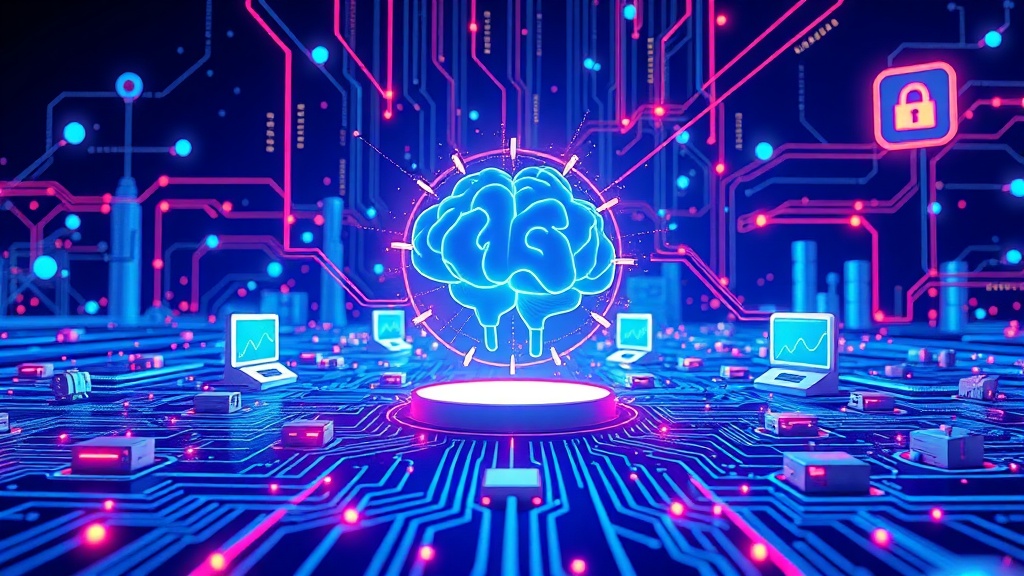
Understanding the Core Technologies: AI, IoT, and Edge Computing
The digital revolution is accelerating, driven by three foundational technologies: Artificial Intelligence (AI), the Internet of Things (IoT), and Edge Computing. These distinct yet interdependent domains are rapidly reshaping how data is generated, processed, and utilized, forming the bedrock of intelligent, distributed systems. Understanding each component individually is crucial before exploring their powerful synergy.
Definition of Artificial Intelligence (AI)
Artificial Intelligence encompasses the development of machine systems capable of performing tasks that typically require human intelligence. This includes learning, reasoning, problem-solving, perception, and language understanding. Key branches like machine learning and deep learning, utilizing neural networks, enable predictive analytics, pattern recognition, and autonomous decision-making across vast datasets.
Definition of the Internet of Things (IoT)
The Internet of Things refers to the vast network of interconnected physical devices, vehicles, home appliances, and other items embedded with sensors, software, and other technologies that allow them to connect and exchange data over the internet. These ‘things’ range from simple sensors and actuators to complex industrial machinery, continuously collecting environmental or operational data.
Definition of Edge Computing
Edge computing is a distributed computing paradigm that brings computation and data storage closer to the data sources, or ‘the edge’ of the network, rather than relying solely on a central cloud or data center. This proximity minimizes latency, conserves bandwidth, and enables real-time processing of data generated by IoT devices, crucial for time-sensitive applications and local decision-making.
Synergistic Integration: How AI, IoT, and Edge Intersect
The true power emerges when AI, IoT, and Edge Computing are integrated, forming a robust ecosystem that delivers unprecedented capabilities. This convergence allows for intelligent processing of real-world data right where it’s collected, enabling quicker insights and automated actions.
Edge AI: Processing at the Source
Edge AI involves deploying machine learning models directly onto edge devices or gateways, allowing data processing and inference to occur locally. This reduces reliance on continuous cloud connectivity, improves response times for applications like facial recognition or predictive maintenance on a factory floor, and enhances data privacy by minimizing raw data transmission.
IoT Data Ingestion and Pre-processing
IoT devices generate a continuous stream of raw, often noisy data. Edge computing acts as the first line of defense, performing initial data ingestion, filtering, aggregation, and pre-processing. This crucial step reduces the volume of data sent to the cloud, making subsequent cloud-based AI analytics more efficient and cost-effective.
Real-time Analytics and Decision Making
By combining IoT data generation with edge processing and AI analytics, real-time decision-making becomes feasible. For instance, in an autonomous vehicle, sensor data is processed instantly by onboard AI algorithms at the edge to make navigation and safety decisions, where even milliseconds of latency can be critical. This empowers immediate responses to dynamic conditions.
Feedback Loops and Autonomous Systems
The integration enables sophisticated feedback loops. IoT sensors gather data, edge computing processes it, AI algorithms make decisions or predictions, and then actuators (part of the IoT ecosystem) execute actions. This creates autonomous systems, from smart thermostats adjusting heating based on occupancy patterns to industrial robots adapting their movements based on real-time quality control data.
Architectural Paradigms for Converged Systems
Designing effective converged systems requires careful consideration of architectural patterns that balance distributed processing with centralized oversight. Modern architectures move beyond purely centralized cloud models to embrace more resilient, hybrid approaches.
Decentralized Data Processing Models
Decentralized models, often leveraging fog computing (a layer between the edge and cloud), distribute computational resources across the network. This minimizes single points of failure, improves fault tolerance, and allows for local data sovereignty, processing sensitive information closer to its origin without always sending it to a remote cloud.
Hybrid Cloud and On-Premise Integration
Many enterprises adopt hybrid cloud strategies, combining public cloud resources with private cloud or on-premise infrastructure. For AI, IoT, and Edge convergence, this means critical, low-latency applications run at the edge or on-premise, while less time-sensitive data analysis, model training (machine learning operations or MLOps), and archival occur in the cloud.
Data Orchestration and Management Frameworks
Effective data orchestration is vital for managing the flow of data from edge devices through fog layers to the cloud and back. Solutions like Kubernetes for containerization, MQTT for lightweight messaging, and robust data pipeline tools for ETL (Extract, Transform, Load) ensure seamless data movement, governance, and integrity across the distributed landscape.
Security at the Edge, Fog, and Cloud Layers
Security must be architected end-to-end, from the device to the cloud. This includes secure boot mechanisms, trusted platform modules (TPMs) on edge devices, encryption for data in transit and at rest, and implementing a Zero Trust architecture. API management and strong authentication protocols are crucial for protecting communication between layers.
Comparison of Traditional Cloud vs. Edge/Fog Architectures
| Feature | Traditional Cloud Architecture | Edge/Fog Architecture |
|---|---|---|
| Latency | High (due to distance) | Low (processing near source) |
| Bandwidth Usage | High (all data sent to cloud) | Low (pre-processed data sent) |
| Real-time Processing | Challenging for instant needs | Primary capability |
| Data Security & Privacy | Centralized control, data transfer risks | Distributed control, local processing |
| Resilience | Dependent on cloud connectivity | More resilient to network outages |
| Computational Power | Virtually unlimited | Resource-constrained at device level |
| Cost Model | Pay-as-you-go for compute/storage | Initial hardware investment, reduced transfer costs |
Key Benefits and Transformative Impact Across Industries
The convergence of AI, IoT, and Edge Computing is not merely a technological advancement; it’s a paradigm shift delivering profound benefits and driving digital transformation across diverse sectors.
Enhanced Operational Efficiency
By processing data locally and acting swiftly, operations become significantly more efficient. In manufacturing, industrial IoT sensors combined with edge AI enable predictive maintenance for machinery, reducing downtime and optimizing production lines. In logistics, real-time route optimization driven by edge analytics minimizes fuel consumption and delivery times.
Predictive Maintenance and Anomaly Detection
IoT devices gather vast telemetry data from assets. Edge-deployed AI models can analyze this data in real-time to detect subtle anomalies that signal impending equipment failure. This allows for proactive maintenance, preventing costly breakdowns and extending asset lifespan in sectors like energy, transportation, and heavy industry.
Hyper-Personalization and Customer Experience
Retail and consumer services leverage this convergence for hyper-personalization. Smart cameras (IoT) with edge AI can analyze foot traffic and customer behavior patterns in stores, while AI in smart homes learns user preferences, adjusting environments and services dynamically, leading to highly tailored customer experiences.
New Business Models and Revenue Streams
The ability to collect, analyze, and act on real-time data at the edge fuels innovative business models. For example, ‘as-a-service’ offerings for machinery, where customers pay for uptime or performance rather than ownership, are enabled by continuous monitoring and predictive capabilities. Digital twins create virtual replicas for simulation and optimization, unlocking new service opportunities.
Use Cases: Manufacturing, Healthcare, Smart Cities, Agriculture
- Manufacturing: Quality control automation with computer vision, robotic process automation, supply chain optimization.
- Healthcare: Remote patient monitoring, smart hospital operations, AI-powered diagnostics at the point of care (e.g., portable ultrasound with embedded AI).
- Smart Cities: Intelligent traffic management, smart street lighting, waste management optimization, public safety surveillance.
- Agriculture: Precision agriculture through drone-based imagery and soil sensors, automated irrigation, disease detection in crops and livestock.
Addressing Challenges and Ensuring Robust Implementation
While the benefits are substantial, implementing converged AI, IoT, and Edge systems presents complex challenges that require strategic planning and robust solutions.
Data Management and Governance Complexity
Managing heterogeneous data from countless IoT devices across distributed locations poses significant challenges. Establishing clear data governance policies, ensuring data quality, and implementing effective data lake and data mesh strategies are crucial. Tools for data ingress and egress management are also essential.
Interoperability and Standardization Issues
The IoT landscape is fragmented with diverse communication protocols (e.g., LoRaWAN, Zigbee, CoAP), hardware platforms (e.g., NVIDIA Jetson, OpenVINO), and data formats. Ensuring seamless interoperability between devices, gateways, and cloud services often requires extensive integration work and adherence to emerging industry standards.
Security Vulnerabilities and Privacy Concerns
Expanding the attack surface to include millions of edge devices introduces new security risks. Devices can be vulnerable to tampering, unauthorized access, and denial-of-service attacks. Robust cybersecurity measures, including encryption, access control, firmware updates, and blockchain for data integrity, are paramount. Privacy regulations like GDPR necessitate careful handling of personal data.
Computational and Power Constraints at the Edge
Edge devices, especially those remote or battery-powered, have limited computational power, memory, and energy resources. This necessitates highly optimized AI models (e.g., TensorFlow Lite) and efficient processing algorithms to run effectively without excessive power consumption or specialized hardware.
Talent Gap and Skill Requirements
Developing, deploying, and maintaining these complex systems requires a multidisciplinary skillset, encompassing expertise in embedded systems, cloud computing, data science, machine learning, networking, and cybersecurity. A significant talent gap exists, making workforce development and strategic hiring critical.
Strategic Roadmapping for Future-Proof Infrastructure
To successfully navigate the complexities and unlock the full potential of AI, IoT, and Edge convergence, organizations must adopt a strategic, phased approach.
Phased Implementation Approaches
Rather than a ‘big bang’ deployment, a phased approach is recommended. Start with pilot projects focusing on specific high-impact use cases. Learn from these initial deployments, refine the architecture, and then scale incrementally. This iterative strategy allows for continuous improvement and risk mitigation.
Selecting the Right Technology Stack
Choosing appropriate hardware (e.g., microcontrollers, edge gateways), software platforms, communication protocols, and cloud services is critical. Factors such as scalability, vendor lock-in, open-source compatibility, and ecosystem support should guide these decisions. Evaluate specific AI frameworks for edge deployment, like OpenVINO or TensorFlow Lite, based on device constraints.
Developing a Comprehensive Security Posture
A multi-layered security strategy is non-negotiable. This includes strong device authentication, secure boot processes, encrypted communication channels, intrusion detection systems, and regular security audits. Implementing a Zero Trust architecture, where no entity is trusted by default, is increasingly vital for distributed environments.
Scalability and Future-Readiness Planning
Design the architecture with future growth in mind. Consider how easily new devices, applications, and data sources can be integrated. Leverage containerization (e.g., Docker) and orchestration tools (e.g., Kubernetes) for flexible deployment and management. Ensure the infrastructure can adapt to evolving AI models and emerging IoT standards.
Measuring ROI and Performance Metrics
Clearly define key performance indicators (KPIs) and return on investment (ROI) metrics before deployment. Track operational efficiencies, cost savings, revenue generation from new services, and improvements in customer satisfaction. Continuously monitor the performance of edge AI models and IoT devices to ensure they deliver intended value.
The convergence of Artificial Intelligence, the Internet of Things, and Edge Computing represents a pivotal shift in digital infrastructure. It enables organizations to move beyond reactive data analysis to proactive, intelligent, and autonomous operations. By strategically architecting these converged systems, enterprises can build robust, scalable, and future-proof foundations that drive innovation, enhance efficiency, and create sustainable competitive advantages in an increasingly data-driven world.