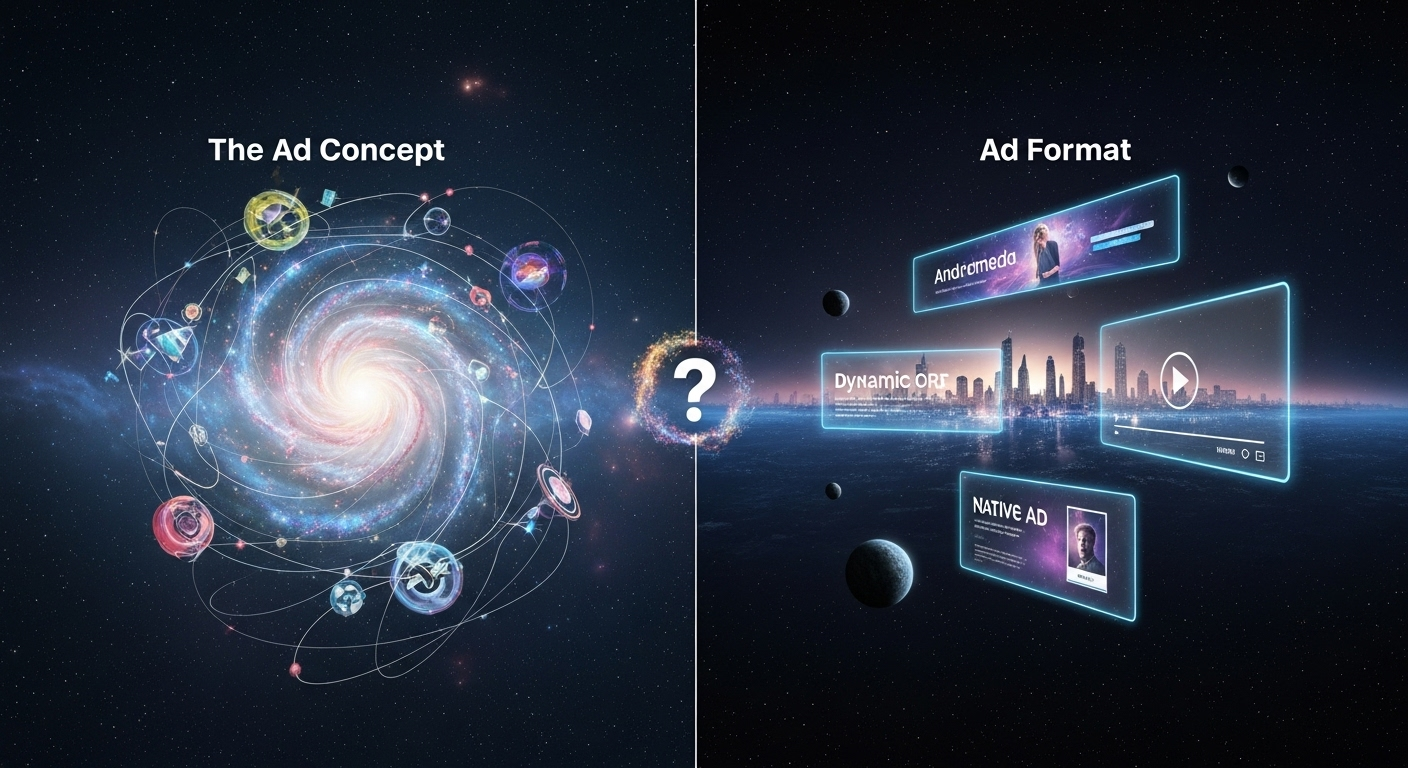
In the sprawling, hyper-competitive cosmos of modern marketing—a landscape we can call ‘Andromeda’—entrepreneurs and marketing leaders constantly grapple with a foundational question: what truly drives campaign success? Is it the transcendent power of a brilliant, emotionally resonant ‘ad concept,’ or the innovative, technologically advanced ‘ad format’ that delivers it? For decades, the prevailing wisdom championed the big idea. A groundbreaking concept, it was believed, could triumph regardless of its medium. It was the story, the hook, the psychological trigger that mattered most. But as Andromeda has expanded, filled with new dimensions like augmented reality, interactive short-form video, and AI-driven personalization, the delivery mechanism has become a message in itself. The debate is no longer a simple binary choice but a complex strategic puzzle. Getting it right means unlocking unprecedented growth; getting it wrong means becoming just another silent signal lost in the cosmic noise.
Understanding this distinction is critical for survival and dominance in the current market. The ‘ad concept’ is the soul of the campaign. It is the core message, the narrative, the emotional promise, and the strategic insight into consumer psychology. A powerful concept forges connection, builds brand affinity, and makes a message memorable long after the impression has been served. Think of it as the recurring melody in a symphony—it’s the part that resonates and sticks with the audience. On the other side of this equation is the ‘ad format,’ which is the vessel. It’s the tangible, structural delivery of the concept, from a static image in a social feed to an immersive, full-screen mobile experience or a voice-activated ad on a smart speaker. The format dictates the rules of engagement, defines the user experience, and often determines the initial moment of attention. An innovative format can surprise, delight, and engage a user in ways a traditional one cannot, creating a powerful first impression before the core message is even fully processed.
The stakes in this debate have been raised exponentially by shifts in consumer behavior and technology. Attention spans have famously shortened, with marketers often having mere seconds to make an impact. In this environment, an arresting format might be the only thing that earns a concept the time it needs to land. Conversely, a consumer who is stopped by a novel format but met with a hollow or irrelevant concept will feel tricked, leading to frustration and brand erosion. The challenge for marketers in Andromeda is that the concept and format are no longer independent variables. They are deeply intertwined, each capable of amplifying or nullifying the other. A concept designed for long-form storytelling will fail spectacularly if squeezed into a six-second bumper ad, just as a simple promotional message will feel underwhelming inside a complex, interactive AR environment. Therefore, the question is not simply “Which matters more?” but rather, “How must we co-develop the concept and the format to create a sum that is far greater than its parts?” This inquiry is the key to navigating the complexities of Andromeda and building campaigns that don’t just reach audiences, but move them.
The Unyielding Power of the Core Concept
Before a single pixel is rendered or a media buy is placed, a campaign is born from an idea. This central ‘ad concept’ remains the bedrock of effective advertising, a truth that persists even in the most technologically advanced marketing landscapes. The concept is the strategic heart of the message—it’s the story, the emotional hook, and the unique value proposition distilled into a form that can connect with a human being on a fundamental level. A truly great concept transcends its medium because it taps into universal truths, desires, or pain points. It is the element responsible for making a brand memorable, relatable, and, ultimately, desirable. Research has consistently shown that the creative itself is the single most significant contributor to sales lift, responsible for nearly half of a brand’s sales growth from advertising. This highlights that no amount of sophisticated formatting or precision targeting can rescue a weak, uninspired, or irrelevant message. The concept is what earns a brand a place in the consumer’s mind, creating lasting brand equity that pays dividends long after the campaign has ended. It is the difference between an ad that is simply seen and an ad that is felt, remembered, and acted upon. A powerful concept can turn a passive viewer into an active brand advocate, sparking conversations and generating organic reach that far exceeds the paid media spend. It is the engine of virality and the foundation of a loyal customer base.
When the Medium Becomes the Message
While a strong concept is essential, the ‘ad format’ is far from a passive delivery system. In the modern marketing ecosystem, the format is an active and powerful variable in the equation of success. The choice of format directly influences how an audience receives and interacts with a message, and in many cases, the format itself can be the primary driver of engagement. The evolution from static banners to interactive, immersive, and user-centric formats has fundamentally changed the advertiser-consumer dynamic. Formats like short-form video ads, augmented reality try-on experiences, and playable ads for mobile games are not just containers for a concept; they are experiences. They invite participation, create utility, and provide entertainment, all of which can significantly enhance a user’s perception of the brand. For example, a well-executed AR ad that allows a user to visualize a piece of furniture in their own living room offers genuine value beyond the product itself. This positive, helpful interaction becomes intertwined with the brand, making the core message more persuasive. Diverse and engaging ad formats have been shown to drive higher engagement than monotonous ones, as variety prevents the user desensitization often referred to as “banner blindness.” The format is the first point of contact, and an innovative or perfectly chosen format can stop a user mid-scroll, earning the crucial few seconds needed for the core concept to work its magic. Ignoring the strategic importance of the format is like writing a masterpiece of a speech and then choosing to mumble it in a crowded room—the brilliance of the message is lost without effective delivery.
The Critical Interplay of Concept and Format
Neither the ad concept nor the ad format exists in a vacuum. The most successful campaigns are those where the creative idea and the delivery mechanism are not just aligned, but synergistically intertwined. This perfect marriage creates an experience that is seamless, impactful, and deeply resonant with the target audience. The friction, or lack thereof, between the what (concept) and the how (format) can ultimately determine a campaign’s fate.
When Concept and Format Align
The magic of modern advertising happens at the intersection of a brilliant idea and the perfect medium to express it. When concept and format are in perfect harmony, the result is an ad that feels intuitive, engaging, and native to the platform on which it appears. For example, Spotify’s annual “Wrapped” campaign is a masterclass in this synergy. The concept is personalization and data-driven storytelling—celebrating the user’s unique listening habits. The format—a shareable, mobile-first, story-style slideshow—is perfectly designed to deliver this personal narrative in a way that encourages social sharing. The format is not merely a container for the data; it is an integral part of what makes the concept so compelling and viral. Similarly, Burger King’s “Whopper Detour” campaign used geofencing technology as its format. The concept was audacious and clever: offering a Whopper for one cent, but only if ordered via their app from within 600 feet of a McDonald’s. Here, the interactive, location-based format was inseparable from the rebellious and witty creative concept. This perfect alignment generated massive buzz, drove over a million app downloads, and created a memorable brand experience that a simple banner ad could never have achieved.
The Cost of Misalignment
Conversely, a disconnect between the creative concept and the chosen ad format can be jarring and ineffective, dooming even the most brilliant ideas or advanced technologies. Imagine a deeply emotional, slow-paced storytelling concept—designed to build a profound connection with the viewer—being forced into a six-second, non-skippable YouTube bumper ad. The format’s brevity would gut the concept of its emotional power, leaving the audience confused and the message lost. The core idea, however strong, is simply not built for that delivery mechanism. This often happens when a single creative asset is expected to perform across all platforms without adaptation. Likewise, an innovative format can be wasted on a weak concept. Consider a brand investing heavily in a sophisticated augmented reality experience, only to use it to deliver a generic “20% off” message. The user, intrigued by the technology, is ultimately let down by the lack of a compelling story or value proposition. This misalignment can make the brand appear gimmicky or out of touch, as they have clearly invested in the “how” without considering the “why.” The format promises an engaging experience, but the concept fails to deliver, leading to a sense of disappointment that can damage brand perception more than a simple, honest ad would have.
Navigating the Dynamics of the Modern Ad Landscape
The relationship between concept and format is further complicated by the powerful forces of data and platform-specific user behavior. In today’s digital world, success requires more than just a great idea and a fitting package; it demands a sophisticated understanding of personalization and the unique cultural context of each advertising channel. These factors add new layers to the strategic decisions marketers must make.
The Role of Data and Personalization
The rise of data-driven marketing has revolutionized how both concepts and formats are developed and deployed. Instead of broadcasting a single message to a mass audience, marketers can now tailor their creative concepts to resonate with specific audience segments. This is where data transforms creativity from an intuitive art into a precise science. By analyzing user behavior, preferences, and demographic information, brands can craft message variations that speak directly to the motivations of different groups. For instance, an e-commerce brand might show a product-focused ad to a new customer but a discount-focused ad to a user who abandoned their cart. This practice, known as Dynamic Creative Optimization (DCO), automatically assembles ad components—like headlines, images, and calls-to-action—into personalized ads at scale. Data not only shapes the concept but also dictates the ideal format. Analytics might reveal that a younger demographic segment responds best to short-form video ads on platforms like TikTok, while an older segment might be more receptive to detailed carousel ads on Facebook. AI and machine learning can now predict which combinations of creative and format will perform best for each individual, moving beyond segmentation to true one-to-one personalization. This data-informed approach ensures that the ad is not only seen by the right person but is also delivered in the most effective and resonant way possible.
Navigating Platform-Specific Nuances
Every digital platform is its own unique ecosystem with a distinct culture, user expectations, and set of unspoken rules. An ad that performs brilliantly on LinkedIn would likely fall flat on TikTok, and vice versa. This is because the user’s mindset and intent vary dramatically between platforms. A user on LinkedIn is in a professional, career-oriented headspace, making them receptive to long-form content, industry insights, and B2B solutions. In contrast, a TikTok user expects fast-paced, entertaining, and authentic short-form video content that aligns with current trends. Therefore, the ad format must be native to the platform to feel authentic. Using vertical video on TikTok and Instagram Reels is non-negotiable, while high-quality, polished imagery works best for Instagram’s main feed. Beyond the technical specifications of the format, the creative concept itself must be adapted. Successful brands don’t just repurpose content; they tailor their message’s tone and style. A brand might showcase its professional expertise and case studies on LinkedIn, while on TikTok, it might create a humorous, behind-the-scenes video featuring its employees. Maintaining brand consistency while adapting the concept and format to each platform’s unique culture is a critical balancing act for achieving success in a multi-channel world.
Redefining the Winning Formula in Andromeda
In the final analysis, pitting the ‘ad concept’ against the ‘ad format’ creates a false dichotomy. The debate is not about which is more important, but how they must be developed in unison to thrive in the complex Andromeda landscape. The winning formula is no longer a sequential process where a great idea is simply poured into an available format. Instead, it is a dynamic, integrated strategy where the concept and format inform and shape each other from the very beginning. A brilliant concept can inspire the use of an innovative format, and the possibilities of a new format can unlock groundbreaking creative ideas. Think of them as the twin engines of a starship: both must function at peak performance and in perfect synchronization to propel the mission forward. If one falters, the other cannot compensate, and the ship will drift aimlessly through the cosmos. An idea without a context-aware delivery is just noise, and a flashy delivery without a meaningful idea is just a gimmick.
For the modern marketer, this means embracing a more holistic and platform-aware creative process. The strategy should begin with deep insights into the audience and the platforms where they spend their time. The question should not be, “What is our message?” but rather, “What is the most engaging way to convey our message to this specific audience on this specific platform?” This approach ensures that the format is considered a core creative ingredient, not an afterthought. It means that creative teams and media planners must collaborate more closely than ever, with data analysts providing the crucial feedback loop that guides their decisions. As new formats emerge, from conversational ads within AI assistants to immersive experiences in the metaverse, the ability to co-develop concepts and formats will become the single greatest differentiator between brands that lead and those that are left behind. The true victors in Andromeda will be those who understand that the most powerful message is one where the medium and the meaning are one and the same.