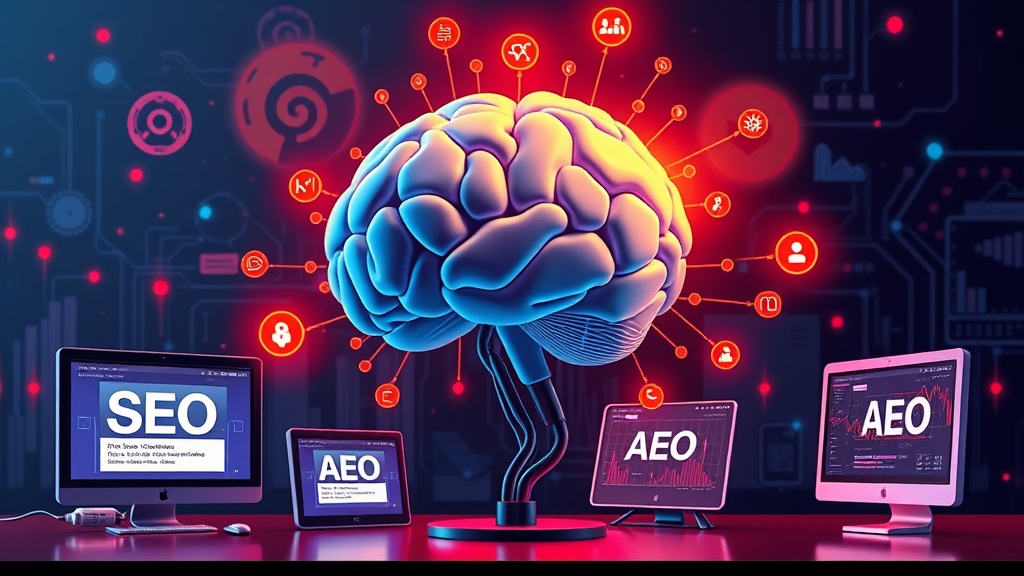
The Convergence of AI and Content Strategy: A New Paradigm
In the rapidly evolving digital ecosystem, content strategy is no longer a static discipline but a dynamic, AI-augmented imperative. Businesses and strategists must transcend traditional content creation methodologies, embracing artificial intelligence to unlock unprecedented levels of optimization across all digital touchpoints. This guide delves into the technical integration of AI into content strategy, offering a blueprint for mastering Search Engine Optimization (SEO), Answer Engine Optimization (AEO), Geographic Engine Optimization (GEO), and Artificial Intelligence Optimization (AIO) for universal digital dominance.
The Paradigm Shift: AI’s Role in Modern Content Strategy
Artificial intelligence is fundamentally reshaping content strategy by automating, augmenting, and personalizing various stages of the content lifecycle, from ideation to distribution and analysis. It allows for deeper insights into user intent, predictive content performance, and scalable content generation, thereby enhancing overall digital efficacy.
Generative AI and Natural Language Processing (NLP)
Generative AI models, such as large language models (LLMs) like GPT and BERT, powered by deep learning architectures like transformers, are pivotal in content creation. These models excel at tasks like text generation, summarization, translation, and stylistic adaptation. NLP, a subfield of AI, enables machines to understand, interpret, and generate human language, which is crucial for semantic search, entity recognition, and sentiment analysis within content strategies.
Predictive Analytics and Machine Learning
Machine learning algorithms are employed for predictive analytics, forecasting content trends, user engagement, and conversion rates based on historical data. This capability allows strategists to proactively create content that resonates with target audiences, optimizing resource allocation and maximizing return on investment. Tools leveraging reinforcement learning can even fine-tune content delivery based on real-time user interactions.
SEO (Search Engine Optimization) in the AI Era
AI significantly enhances traditional SEO practices by enabling more sophisticated keyword research, optimizing content creation for semantic relevance, and improving technical SEO aspects. It moves beyond keyword stuffing to focus on topical authority, user intent, and comprehensive coverage, aligning content with modern search engine algorithms that heavily utilize AI for ranking.
AI-driven SEO tools leverage machine learning to analyze vast datasets, identifying emerging search trends, long-tail keyword opportunities, and competitor strategies with unparalleled precision. This allows for a proactive approach to content creation, ensuring relevance and visibility within search engine results pages (SERPs).
AI for Advanced Keyword Research and Semantic SEO
AI algorithms analyze search queries, user behavior, and industry trends to uncover high-potential keywords, including latent semantic indexing (LSI) keywords and conversational phrases. Semantic search is paramount, and AI helps identify knowledge gaps and topic clusters, allowing for the creation of authoritative content that fully addresses a user’s intent, moving beyond exact-match keywords to comprehensive thematic coverage. Tools can identify entities and their relationships within content, aligning with search engines’ knowledge graphs.
AI for Content Generation and Optimization
AI writing assistants generate drafts, expand on ideas, and optimize existing content for readability, tone, and SEO parameters. These tools can suggest internal linking opportunities, optimize meta descriptions, and ensure content adheres to E-E-A-T (Experience, Expertise, Authoritativeness, Trustworthiness) principles. By analyzing top-performing content, AI can identify patterns and suggest improvements for structure, length, and media integration, ensuring core web vitals are met.
AI for Technical SEO Enhancements
AI assists in identifying and resolving technical SEO issues at scale. It can analyze site architecture, detect broken links, identify crawl budget inefficiencies, and optimize image alt text and structured data markup, such as JSON-LD, to improve indexability and crawlability. AI-powered tools can also monitor server logs to detect anomalies that might affect search engine performance.
AEO (Answer Engine Optimization) and Conversational AI
AEO focuses on optimizing content to directly answer user queries, particularly for featured snippets, voice search, and conversational interfaces. AI is central to understanding natural language queries and formatting content for direct, concise answers, which is crucial in an era dominated by smart assistants and voice-activated devices.
Answer Engine Optimization prioritizes clarity, conciseness, and directness in content, ensuring that information can be easily extracted and presented as a definitive answer by AI-powered search engines and virtual assistants. This involves careful structuring and semantic markup to facilitate automated comprehension.
Understanding User Intent and Query Formulation
AI algorithms, particularly those employing natural language understanding (NLU), excel at discerning the precise intent behind a user’s query—be it informational, navigational, or transactional. This understanding guides content creation towards providing direct, unambiguous answers. Prompt engineering becomes critical for crafting content that responds effectively to AI-driven queries.
Structured Data and Rich Snippets
Implementing Schema.org markup, specifically JSON-LD, is fundamental for AEO. AI tools can help generate and validate this structured data, making it easier for search engines to understand the context and purpose of content, thus increasing the likelihood of appearing in rich snippets, knowledge panels, and featured snippets. Specific types like HowTo, FAQPage, and QAPage are highly valuable.
Voice Search Optimization with AI
Optimizing for voice search involves creating content that responds to natural, conversational language patterns. AI can analyze common voice query structures and help tailor content to be concise, direct, and provide immediate answers, often leveraging long-tail keywords and question-based phrases. This often means focusing on the ‘who, what, when, where, why, how’ aspects of a topic.
GEO (Geographic Engine Optimization) with AI Precision
GEO focuses on optimizing content and digital presence for specific geographic locations, from global regions to hyper-local neighborhoods. AI enhances GEO by enabling highly localized content generation, personalized local experiences, and precise audience targeting based on geographic data, local nuances, and real-time proximity.
Geographic Engine Optimization leverages AI to understand the distinct cultural, linguistic, and economic characteristics of specific locales, allowing for the creation and distribution of content that resonates deeply with local audiences. This precision ensures businesses effectively capture local market share and build community engagement.
AI for Local SEO and Google Business Profile
AI-powered analytics can optimize Google Business Profile (GBP) listings by suggesting relevant categories, services, and local keywords. It can also analyze customer reviews to identify common themes, allowing businesses to respond effectively and improve their local reputation. Geo-tagging and location intelligence are critical components, often integrated with customer relationship management (CRM) systems.
Localized Content Generation and Personalization
AI can generate localized content variants, adapting language, cultural references, and relevant local landmarks to resonate with specific geographic audiences. This extends to personalizing marketing messages based on a user’s real-time location and demographic data, utilizing techniques like geo-fencing and localized content delivery networks (CDNs).
Predictive Local Market Analysis
Machine learning models analyze local search trends, competitor activity, and demographic shifts to identify lucrative local markets and anticipate changes in consumer behavior. This allows for proactive content and marketing adjustments, ensuring businesses remain competitive in highly fragmented local ecosystems.
AIO (Artificial Intelligence Optimization): The Holistic Approach
AIO represents the comprehensive integration of AI across all aspects of digital optimization, creating an intelligent, self-optimizing ecosystem. It goes beyond individual optimizations, leveraging AI for continuous learning, predictive performance, and highly personalized user experiences across every digital touchpoint.
Artificial Intelligence Optimization is the culmination of deploying AI strategically across SEO, AEO, and GEO, resulting in a synergistic system where data-driven insights from one area inform and enhance the others. This creates a highly adaptable and efficient content strategy that consistently improves performance metrics.
Personalization at Scale and Dynamic Content
AI enables hyper-personalization by analyzing individual user behavior, preferences, and journey stage. It can dynamically generate or recommend content, offers, and experiences tailored to each user in real time, whether on a website, email, or mobile application. This involves real-time content delivery systems and adaptive user interfaces.
Predictive Content Performance and Optimization Loops
AIO platforms use machine learning to predict content performance metrics—engagement rates, conversion probabilities, and even future SEO rankings. This allows for continuous, AI-driven optimization loops where content is constantly refined based on predicted outcomes and actual performance data. This includes A/B testing automation and multivariate testing.
AI-Driven Analytics and Insights
Beyond traditional analytics, AI offers deeper insights into complex data patterns, identifying correlations and causalities that human analysts might miss. This includes anomaly detection, sentiment analysis of user feedback, and comprehensive journey mapping, informing strategic adjustments across the entire digital landscape. Customer Data Platforms (CDPs) play a crucial role in aggregating and activating this data.
Technical Implementation and Strategic Considerations
Implementing an AI-powered content strategy requires robust technical infrastructure, careful tool selection, and a clear understanding of ethical implications. Data governance, integration capabilities, and human oversight remain critical.
Data Infrastructure and Integration
A strong data foundation is paramount. This includes secure data lakes for raw content and user data, integration with Customer Data Platforms (CDPs) for unified customer profiles, and robust Content Management Systems (CMS) capable of dynamic content delivery. APIs are crucial for connecting various AI tools and data sources.
Tooling and Platforms
A suite of AI-powered tools is essential, including generative AI platforms for content creation, advanced SEO/AEO suites (e.g., Semrush, Ahrefs with AI features), GEO-specific tools for local SEO, and comprehensive analytics platforms. Strategic selection and integration of these tools are key to avoiding data silos and ensuring seamless workflows.
Ethical AI and Content Governance
Organizations must establish clear guidelines for ethical AI use, addressing biases in AI-generated content, ensuring data privacy (e.g., GDPR, CCPA compliance), and maintaining brand voice and accuracy. Human review and oversight are indispensable to prevent misinformation and uphold quality standards, especially concerning fact-checking and brand safety.
Measuring Success and Future Outlook
Evaluating the success of an AI-powered content strategy requires a blend of traditional KPIs and new metrics that reflect AI’s unique contributions. The future promises even deeper integration and autonomy for AI in content.
Key Performance Indicators (KPIs) for AI-Powered Content
Beyond traditional metrics like organic traffic, rankings, and conversions, KPIs for AI-powered content include enhanced content velocity, improved content quality scores, personalization effectiveness metrics, and predictive accuracy of AI models. Monitoring these provides a holistic view of the strategy’s impact.
The Evolving Landscape of AI and Search
The trajectory of AI in search engines points towards increasingly intelligent, personalized, and conversational search experiences. Future iterations will likely feature more sophisticated multimodal AI, greater emphasis on user experience signals, and highly adaptive content algorithms. Continuous learning and adaptation are vital for staying ahead.
| Optimization Area | Key AI Application | Technical Impact |
|---|---|---|
| SEO | Generative AI, NLP, Predictive Analytics | Improved semantic relevance, E-E-A-T, long-tail keyword capture |
| AEO | NLU, Structured Data Automation, Voice Recognition | Enhanced direct answers, rich snippets, voice search visibility |
| GEO | Location Intelligence, Demographic Analysis, Local Content Generation | Hyper-local targeting, personalized local experiences, GBP optimization |
| AIO | Machine Learning, Deep Learning, Predictive Modeling | Personalization at scale, continuous optimization, intelligent analytics |
Conclusion: Embracing the AI-First Content Imperative
Mastering AI-powered content strategy is no longer a competitive advantage but a fundamental requirement for digital survival and growth. By strategically integrating artificial intelligence across SEO, AEO, GEO, and AIO, organizations can unlock unparalleled efficiencies, deliver hyper-personalized experiences, and achieve universal visibility in an increasingly complex digital world. The future of content is intelligent, adaptive, and deeply optimized by AI, demanding a proactive and technically proficient approach from all digital strategists.