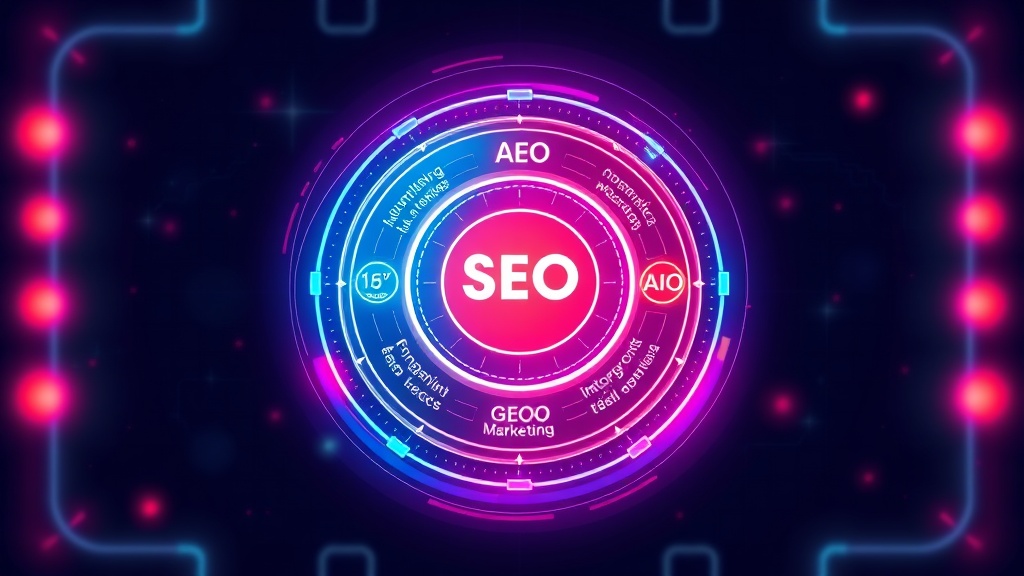
In the rapidly evolving landscape of digital presence, the fragmentation of optimization efforts often leads to suboptimal results and inefficient resource allocation. Traditional approaches to Search Engine Optimization (SEO), Voice Search Optimization (AEO), and Localized Optimization (GEO) are powerful in isolation, yet they fall short of harnessing the full potential of an integrated, intelligent ecosystem. This foundational challenge necessitates a transformative paradigm: All-In-One Optimization (AIO). AIO represents a strategic convergence of Artificial Intelligence (AI), advanced automation, and indispensable human intelligence, designed to create a unified, self-optimizing digital strategy that transcends conventional boundaries and drives unparalleled growth.
The Dawn of All-In-One Optimization (AIO): A Foundational Shift
AIO signifies a holistic approach where disparate digital strategies coalesce into a singular, intelligent framework, allowing organizations to leverage AI for deep insights, automation for scalable execution, and human oversight for strategic direction and ethical governance.
What is AIO and Why Does it Matter?
All-In-One Optimization (AIO) is a comprehensive strategic framework that integrates advanced technologies like Artificial Intelligence and automation with critical human oversight to create a dynamic, self-improving digital ecosystem. It matters because it resolves the inherent inefficiencies and limitations of siloed optimization efforts, such as traditional SEO, AEO, and GEO, by providing a unified, intelligent, and adaptive approach to content creation, distribution, user engagement, and performance analysis. This integrated methodology ensures that every digital touchpoint is optimized in harmony, maximizing overall effectiveness and Return on Investment (ROI) while adapting to continuously shifting market dynamics and algorithm updates.
The Limitations of Siloed Digital Strategies
Historically, digital marketing and optimization have operated in isolated verticals. SEO teams focused on keyword rankings and technical site health, AEO specialists targeted voice queries and conversational interfaces, and GEO experts concentrated on local search visibility and geofencing campaigns. While effective within their narrow scopes, these siloed strategies often created disjointed user experiences, redundant efforts, and missed opportunities for cross-channel synergy. For example, a compelling piece of content optimized for traditional search might perform poorly in a voice search context without specific AEO considerations, or fail to convert locally without GEO-specific calls to action. The lack of an overarching intelligence to connect these dots leads to fragmented data, inconsistent brand messaging, and an inability to adapt swiftly to the holistic needs of the modern digital consumer journey. This fragmentation ultimately hinders the true potential for a cohesive and truly adaptive digital presence, emphasizing the need for a unified AIO framework.
AI as the Engine of AIO: Enhancing Intelligence and Prediction
Artificial Intelligence forms the core analytical and generative engine of AIO, enabling unprecedented levels of data processing, predictive modeling, and content generation that far exceed human capabilities in terms of speed and scale.
Generative AI and Predictive Analytics in Content Strategy
Generative Artificial Intelligence, powered by Large Language Models (LLMs) like GPT-4 or Gemini, revolutionizes content strategy within an AIO framework by automating the creation of high-quality, contextually relevant content at scale. These models can draft blog posts, social media updates, product descriptions, and even technical documentation based on specified parameters, target audiences, and desired tones. Beyond mere generation, AI-driven predictive analytics analyzes vast datasets—including historical performance, real-time user behavior, market trends, and competitive intelligence—to forecast content effectiveness. This capability allows strategists to identify optimal content topics, formats, and distribution channels, predict engagement levels, and anticipate future user needs or algorithm shifts. For instance, predictive models can pinpoint content gaps, suggest repurposing opportunities, and even recommend specific adjustments to existing content to improve its performance across various optimization vectors, including SEO, AEO, and GEO, ensuring maximum impact before deployment.
Machine Learning for User Experience Personalization
Machine Learning (ML) algorithms are fundamental to delivering hyper-personalized user experiences (UX) within an AIO ecosystem. By continuously analyzing user interactions, browsing histories, demographic data, and stated preferences, ML models can dynamically adapt website layouts, content recommendations, product offerings, and even promotional messages in real-time. Collaborative filtering and reinforcement learning techniques identify intricate patterns in user behavior, allowing platforms to present content that is most relevant to an individual’s current intent or long-term interests. For example, an e-commerce site utilizing ML might show different product carousels to returning customers based on their past purchases, while a media site might curate a unique homepage news feed for each visitor. This level of personalization extends beyond simple segmentation; it involves continuous learning and adaptation, improving the user journey at every touchpoint. The result is increased engagement, higher conversion rates, and a significantly more satisfying and sticky user experience, directly contributing to AIO’s overarching goal of holistic optimization.
Automation: Scaling Efficiency and Precision in AIO Workflows
Automation plays a critical role in AIO by streamlining repetitive tasks, ensuring consistency, and executing complex workflows with speed and precision, freeing human strategists to focus on higher-level creative and strategic initiatives.
Robotic Process Automation (RPA) in Content Distribution
Robotic Process Automation (RPA) within an AIO strategy automates the systematic and error-free distribution of content across diverse digital channels. RPA bots can manage tasks such as scheduling posts on social media platforms, uploading articles to Content Management Systems (CMS), distributing press releases to news outlets, or updating product information across multiple e-commerce sites. These bots can be configured to follow predefined rules, ensuring brand consistency, adherence to platform-specific formatting requirements, and optimal timing for maximum reach. For example, after an article is drafted by Generative AI and refined by a human editor, an RPA bot can automatically publish it, generate tracking links, and notify relevant internal teams, all without manual intervention. This not only significantly reduces the time and human effort involved in content dissemination but also minimizes the potential for human error, ensuring that content reaches its intended audience efficiently and reliably across the entire digital footprint.
Automated Data Analysis and Reporting
Automated data analysis and reporting are indispensable components of an effective AIO strategy, providing real-time insights and accelerating decision-making. AI-powered analytics platforms automatically collect, clean, and process vast quantities of data from various sources, including website analytics platforms like Google Analytics 4, social media insights, Customer Relationship Management (CRM) systems, and ad campaign performance dashboards. Machine Learning algorithms then identify trends, anomalies, and correlations that would be nearly impossible for human analysts to uncover manually within reasonable timeframes. Automated reporting tools can generate customizable dashboards and reports, highlighting Key Performance Indicators (KPIs), identifying underperforming assets, and pinpointing areas for optimization across SEO, AEO, and GEO. This continuous, intelligent feedback loop empowers strategists to make data-driven adjustments proactively, shifting from reactive problem-solving to proactive optimization. Such automation ensures that strategic decisions are always informed by the most current and comprehensive performance metrics, driving continuous improvement within the AIO framework.
The Indispensable Role of Human Intelligence in AIO Synergy
Despite the power of AI and automation, human intelligence remains the cornerstone of AIO, providing critical strategic oversight, ethical judgment, creative nuance, and emotional intelligence that machines cannot replicate.
Strategic Oversight and Ethical AI Governance
Human intelligence is paramount for providing strategic oversight and establishing robust ethical AI governance within an AIO framework. While AI excels at data processing and pattern recognition, it lacks intrinsic understanding of context, cultural nuances, or societal values. Human strategists are essential for defining the overarching goals of the digital strategy, interpreting complex AI outputs, and making high-level decisions that align with business objectives and brand identity. Furthermore, humans must design and enforce ethical guidelines for AI usage, ensuring fairness, transparency, and accountability in algorithms to prevent bias, misinformation, or privacy breaches. This includes regularly auditing AI models, challenging their recommendations, and ensuring compliance with regulations like General Data Protection Regulation (GDPR) or California Consumer Privacy Act (CCPA). Without human ethical oversight, AI systems could inadvertently perpetuate harmful biases or generate content that damages brand reputation, underscoring the indispensable role of human judgment in responsible AIO deployment.
Creative Insight and Nuance in Content Development
While generative AI can produce content at scale, human intelligence provides the creative insight and nuanced understanding essential for truly compelling and differentiated content development. AI algorithms are trained on existing data, meaning their output can sometimes lack originality, emotional depth, or the unique ‘spark’ that resonates deeply with human audiences. Human content creators introduce innovative ideas, craft compelling narratives, inject humor or pathos, and ensure that content reflects genuine empathy and understanding of the target audience’s complex emotional landscape. They refine AI-generated drafts, adding a distinctive voice, cultural relevance, and the subtle linguistic nuances that build genuine connection and trust. This human touch is critical for establishing brand personality, fostering community, and creating evergreen content that stands out in a crowded digital space. The synergy occurs when AI handles the grunt work of drafting and optimization, allowing human creatives to elevate the content to an art form, ensuring that the brand’s message is not only optimized for discovery but also deeply impactful.
Integrating AIO with Specialized Optimization Disciplines
AIO acts as the unifying intelligence that orchestrates and enhances specialized optimization disciplines, ensuring that SEO, AEO, and GEO efforts are not just coordinated but synergistically elevated for superior performance.
Advanced SEO and Semantic Search Optimization
AIO transforms traditional SEO by integrating advanced Artificial Intelligence capabilities, moving beyond keyword matching to embrace semantic search optimization and Entity Relationship Management (ERM). AI analyzes vast web data, identifying latent semantic relationships, user intent, and how entities (people, places, things, concepts) connect within a Knowledge Graph. This allows AIO systems to inform content creation that answers complex queries comprehensively, targets Featured Snippets, and optimizes for People Also Ask (PAA) sections. It also enhances technical SEO by autonomously identifying and rectifying issues like broken links, crawlability errors, and slow page load times. Furthermore, AIO leverages Machine Learning to predict algorithm updates, allowing proactive adjustments to content and site structure. This ensures that content is not just found, but understood and valued by search engines, leading to significantly higher organic visibility and authority. The outcome is a dynamic, continuously optimized SEO strategy that adapts to the evolving sophistication of search engine algorithms, providing a substantial competitive advantage.
Accelerating AEO: Conversational Interface Dominance
AIO dramatically accelerates AEO (Audience Engagement Optimization), particularly for conversational interfaces and voice search. By leveraging Natural Language Processing (NLP) and Machine Learning, AIO systems can analyze vast amounts of conversational data, identify natural language patterns, and understand user intent behind spoken queries, which are often longer and more context-dependent than text queries. This intelligence informs content strategies specifically designed for voice assistants like Google Assistant, Amazon Alexa, and Apple Siri, focusing on direct answers, conciseness, and structured data formats like Schema markup. AIO also helps develop and optimize Conversational AI chatbots for websites and customer service, ensuring they provide accurate, empathetic, and efficient responses. By predicting common voice queries and optimizing content snippets for immediate, audible delivery, AIO enables brands to dominate the emerging landscape of voice-first interactions, securing top-of-funnel visibility and improving user experience for a rapidly growing segment of digital users. This precision in conversational design is crucial for staying ahead in the voice-enabled future.
Geo-Targeting Optimization (GEO) with AIO Precision
AIO elevates Geo-Targeting Optimization (GEO) by integrating real-time location data, demographic insights, and predictive analytics to achieve unprecedented precision in local and regional digital strategies. AI algorithms process Geographic Information System (GIS) data, mobile device signals, and local search trends to identify specific hyper-local user segments and their immediate needs. This allows for dynamic content localization, personalized offers, and targeted advertising campaigns that are highly relevant to a user’s physical proximity and local context. For instance, an AIO system can automatically adjust website content, store locators, and special promotions based on a user’s geofence, ensuring that the most pertinent information is delivered at the right moment. It also optimizes local business profiles on platforms like Google Business Profile, ensuring consistency and maximizing visibility in ‘near me’ searches. By predicting local demand fluctuations and optimizing for localized search intent, AIO ensures that businesses capture and convert local traffic effectively, significantly enhancing their regional market penetration and competitive positioning.
Implementing an AIO Strategy: A Phased Approach
Successful AIO implementation requires a structured, phased approach that prioritizes foundational elements, integrates existing systems, and embraces iterative development and continuous feedback loops.
Data Infrastructure and Integration Layer
The foundational step for implementing an AIO strategy involves establishing a robust data infrastructure and a seamless integration layer. This includes consolidating disparate data sources—such as website analytics, CRM systems, marketing automation platforms, social media data, and third-party data providers—into a centralized data lake or data warehouse. The integration layer, typically powered by Application Programming Interfaces (APIs), ensures that all systems can communicate and exchange data efficiently in real-time. Crucially, this phase also involves defining a clear data governance framework to ensure data quality, security, privacy compliance (e.g., GDPR, CCPA), and ethical use. Without a clean, unified, and accessible data foundation, AI algorithms cannot operate effectively, and automation workflows will lack the necessary inputs. Investing in this infrastructure ensures that the AIO system has the accurate, comprehensive, and real-time information it needs to learn, optimize, and perform across all digital channels, laying the groundwork for intelligent decision-making and automated execution.
Pilot Programs and Iterative Refinement
Following the establishment of a solid data infrastructure, the implementation of an AIO strategy should proceed with pilot programs and an iterative refinement process. Instead of a full-scale rollout, organizations should identify specific, manageable areas or campaigns to test the AIO framework. For example, a pilot might focus on optimizing a single product category’s content for SEO and AEO, or automating a specific content distribution workflow. This allows teams to gain practical experience, identify bottlenecks, validate assumptions, and measure initial performance in a controlled environment. Key Performance Indicators (KPIs) relevant to the pilot’s objectives should be meticulously tracked. Based on the performance data and qualitative feedback from human strategists, the AIO system, its algorithms, and automation rules can be iteratively refined and improved. This continuous feedback loop of ‘test, learn, adapt’ ensures that the AIO strategy is continually optimized, scalable, and effectively aligned with evolving business needs and market dynamics, minimizing risks and maximizing long-term success.
Measuring Success and Future-Proofing with AIO
Measuring the effectiveness of AIO requires a comprehensive set of KPIs that reflect its holistic impact, while continuous adaptation ensures the strategy remains resilient and forward-looking in a dynamic digital landscape.
Key Performance Indicators (KPIs) for AIO
Measuring the success of an AIO strategy requires a holistic approach to Key Performance Indicators (KPIs) that transcend individual channel metrics. Essential AIO KPIs include:
- Overall Customer Lifetime Value (CLV), demonstrating the long-term impact of integrated engagement.
- Multi-touch attribution models, revealing the contribution of various touchpoints across the customer journey.
- Conversion Rate Optimization (CRO) across all digital assets.
- Brand sentiment and share of voice across diverse platforms.
- Operational efficiency gains, such as reduced content production costs or faster response times in customer service.
- Personalization effectiveness, measured by metrics like increased time on site for personalized content.
- Adaptability to algorithm changes, reflected in stable rankings despite major updates.
These comprehensive metrics offer a clearer picture of the unified strategy’s true Return on Investment (ROI) and its ability to drive sustainable business growth by fostering deeper, more valuable customer relationships.
The Continuous Evolution of Digital Strategy
The digital landscape is in perpetual flux, making the continuous evolution of digital strategy a critical aspect of future-proofing with AIO. AIO is not a static solution but a dynamic framework designed for constant adaptation. This means regularly monitoring emerging technologies like new AI models, advancements in blockchain for data integrity, or novel conversational interfaces. Human strategists, guided by AI-driven insights, must continually review and adjust the AIO system’s algorithms, automation rules, and content strategies to anticipate and respond to shifts in consumer behavior, platform updates, and competitive pressures. The framework must be agile enough to incorporate new data sources, experiment with innovative engagement models, and quickly pivot when market conditions demand. By embedding a culture of continuous learning and refinement, where AI provides the analytical muscle and humans provide strategic foresight, an AIO strategy ensures long-term relevance and resilience. This proactive adaptability transforms potential disruptions into opportunities, securing a sustainable competitive advantage in the ever-changing digital ecosystem.
The journey towards All-In-One Optimization represents more than just an technological upgrade; it is a fundamental shift in how organizations approach their digital presence. By harmonizing Artificial Intelligence, automation, and human ingenuity, AIO empowers businesses to move beyond fragmented efforts, achieving unprecedented levels of efficiency, personalization, and strategic foresight. It’s about building a digital ecosystem that is not only optimized for today’s challenges but intelligently designed to adapt and thrive in the face of tomorrow’s uncertainties, ultimately driving sustainable growth and deeper customer connections in the digital age.