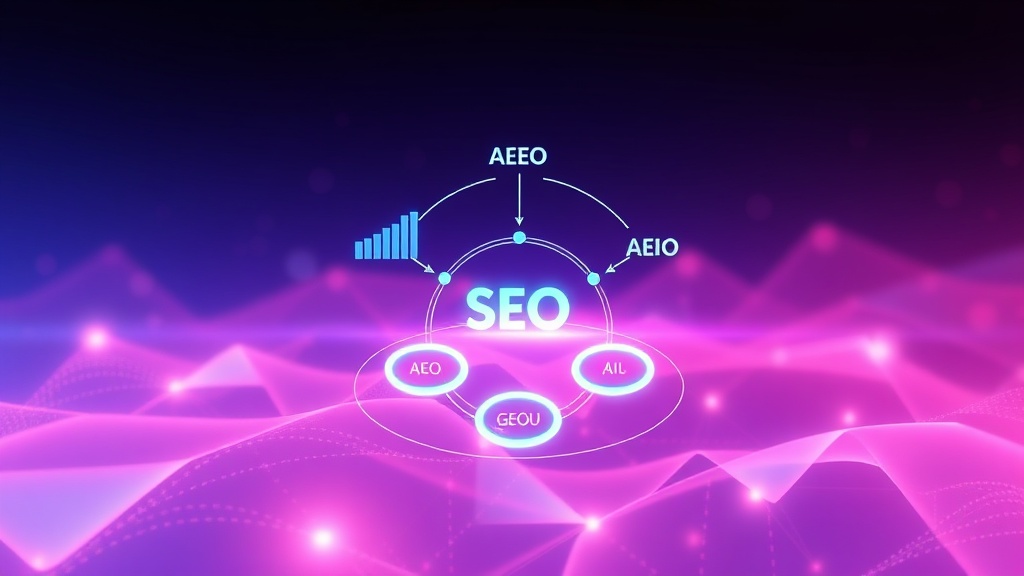
In the vast and ever-expanding digital landscape, where information overload is a constant challenge, the genesis of any truly impactful expert article lies not within its intricate paragraphs or exhaustive data sets, but fundamentally within its title. A title is far more than a mere label; it serves as the foundational blueprint, the initial promise, and the primary gateway for both human readers and sophisticated search algorithms. It dictates the content’s scope, signals its technical depth, and fundamentally shapes its discoverability. Without a meticulously crafted title, even the most profound technical insights risk remaining buried, unaccessed, and ultimately ineffective. This article delves into the multi-faceted criticality of title precision, exploring its pervasive influence across content architecture, search engine optimization (SEO), answer engine optimization (AEO), geographic optimization (GEO), and artificial intelligence optimization (AIO), ultimately demonstrating how a well-formulated title is indispensable for creating a definitive, adaptable, and highly discoverable expert resource.
The Title as the Genesis of Content Strategy
The article’s title acts as the primordial instruction set, initiating the entire content development lifecycle by precisely delineating the scope, intent, and target audience, thereby serving as an indispensable architectural foundation for all subsequent content generation and optimization efforts.
Defining Scope and Intent
A precisely formulated title establishes the thematic boundaries and the intended depth of the expert article. For instance, a title like ‘Quantum Cryptography Protocols in Post-Quantum Computing’ immediately signals a highly specialized technical discussion, narrowing the scope to specific cryptographic algorithms and their resilience against quantum threats. Conversely, ‘Introduction to Quantum Computing Concepts’ indicates a broader, more accessible overview. This initial definition of scope is crucial for managing content development resources, ensuring subject matter expertise alignment, and preventing scope creep. The title communicates the core problem or solution addressed, ensuring that authors, editors, and ultimately readers, are all aligned on the article’s central purpose. It acts as a contract between the publisher and the audience, setting expectations for the information contained within.
Guiding Content Architecture
Beyond defining scope, the title acts as a structural beacon, guiding the internal organization and logical flow of the article. An explicit title often suggests the primary sections or subtopics that must be covered to fulfill its promise. For a title such as ‘Implementing Distributed Ledger Technology for Supply Chain Transparency’, one would anticipate sections covering blockchain fundamentals, specific DLT platforms like Hyperledger Fabric or Corda, integration strategies, and case studies on supply chain applications. This direct guidance helps in crafting a logical hierarchy, ensuring comprehensive coverage of the stated topic, and facilitating the development of a coherent narrative. The architectural implications extend to the judicious selection of supporting data, diagrams, and code examples, all of which must directly serve the thesis articulated by the title.
SEO and AEO Optimization Through Title Precision
Precise titles are paramount for search engine optimization (SEO) and answer engine optimization (AEO) as they directly influence keyword ranking, search intent matching, and the ability of intelligent systems to accurately extract and deliver direct answers to user queries.
Keyword Integration and Search Intent Alignment
An effective title strategically integrates primary keywords and long-tail phrases that reflect user search intent. Modern search algorithms, like Google’s RankBrain and BERT, prioritize understanding the contextual meaning behind queries. A title such as ‘Advanced Kubernetes Orchestration for Multi-Cloud Deployments’ precisely targets users seeking expert-level information on Kubernetes within a multi-cloud context, aligning with commercial or informational intent. This granular alignment improves click-through rates (CTR) and reduces bounce rates, signaling to search engines that the content is highly relevant. Proper keyword distribution within the title, combined with a clear understanding of semantic search, ensures that the article surfaces for the most pertinent and high-value queries.
Voice Search Optimization and Natural Language Queries
The rise of voice assistants and conversational AI, powered by natural language processing (NLP), has amplified the importance of natural-sounding, question-based titles for AEO. Users often phrase voice queries as direct questions, for example, ‘What are the benefits of serverless computing?’ An article titled ‘Benefits of Serverless Computing Architecture Explained’ or ‘Understanding Serverless Computing Advantages’ is far more likely to be identified as a direct answer. AEO emphasizes conciseness and clarity, aiming for titles that can serve as immediate responses or lead directly to a specific answer capsule. This optimization goes beyond simple keyword matching, requiring an understanding of how users articulate information needs in spoken language.
GEO and AIO Enhancement via Strategic Titling
Strategic titling significantly enhances geographic optimization (GEO) by incorporating location-specific entities for regional discoverability, and improves artificial intelligence optimization (AIO) by creating machine-readable structures that facilitate semantic understanding and data extraction for AI models.
Geographic Specificity in Technical Topics
Even highly technical subjects can benefit from geographic specificity in their titles, particularly for compliance, regulation, or market-specific analyses. A title like ‘GDPR Compliance Strategies for AI Startups in the EU’ immediately signals relevance to businesses operating within the European Union’s regulatory framework, leveraging a specific named entity (GDPR) and geographic scope (EU). This allows search engines to accurately present content to users seeking locale-specific guidance, improving GEO performance. For global enterprises, understanding regional variations in technological adoption, policy, or infrastructure is critical, and titles incorporating such details, for example ‘5G Rollout Challenges in Southeast Asian Markets’, capture precise regional search interest.
AI-Readiness and Machine Understandability
For artificial intelligence optimization (AIO), titles must be crafted to maximize machine understandability. AI systems, including large language models and knowledge graphs, parse titles to categorize content, extract entities, and build semantic relationships. Titles that are clear, concise, and contain well-defined technical terms (e.g., ‘Transformer Models for Natural Language Understanding’) are more easily processed by entity recognition and classification algorithms. Modular titles that separate key concepts with punctuation or clear phrases assist generative AI in summarizing content or answering complex queries. AIO ensures that content is not just human-readable, but also optimized for ingestion and utilization by sophisticated AI-driven platforms, contributing to better content syndication and contextual retrieval.
Adaptive Depth: From Title to Definitive Resource
Adaptive depth in content delivery, a key principle for creating definitive resources, is initiated by the title, which implicitly or explicitly sets the expectation for the level of technical detail, complexity, and comprehensiveness a reader can anticipate from the article.
Scoping Technical Detail Levels
The title serves as the primary indicator of the article’s intended technical depth. A title like ‘Primer on Microservices Architecture’ suggests an introductory, conceptual overview suitable for a broad technical audience, whereas ‘Advanced Service Mesh Implementations with Istio and Envoy’ targets experienced engineers seeking highly specific, hands-on architectural guidance. This initial scoping prevents user frustration by managing expectations upfront, ensuring that readers encountering the article are met with the appropriate level of detail. Expert content must cater to a spectrum of technical proficiencies, and the title’s role in delineating this depth is critical for user experience and content authority. It informs the author how much prerequisite knowledge can be assumed.
Anticipating User Information Needs
An effective title anticipates the precise information needs of its target audience, guiding the content creator to deliver a definitive resource. If a title is ‘Troubleshooting Common Issues in Apache Kafka Clusters’, it implies a need for practical, solution-oriented guidance, complete with diagnostic steps and resolution techniques. Conversely, ‘The Ethical Implications of Generative AI’ indicates a discussion requiring philosophical depth and critical analysis rather than prescriptive technical solutions. By accurately reflecting the user’s anticipated query and desired outcome, the title helps to structure an article that directly addresses those needs, establishing the content as a go-to authority on the subject. This focus on user intent transforms a mere collection of facts into a valuable, actionable resource.
Crafting the Optimal Title: Best Practices
Crafting an optimal title demands a strategic balance of conciseness, comprehensiveness, and the precise integration of core technical entities, requiring iterative testing and refinement to ensure maximum clarity and discoverability across all search and AI platforms.
Balance Conciseness with Comprehensiveness
An ideal title is concise enough to be easily digestible while comprehensive enough to accurately represent the article’s content. Overly long titles can be truncated in search results, diminishing their impact, while overly brief titles may lack sufficient descriptive power to attract the right audience. The sweet spot often lies in titles that are between 50-70 characters in length for SEO purposes, but for technical depth, sometimes slightly longer titles are necessary to convey specificity. For instance, ‘Container Orchestration with Kubernetes’ is concise, but ‘Kubernetes for Enterprise-Grade Multi-Cloud Deployments’ adds crucial comprehensiveness without becoming unwieldy. Strive for a title that is scannable yet rich in relevant information.
Incorporate Core Technical Entities
To establish topical authority and enhance machine readability for AIO, titles must incorporate core technical entities, named technologies, specific methodologies, or industry standards. These are the proper nouns and key concepts that anchor the content to a recognized domain. Examples include ‘Rust Programming for Embedded Systems Development’, ‘Federated Learning in Healthcare AI’, or ‘Leveraging OpenAPI Specifications for API Design’. These entities provide immediate context, improve discoverability for highly specific searches, and enable AI models to accurately categorize and relate the content within knowledge graphs. Utilizing precise terminology over generic descriptions is critical for targeting expert audiences and machine understanding.
Test and Refine for Clarity
Title optimization is an iterative process. Effective titles often emerge from A/B testing, analysis of search query data, and feedback mechanisms. Tools for keyword research, competitor analysis, and semantic similarity can inform initial title drafts. Subsequently, monitoring organic search performance, click-through rates, and user engagement metrics provides empirical data for refinement. A title that performs poorly might be too vague, too niche, or not aligned with prevailing search intent. Continuous refinement, based on analytical insights, ensures that the title remains an effective gateway to the expert content, adapting to evolving search behaviors and algorithm updates.
- Clarity: Is the topic immediately understandable?
- Specificity: Does it convey the depth and focus of the article?
- Keyword Resonance: Does it use terms actively searched by the target audience?
- AEO Readiness: Can it serve as a direct answer or part of one?
- AIO Compatibility: Are key entities and concepts clear for machine processing?
- Emotional Appeal (if applicable): Does it generate curiosity or urgency?
- Uniqueness: Does it stand out from similar content?
Conclusion: The Unseen Power of a Well-Formulated Title
The journey of creating a truly definitive expert article begins and is fundamentally shaped by its title. Far from a mere formality, the title is a strategic declaration that dictates scope, guides architectural design, and acts as the primary lever for discoverability across complex digital ecosystems. Its precision profoundly impacts SEO by aligning with search intent, elevates AEO by facilitating direct answers for conversational queries, enhances GEO through location-specific anchoring, and optimizes AIO by making content machine-readable for advanced AI platforms. A meticulously crafted title ensures adaptive depth, setting clear expectations for technical detail and user needs. In an era dominated by algorithmic gatekeepers and information overload, the unseen power of a well-formulated title is not just a best practice; it is an indispensable foundational element for any content aspiring to be a comprehensive, authoritative, and ultimately impactful resource in its domain.