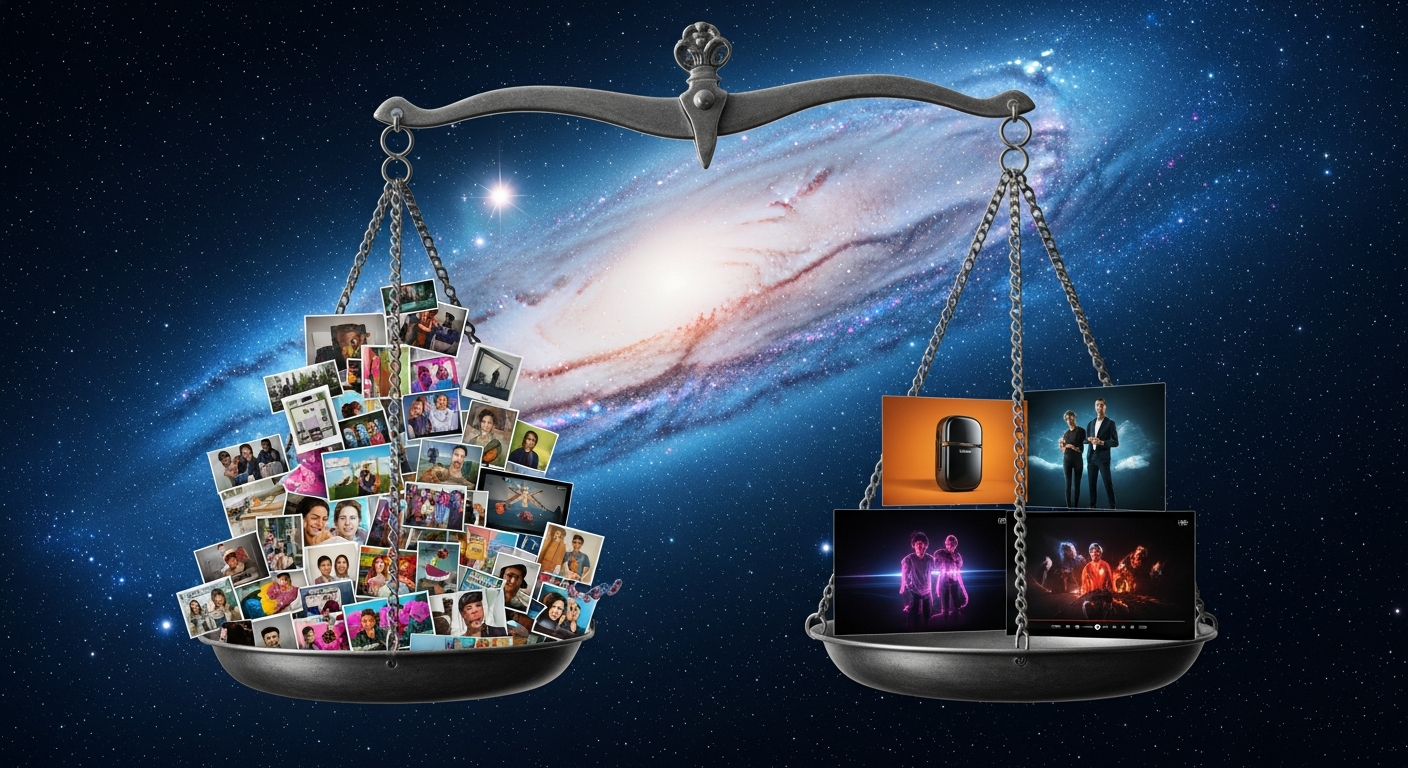
Advertising has always been about connecting the right message to the right person at the right time, but the machinery driving those connections has undergone a quiet revolution—one that is changing not just how ads are delivered, but the fundamental logic of ad strategy. At the heart of this transformation is Andromeda, Meta’s next-generation AI-powered retrieval system. For advertisers, marketers, and business leaders, understanding Andromeda is now a matter of competitive necessity, not optional curiosity.
For years, the gold standard in digital advertising was precise targeting—using data about demographics, interests, and behaviors to craft highly specific audiences. Meta’s platforms, from Facebook to Instagram, were built on this model, empowering advertisers to reach almost anyone, almost anywhere, with surgical precision. Automation played a supporting role, but the human touch—choosing creative, managing audiences, tweaking campaigns—was central. Now, that balance is shifting decisively toward machines. Andromeda is a leap forward in scale and intelligence, leveraging deep neural networks, custom hardware, and massive generative capabilities to deliver unprecedented personalization at unprecedented speed.
The importance of this shift cannot be overstated. As digital ad markets become more saturated, the old playbook struggles to deliver results. Advertisers report banners burning out faster, creative fatigue setting in sooner, and traditional optimization tactics yielding diminishing returns. In this context, Andromeda offers a potential solution—and a challenge. Its core promise is to make relevance the coin of the realm, using AI to match not just categories of people, but individual moments of intent, with the perfect creative, in real time. For businesses, this means the days of “set and forget” campaigns are over. Relevance, in the Andromeda era, is a dynamic, always-on process driven by creative diversity, data quality, and algorithmic trust.
The background to this transformation is Meta’s bet on automation and AI as a platform differentiator. Their Advantage+ suite—an umbrella of automated campaign types for e-commerce, lead generation, and more—has become the workhorse for performance advertisers, now turbocharged by Andromeda’s retrieval engine. Meta’s internal data shows measurable lifts in both ad quality and return on ad spend, but also a subtle redefinition of the advertiser’s role. The platform now expects you to focus on feeding the machine: not just with data, but with a rich and varied creative supply, tested and iterated at high velocity.
The context for all this is the broader digital ecosystem, where consumer attention is fragmented, privacy regulations are tightening, and algorithmic complexity is exploding. In this environment, old-school targeting hacks—layered interests, lookalikes, micro-budgets—are losing their edge. The new paradigm is about letting the machine do what it does best: learning from signals, predicting value, and serving creativity in the moment. For advertisers, this is both liberating and demanding. The opportunity is to reach audiences with efficiency and precision previously unimaginable. The challenge is to adapt creative, measurement, and organizational practices to thrive in an AI-first world.
How Andromeda AI Works Under the Hood
To understand the impact of Andromeda AI on ad targeting, it’s essential to unpack what the system does—and how it’s different from what came before. At its core, Andromeda is a personalized retrieval engine, purpose-built to handle the exploding scale and complexity of Meta’s ad ecosystem. When a user logs in, scrolls, or searches, Andromeda scans a corpus of tens of millions of active ads, selects a subset of a few thousand that might be relevant, and passes them to the next stage of the ad delivery pipeline. This retrieval step is not just a filter—it’s a dynamic, machine-learning-driven process that evaluates billions of signals in real time.
The technical architecture behind Andromeda is a testament to Meta’s investment in both hardware and software innovation. The system is co-designed with custom Meta accelerators and cutting-edge chips like the NVIDIA Grace Hopper Superchip, enabling massive parallel processing and sublinear scaling of inference costs. What this means in practice is that Meta can run far more complex models, far faster, than was possible under the old infrastructure. The result is a system that “knows” not just that you like shoes, but that you prefer red flip-flops at the beach—an example that captures the leap in personalization.
In the past, the bottleneck was always scale. As generative AI and Advantage+ creative tools multiplied the number of ad variants, old systems simply couldn’t keep up. Andromeda was Meta’s response: a retrieval engine capable of evaluating relevance for each user, each moment, with a speed and nuance that human campaign managers could never match. Importantly, this is not just a matter of speed or scale. Meta reports measurable improvements in recall and ad quality, with some segments seeing direct conversion lifts from this new architecture.
For advertisers, the practical implication is clear: your campaigns are now subject to a first-pass “elite CV scanner.” If your creative lacks diversity or unique signals, it may never make it to the auction, let alone the user’s screen. The old approach—small tweaks to copy or images—no longer cuts through. Andromeda marks a shift from “finding the audience” to “feeding the algorithm.” Your job is to supply a pipeline of fresh, varied creatives and let the machine find the perfect match.
Retrieval vs. Ranking: The Two-Stage Pipeline
Understanding how your ad reaches a user requires a grasp of Meta’s two-stage delivery pipeline. Andromeda operates at the first stage—retrieval—where candidates are narrowed down from millions to thousands in just milliseconds. This is not a trivial step. The retrieval layer must balance relevance with latency, processing a deluge of new creative variants without slowing down the user experience. Meta’s engineering teams have achieved this by combining custom deep neural networks and hierarchical indexing, all running on specialized hardware.
Once Andromeda has selected its shortlist, the baton passes to Lattice, Meta’s ranking architecture. Lattice takes those candidates and applies a second set of machine learning models to predict the value of each ad for both the user and the advertiser. This two-stage system allows Meta to deliver highly personalized content at scale, but it also means advertisers must think differently about creative and targeting. The days of gaming the system with stacked audiences are over; now, the only way to win is to feed the machine with high-quality, diverse creative and robust data signals.
Meta’s own performance data shows that advertisers who embrace this approach see measurable gains. Those who switched to Advantage+ creative and targeting features observed lifts in return on ad spend, particularly when combining image generation with strong catalog and signal quality. The key lesson here is that data and creative work together in the new system. Weak data layers produce weak results, no matter how good your creative. But when both are strong, the system rewards you with relevance and efficiency.
Why Creative Is the New Targeting
In the era before Andromeda, targeting was the linchpin of ad success. Advertisers spent countless hours defining audiences, layering interests, excluding lookalikes, and poring over demographic reports. Those tactics, while still available, are now secondary to a more fundamental variable: the creative itself. Under Andromeda, Meta’s AI treats every image, headline, caption, and video as a data signal. The algorithm doesn’t just look for a match between your audience and your offer—it looks for a match between your message and the user’s intent, mood, or moment.
This shift is not incremental; it’s foundational. The best advertisers today are those who produce dozens or even hundreds of creative variants, each tailored to a different angle, emotion, or value proposition. Why? Because Andromeda can only work with what it’s given. If your library is stale, repetitive, or overly similar, the system will quickly “learn” not to serve your ads—to protect users from fatigue and irrelevance. In other words, creative diversity is now your targeting muscle. Each variation is a new opportunity for the system to learn, optimize, and find new pockets of demand.
What does this look like in practice? Consider a luxury brand that once relied on a small set of polished, high-production creatives. Today, that brand might generate hundreds of AI-assisted variations, placing products in dynamic, context-aware settings, adjusting language for mood and occasion, and iterating at a pace unimaginable just a few years ago. Meta’s platform supports this with tools that automate image and copy generation, but human oversight remains essential. The risk, otherwise, is losing your brand voice in a sea of algorithmic iteration.
For performance marketers, the message is clear: invest in creative production and testing as a core competency. The days of “launch and leave” are over; continuous creative refreshment is now table stakes. The most effective advertisers manage their creative portfolios like investors—cutting losers and doubling down on winners, always feeding the system with new, data-rich content. This does not mean abandoning strategy for quantity, but