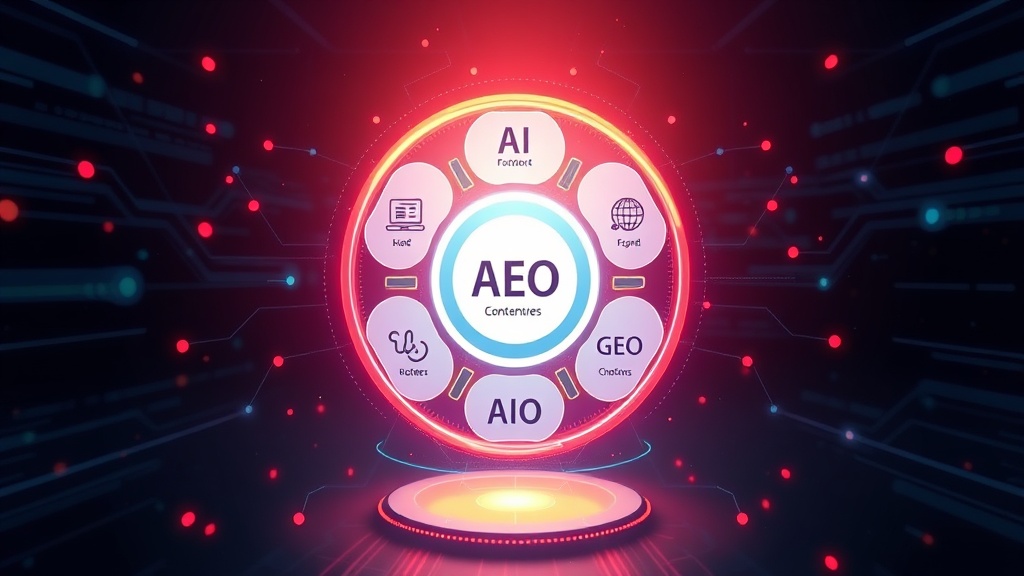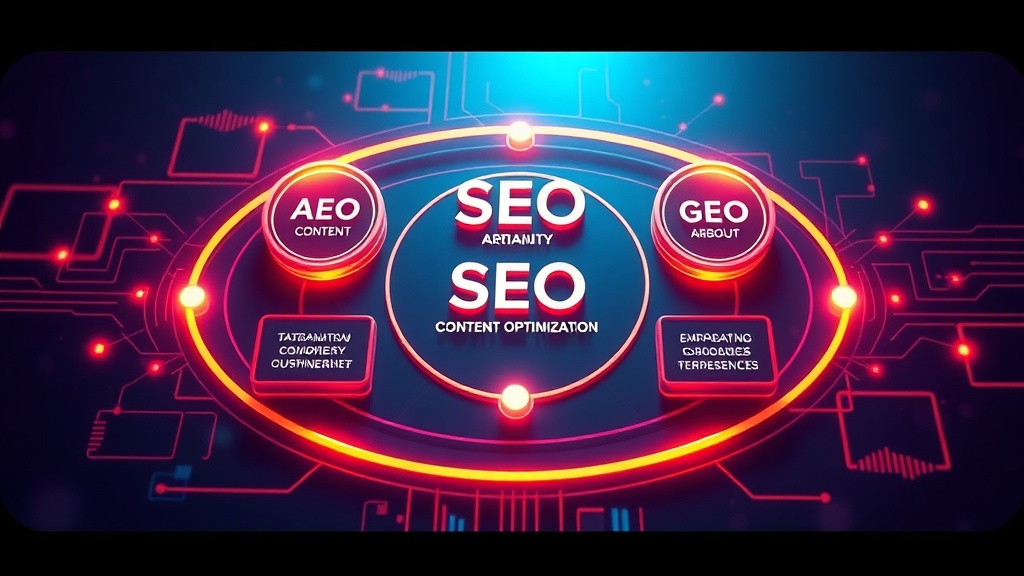
In the rapidly evolving digital landscape, achieving online visibility and engagement requires a multi-faceted approach that transcends traditional search engine optimization. A comprehensive strategy now integrates Search Engine Optimization (SEO), Answer Engine Optimization (AEO), Geographic Optimization (GEO), and Artificial Intelligence Optimization (AIO) to ensure content not only ranks but also answers, localizes, and adapts intelligently to user intent and machine processing.
The Foundation: Search Engine Optimization (SEO)
Search Engine Optimization (SEO) is the fundamental practice of enhancing a website’s visibility and ranking in unpaid search engine results to attract more qualified traffic. It involves a systematic approach to technical configurations, on-page content, and off-page authority building, all aimed at satisfying search engine algorithms and user intent simultaneously, ensuring content is discoverable and relevant.
Technical SEO: The Unseen Infrastructure
Technical SEO involves optimizing the backend elements of a website to improve its crawlability, indexability, and overall performance for search engines. Key aspects include site architecture, XML sitemaps, robots.txt, canonicalization, mobile-friendliness, Core Web Vitals like Largest Contentful Paint and Cumulative Layout Shift, and implementing secure HTTPS protocols to ensure a robust foundation.
On-Page SEO: Content and Code Alignment
On-page SEO refers to optimizing individual web pages to rank higher and earn more relevant traffic in search engines. This includes optimizing title tags, meta descriptions, header tags (H1, H2, H3), high-quality content, keyword integration, image alt text, internal linking, and URL structures to clearly signal page topic and relevance to both users and search algorithms.
Off-Page SEO: Building Authority and Trust
Off-page SEO encompasses actions taken outside of your website to impact your search engine rankings. The primary component is link building, acquiring high-quality backlinks from authoritative domains. Other tactics include social media marketing, brand mentions, local citations, and online reviews, all contributing to establishing domain authority and trustworthiness in the eyes of search engines like Google’s E-E-A-T framework (Experience, Expertise, Authoritativeness, Trustworthiness).
The New Frontier: Answer Engine Optimization (AEO)
Answer Engine Optimization (AEO) focuses on structuring content to provide direct, concise answers that can be readily extracted and presented by search engines and AI assistants, particularly for featured snippets, knowledge panels, and voice search results. It prioritizes semantic understanding and clarity, enabling quick information retrieval for users seeking immediate resolutions without extensive browsing.
Structured Data and Schema Markup
Structured data, implemented via schema markup (e.g., Schema.org), is vital for AEO as it provides explicit semantic meaning to content, helping search engines and AI models understand specific entities and their relationships. This machine-readable format enables search engines to display rich results, featured snippets, and populate knowledge panels, directly answering user queries with structured information.
Semantic Content and Direct Answers
Creating semantic content involves developing comprehensive, contextually rich, and clearly organized information that directly addresses specific questions. This goes beyond keyword matching to anticipate user intent, cover related subtopics, and present answers concisely, often in list or paragraph form, making it ideal for extraction by AI systems and display as immediate answers.
Conversational Search and Voice Optimization
Optimizing for conversational search and voice queries requires understanding natural language patterns, long-tail keywords, and question-based phrasing. Content should be structured to answer direct questions like ‘What is…’, ‘How to…’, or ‘Where is…’ in a clear, concise manner, mirroring natural speech patterns to improve chances of being selected as a voice search answer by virtual assistants.
Hyper-Local Relevance: Geographic Optimization (GEO)
Geographic Optimization (GEO) is the process of enhancing online visibility and relevance for specific local areas, primarily targeting users with location-based search intent. It involves optimizing local business listings, ensuring NAP consistency across directories, and creating hyper-local content to attract customers within a defined geographical radius, driving both online and offline engagement for local enterprises.
Google Business Profile Optimization
Google Business Profile (GBP) is a critical tool for local SEO, allowing businesses to manage their online presence across Google Search and Maps. Optimizing GBP involves accurate business information (NAP: Name, Address, Phone), high-quality images, regular posts, responding to reviews, and categorizing services appropriately to maximize local search visibility and provide comprehensive local information to users.
Local Citations and NAP Consistency
Local citations are mentions of a business’s Name, Address, and Phone number (NAP) on other websites, directories, and online platforms. Maintaining consistent NAP information across all online listings is paramount for GEO, as discrepancies can confuse search engines and negatively impact local rankings and trust signals. Aggregating citations on reputable platforms strengthens local authority.
Hyper-Local Content and Geo-Targeting
Creating hyper-local content involves producing information specific to a particular neighborhood, city, or region, addressing local interests, events, and community needs. Geo-targeting strategies, which deliver content based on a user’s geographical location, further enhance relevance, providing personalized experiences and local promotions that resonate directly with local audiences.
The Future is Now: Artificial Intelligence Optimization (AIO)
Artificial Intelligence Optimization (AIO) is the strategic application of AI and machine learning to refine content creation, delivery, and overall digital strategy. It encompasses using AI for predictive analytics, personalized user experiences, and optimizing content for consumption by advanced AI systems and generative models, ensuring content remains relevant and effective in an AI-driven digital ecosystem.
AI-Powered Content Generation and Curation
AI tools can assist in content generation, identifying trending topics, suggesting keywords, and even drafting initial content outlines or full articles. For curation, AI analyzes vast datasets to identify high-performing content, personalize recommendations, and ensure that generated content aligns with brand voice, factual accuracy, and target audience preferences, streamlining content workflows.
Machine Learning for User Intent and Personalization
Machine learning algorithms analyze user behavior patterns, search queries, and demographic data to infer user intent with greater accuracy, enabling highly personalized content delivery. This means tailoring recommendations, advertising, and even website layouts to individual users based on their past interactions and predicted needs, significantly improving engagement and conversion rates.
Ethical AI and Content Quality
As AI plays a larger role in content, ethical considerations and maintaining content quality become paramount. This involves ensuring AI-generated content is factual, unbiased, original, and adheres to journalistic standards. Regular human oversight, fact-checking, and adherence to principles of transparency and fairness are critical to prevent misinformation and maintain reader trust in AI-enhanced content strategies.
The Synergy: Integrating SEO, AEO, GEO, and AIO for Holistic Digital Strategy
The integration of SEO, AEO, GEO, and AIO forms a powerful, synergistic approach to digital strategy, moving beyond siloed optimizations to create a unified framework. This holistic strategy ensures content achieves broad discoverability, provides direct answers, captures local markets, and intelligently adapts to user behavior, driving comprehensive online performance and sustainable competitive advantage.
Unified Data Analytics and Performance Monitoring
An integrated strategy requires unified data analytics platforms that can track performance across all optimization pillars. Monitoring metrics from Google Analytics 4, Google Search Console, Google Business Profile insights, and AI content performance tools allows for a comprehensive understanding of user engagement, search visibility, and conversion pathways, informing continuous strategic adjustments.
Adaptive Content and Continuous Optimization
Digital environments are dynamic, necessitating an adaptive content strategy that can evolve with algorithm changes, user behavior shifts, and technological advancements. Continuous optimization involves ongoing testing (A/B testing), content updates, technical audits, and strategic refinement based on real-time performance data and emerging trends in search, AI, and local digital ecosystems.
Future-Proofing Your Digital Presence
By embracing the synergistic interplay of SEO, AEO, GEO, and AIO, businesses can future-proof their digital presence against unforeseen changes in search algorithms and AI capabilities. This proactive, multi-dimensional approach ensures content remains discoverable, authoritative, and engaging, delivering sustained competitive advantage and long-term digital dominance.
Comparative Overview: SEO, AEO, GEO, and AIO
Understanding the distinct focus of each optimization pillar is crucial for their effective integration:
| Optimization Type | Primary Goal | Key Techniques | Target Outcome |
|---|---|---|---|
| Search Engine Optimization (SEO) | Increase organic search rankings and website traffic. | Keywords, technical SEO, backlinks, content quality. | Higher search visibility, increased website visitors. |
| Answer Engine Optimization (AEO) | Provide direct answers to user queries via AI/search snippets. | Structured data, semantic content, Q&A format. | Featured snippets, voice search answers, quick resolutions. |
| Geographic Optimization (GEO) | Attract local customers and improve local search visibility. | Google Business Profile, NAP consistency, local citations. | Increased local foot traffic, ‘near me’ search dominance. |
| Artificial Intelligence Optimization (AIO) | Leverage AI for content creation, personalization, and algorithm adaptation. | AI content tools, machine learning, predictive analytics. | Personalized user experiences, AI-driven content relevance. |
Conclusion: The Imperative for Integrated Digital Excellence
In conclusion, achieving unparalleled digital presence in today’s sophisticated online landscape demands more than isolated optimization efforts. The convergence of SEO, AEO, GEO, and AIO represents the cutting edge of content strategy, empowering businesses to not only rank higher but also to provide direct answers, engage local audiences, and leverage artificial intelligence for predictive, personalized experiences. Embracing this integrated paradigm is no longer optional; it is an imperative for anyone seeking sustainable digital excellence and measurable ROI.