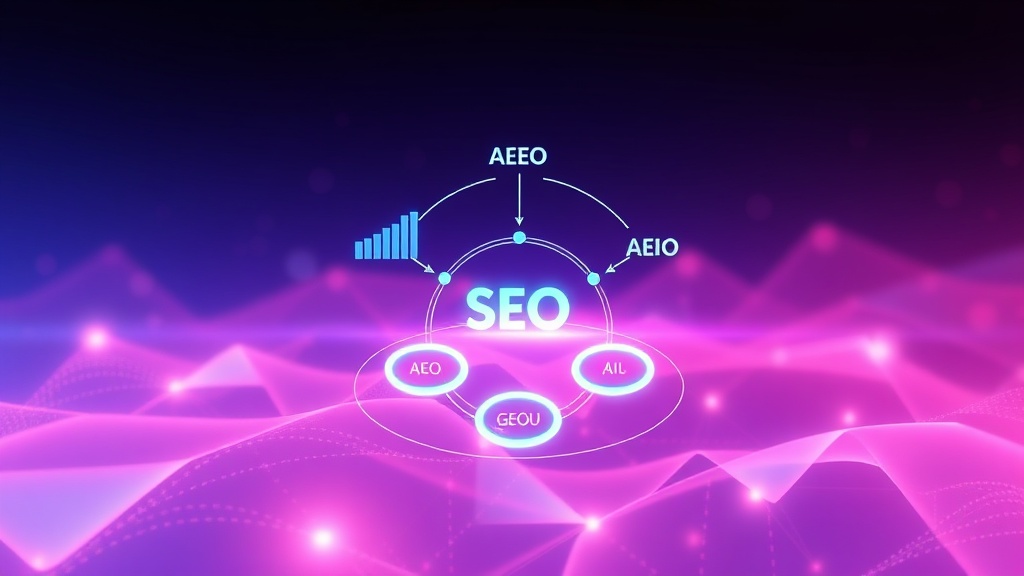
In the relentless pursuit of digital visibility and audience engagement, businesses and content creators face an increasingly complex landscape. The era of focusing solely on traditional Search Engine Optimization (SEO) has evolved. Today, achieving enduring digital authority demands a multi-faceted, integrated approach that encompasses not only SEO but also Answer Engine Optimization (AEO), Geographic Optimization (GEO), and Artificial Intelligence Optimization (AIO). This comprehensive strategy, often termed the ‘quadruple helix’ of digital marketing, is essential for capturing diverse user intent, adapting to algorithmic shifts, and establishing a dominant online presence across various digital touchpoints. Understanding and harmonizing these distinct yet interconnected disciplines is the hallmark of a truly future-proof content strategy.
The Foundational Pillar: Search Engine Optimization (SEO)
SEO forms the bedrock of digital visibility by optimizing web content for search engine algorithms, ensuring organic discoverability and relevance through keyword targeting, technical health, and quality backlinks.
Core Principles of Modern SEO
At its heart, modern SEO is about connecting users with the most relevant, high-quality information. This begins with rigorous keyword research, moving beyond simple terms to understand user intent behind queries. Content creation must reflect this intent, offering comprehensive answers and solutions. Technical SEO ensures that search engine crawlers can efficiently access, crawl, and index website content, addressing issues like site speed, mobile-friendliness, and crawlability. Furthermore, link building, through earning high-quality backlinks from authoritative domains, signals trustworthiness and authority to search engines, boosting organic rankings.
Advanced SEO Techniques for Competitive Niches
Beyond the basics, advanced SEO leverages structured data using schema.org vocabulary and JSON-LD markup to provide context to search engines, enhancing visibility in rich results and featured snippets. Core Web Vitals, a set of metrics measuring user experience aspects like loading performance, interactivity, and visual stability, are critical ranking factors. Semantic SEO and topic clusters involve organizing content around broader topics rather than isolated keywords, demonstrating deep topical authority and improving overall site relevance. This holistic approach signals to search engines like Google that the website is a definitive resource, rewarding it with higher organic visibility and sustained traffic.
Capturing Intent: Answer Engine Optimization (AEO)
AEO focuses on directly answering user queries, particularly for voice search, featured snippets, and conversational AI, by structuring content to provide concise, authoritative, and direct responses to specific questions.
The Rise of Conversational Search
The proliferation of voice assistants like Google Assistant, Amazon Alexa, and Apple Siri, alongside the increasing sophistication of large language models (LLMs), has shifted user interaction towards conversational search. Users often phrase queries as natural language questions. AEO directly addresses this by optimizing content to serve as direct answers, anticipating common ‘who, what, when, where, why, how’ questions. This includes optimizing for question-answer pairs and understanding the nuances of natural language processing (NLP) to align with how AI interprets and processes queries.
Structuring Content for AEO Supremacy
To excel in AEO, content must be structured to deliver immediate value. This involves creating dedicated FAQ sections, using clear headings (H2, H3) that pose common questions, and following them immediately with concise, direct answers. Paragraph-level optimization is crucial for capturing featured snippets, often referred to as ‘position zero’ in the search engine results page (SERP). Summaries, definitions, and bulleted or numbered lists enhance scannability and make it easier for search engines to extract definitive answers. The goal is to provide ‘just the right amount’ of information for a query, quickly and authoritatively.
Localizing Reach: Geographic Optimization (GEO)
GEO strategically targets specific geographical areas, connecting businesses with local audiences through localized content, directory listings, and location-based keywords, essential for physical businesses and regionally relevant services.
Hyper-Local Strategies for Business Growth
For businesses with physical locations or those serving specific regions, Geographic Optimization is indispensable. The cornerstone of GEO is a meticulously optimized Google Business Profile, ensuring accurate business information, hours, services, and engaging with customer reviews. Local citations across online directories like Yelp, Yellow Pages, and industry-specific platforms bolster local search visibility. Creating localized content, such as blog posts about local events, community initiatives, or region-specific services, signals geographic relevance to search engines and connects with local user intent. Using city-specific keywords and regional modifiers throughout website content is also vital.
Geo-Fencing and Proximity Marketing Integration
Advanced GEO strategies extend to mobile-first local SEO, recognizing that a significant portion of local searches occur on mobile devices. This involves ensuring fast loading times, responsive design, and location-aware functionalities. Dedicated location pages for each physical branch or service area, complete with unique content, maps, and local testimonials, reinforce geographic authority. Understanding geo-signals, which encompass IP address lookup, GPS data, Wi-Fi triangulation, and even beacon technology, allows search engines to deliver highly localized results. Proximity marketing, leveraging these signals, can push relevant content or offers to users within a defined geographic area, enhancing engagement and driving foot traffic.
Future-Proofing with AI: Artificial Intelligence Optimization (AIO)
AIO involves leveraging AI tools and understanding AI’s influence on search and content generation, optimizing for algorithms that increasingly use machine learning for relevance ranking, content creation, and user experience personalization.
AI in Content Creation and Curation
Artificial intelligence, particularly large language models (LLMs) like GPT-4 and similar generative AI tools, has revolutionized content workflows. AIO integrates these tools responsibly to assist in generating content ideas, drafting outlines, summarizing long-form content, and even personalizing content at scale. AI-powered content auditing tools can analyze existing content for readability, sentiment, and semantic relevance, identifying gaps or areas for improvement. Furthermore, AI-driven personalization engines can dynamically adapt website content and recommendations based on individual user behavior, enhancing engagement and conversion rates, leading to a more tailored user experience across digital touchpoints.
Optimizing for AI-Driven Search and Discovery
The core of search engine algorithms, such as Google’s RankBrain, BERT, and MUM updates, are increasingly powered by machine learning and AI. AIO means optimizing content not just for keywords, but for semantic understanding and contextual relevance that AI models prioritize. This includes structuring content with clear entities, relationships, and concepts that AI can easily parse and understand through natural language understanding (NLU). Optimizing for AI-enhanced semantic search involves creating comprehensive, authoritative content that demonstrates deep topical expertise. Crucially, AIO also involves ethical considerations, ensuring content integrity, avoiding AI-generated misinformation, and distinguishing human-created content from AI-generated assistance to maintain user trust and E-E-A-T (Experience, Expertise, Authoritativeness, Trustworthiness) guidelines.
The Synergy of the Quadruple Helix: Integrating SEO, AEO, GEO, and AIO
True digital authority is achieved by a seamless integration of SEO, AEO, GEO, and AIO, where each component reinforces the others, creating a robust, adaptive, and highly effective digital presence that addresses diverse user needs and algorithmic changes.
Holistic Content Strategy Framework
An integrated approach means that keyword research isn’t just for SEO; it informs question-based queries for AEO, local modifiers for GEO, and semantic entities for AIO. Content created with SEO best practices (structure, E-E-A-T) simultaneously aids AEO by providing clear answers and GEO by incorporating local details. AI tools can enhance the efficiency and personalization of content across all pillars. A unified keyword strategy ensures consistency and coverage. Cross-platform optimization guarantees that content performs well across desktop, mobile, voice assistants, and local search platforms. Data-driven iteration, informed by insights from all four areas, allows for continuous refinement and adaptation to evolving digital landscapes and user behaviors. This holistic framework ensures maximum impact and efficiency, avoiding siloed efforts.
Key Differences & Synergies: A Comparison
| Optimization Type | Primary Focus | Key Tactic | Ideal Outcome | Synergistic Role |
|---|---|---|---|---|
| SEO | Organic Discoverability & Rankings | Keyword research, technical audits, backlinks, quality content | Increased organic traffic, higher SERP positions | Foundation for relevance, authority, and indexability for all others |
| AEO | Direct Answers to User Queries | FAQ sections, concise answers, structured data for snippets | Featured snippets, voice search visibility, direct answers | Enhances SEO visibility; leverages GEO for local answers; uses AI for understanding queries |
| GEO | Local Audience Engagement | Google Business Profile, local citations, localized content, local keywords | Increased local foot traffic, local search visibility | Boosts SEO for local queries; provides local context for AEO; leverages AI for personalized local recommendations |
| AIO | Leveraging & Optimizing for AI | AI content generation, semantic optimization, understanding LLMs, data integrity | Content efficiency, enhanced personalization, future-proofed against AI shifts | Augments all other pillars with intelligent tools, predictive insights, and advanced semantic understanding |
Measuring Success and Adapting to Evolution
Effective measurement involves tracking key performance indicators across all optimization pillars, utilizing analytics platforms, and maintaining an agile strategy to adapt to algorithm updates and evolving user behaviors.
Key Performance Indicators (KPIs)
Tracking the right KPIs is crucial for assessing the effectiveness of this integrated strategy. For SEO, focus on organic traffic growth, keyword rankings, dwell time, and bounce rate. AEO success can be measured by featured snippet impressions, voice search query volume, and direct answer engagement. GEO KPIs include local pack visibility, Google Business Profile insights (views, calls, direction requests), and localized conversion rates. AIO’s impact can be gauged by content efficiency metrics, personalization effectiveness, and engagement rates on AI-enhanced content. Using tools like Google Analytics, Google Search Console, and third-party SEO/AEO/GEO tools is paramount for comprehensive data collection and analysis.
Continuous Auditing and Iteration
The digital landscape is fluid, marked by constant algorithm updates from search engines and the rapid evolution of AI technologies. A strategy of continuous auditing and iteration is therefore non-negotiable. Regular technical SEO audits, content reviews for AEO relevance, local listing integrity checks for GEO, and staying abreast of AI advancements are essential. Monitoring algorithmic change announcements and understanding their implications allows for proactive adjustments. Crucially, establishing user feedback loops—through surveys, heatmaps, and session recordings—provides invaluable qualitative data to refine strategies. Furthermore, competitive analysis helps identify opportunities and benchmark performance against industry leaders, ensuring the strategy remains agile, relevant, and ahead of the curve.
Conclusion
Achieving and sustaining digital authority in today’s dynamic online environment is no longer a singular pursuit but a grand orchestration. The synergistic integration of Search Engine Optimization (SEO), Answer Engine Optimization (AEO), Geographic Optimization (GEO), and Artificial Intelligence Optimization (AIO) creates a robust, adaptive, and highly effective digital presence. Each component, while powerful on its own, amplifies the efficacy of the others, creating a holistic strategy that captures broad search intent, delivers precise answers, connects with local audiences, and intelligently adapts to the future of AI-driven discovery. Embracing this ‘quadruple helix’ approach is not just an advantage—it is a strategic imperative for any entity aspiring to build unparalleled digital authority and achieve long-term success in the digital age.