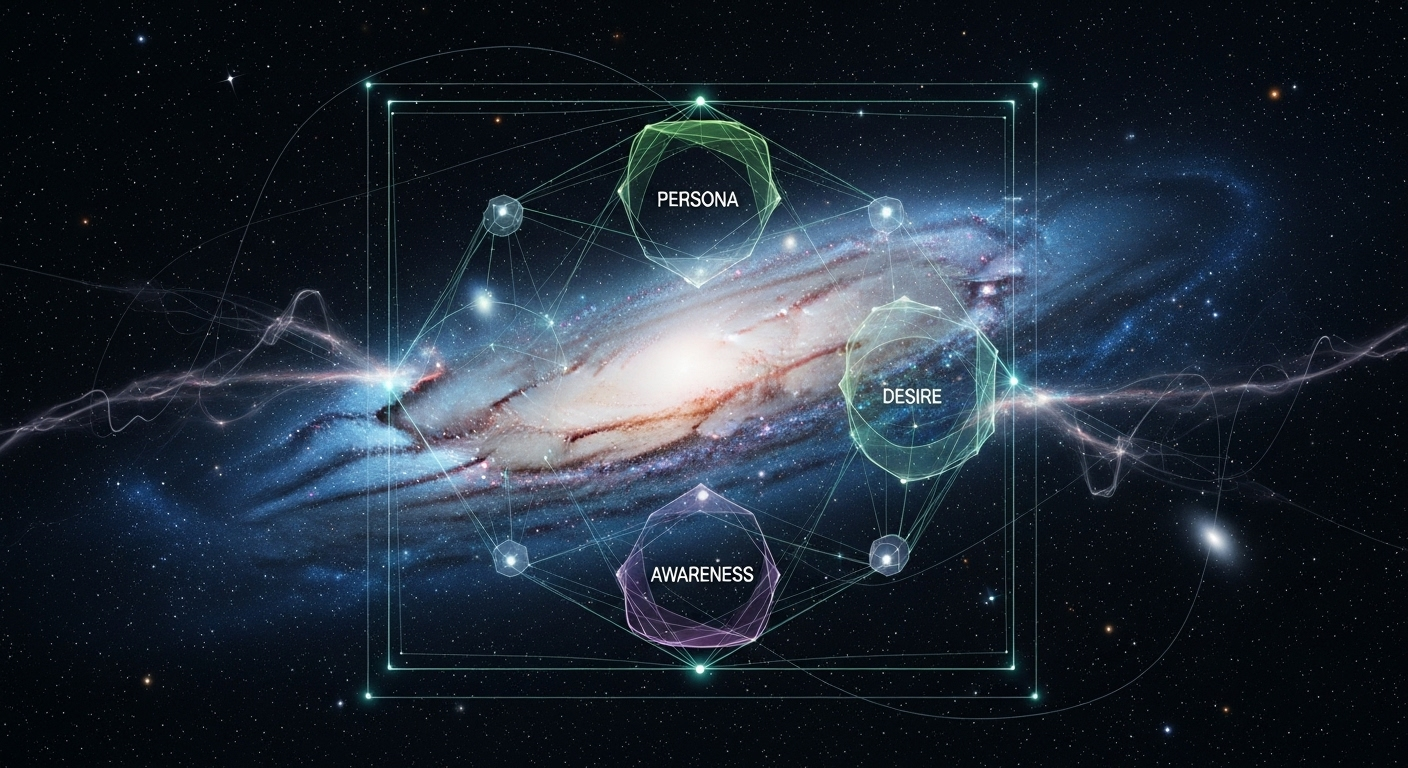
In the vast, chaotic expanse of the modern digital marketplace—a universe we call Andromeda—the old rules of engagement are failing. We operate in an environment of near-infinite content, where countless brands scream for attention, creating a deafening roar of undifferentiated noise. For entrepreneurs and marketers, the daily challenge is no longer just about being seen, but about resonating on a level that transcends the fleeting glance of a social media scroll. The prevailing strategy of “more is more” has begun to backfire, leading to ad fatigue, consumer apathy, and a precipitous drop in trust. In this saturated reality, where customers are overwhelmed by generic advertising, the one-size-fits-all creative approach is not just ineffective; it’s a liability. The sheer volume of content makes it incredibly difficult for any single message to penetrate the consciousness of the modern consumer, who now sees the same ads repeated ad nauseam. To survive and thrive, we need a new navigational chart, a systematic way to create messages that feel personal, timely, and deeply relevant. This is not about shouting louder; it is about speaking with precision.
Enter the P.D.A. Framework, a strategic blueprint designed to generate meaningful creative variation in the age of Andromeda. P.D.A. stands for Persona, Desire, and Awareness—the three pillars that, when understood and integrated, provide a powerful engine for developing marketing messages that connect. This framework moves beyond superficial targeting to build a multi-dimensional understanding of your audience. It acknowledges that effective communication isn’t about a single perfect message but a spectrum of tailored variations, each designed for a specific intersection of identity, motivation, and market sophistication. Persona demands that we move beyond basic demographics to build a rich, psychographic understanding of who our customer is—their values, attitudes, and core beliefs. Desire compels us to look past the functional benefits of our products and tap into the fundamental emotional drivers that truly motivate human behavior—the deep-seated needs for security, belonging, recognition, or growth. Finally, Awareness provides the tactical lens, ensuring our message aligns perfectly with where a customer is on their journey, from being completely unaware of their problem to being ready to purchase. By methodically combining these three elements, the P.D.A. Framework offers a repeatable system for generating dozens of potent creative angles, each one a calculated response to the Andromeda effect, designed not just to be seen, but to be felt.
Deconstructing The “Andromeda” Effect On Modern Marketing
The “Andromeda” effect is a metaphor for the current state of the digital marketing landscape: a seemingly infinite, expanding, and chaotic universe filled with competing signals. Every day, billions of pieces of content are created and shared across a dizzying array of platforms, from social media feeds to streaming services and news sites. This hyper-saturation creates several critical challenges for marketers. The first is the dramatic rise of ad fatigue and banner blindness. Consumers are exposed to thousands of brand messages daily, and as a survival mechanism, their brains have learned to ignore the vast majority of them. A staggering 70% of consumers report seeing the same ads over and over, breeding apathy rather than interest. This oversaturation has eroded public favorability toward advertising, which has plummeted from 50% to just 25% over the last three decades.
Furthermore, the Andromeda effect is characterized by the dominance of algorithms that dictate content visibility. These complex systems prioritize engagement, creating filter bubbles and echo chambers that can make it difficult for new ideas or brands to break through organically. Relying on a single, static creative message is a recipe for failure in this environment. An ad that performs well with one audience segment may fall completely flat with another, or be algorithmically suppressed before it ever has a chance to gain traction. The core issue is a fundamental mismatch between the broadcast-era mindset of creating one perfect ad and the reality of a fragmented, algorithm-driven ecosystem. Success in Andromeda requires a shift from monolithic campaigns to a fluid, adaptive approach. It demands a system for generating a high volume of creative variations that can be tested, optimized, and tailored to specific contexts and audience mindsets. This is precisely the problem the P.D.A. Framework is engineered to solve. It provides a structured methodology for moving beyond generic messaging, enabling brands to develop a portfolio of creative that is contextually relevant and emotionally resonant, thereby increasing the odds of capturing attention in an overwhelmingly crowded space.
Persona: The Gravitational Center Of Your Creative Universe
In the P.D.A. Framework, the Persona is the starting point and the anchor for all creative development. It is the gravitational center around which your messaging strategy revolves. However, the traditional approach to building personas—often a shallow collection of demographic data points like age, gender, and income—is woefully inadequate for navigating Andromeda. These surface-level details tell you who your customer is, but they reveal very little about why they make decisions. To create messages that truly resonate, we must move beyond these static identifiers and construct a deep, multi-dimensional profile grounded in psychographics and behavioral patterns. This means understanding not just their job title, but their deepest aspirations and anxieties. It means knowing not just their location, but the cultural values that shape their worldview and the triggers that influence their behavior. A powerful persona is a living document, a narrative that brings your ideal customer to life, making them feel less like a data point and more like a real person you can speak to directly.
Building such a persona requires a commitment to qualitative and quantitative research. It involves conducting in-depth interviews with existing customers to uncover their motivations and pain points. It means leveraging surveys and web analytics to identify patterns in behavior. Social listening tools can reveal the language they use, the communities they belong to, and the influencers they trust. The goal is to synthesize this information into a cohesive profile that captures their worldview. By investing the time to develop these rich, nuanced personas, you create a powerful strategic asset. This deep understanding allows you to craft messages that align with their identity, speak to their unspoken needs, and feel authentic and empathetic. It transforms your marketing from a disruptive intrusion into a welcome conversation, making your brand a trusted guide rather than just another voice shouting in the cosmic noise of Andromeda.
Beyond Demographics: Mapping The Psychographic Blueprint
To truly understand your persona, you must map their psychographic blueprint. Psychographics are the key to unlocking the “why” behind consumer behavior, focusing on internal attributes such as values, attitudes, interests, and lifestyle. While demographics explain who your buyer is, psychographics explain why they buy. This level of insight allows you to segment your audience based on their intrinsic motivations, not just their external circumstances. For example, two individuals with identical demographic profiles—say, 35-year-old urban professionals with a high income—may have vastly different purchasing habits. One might be driven by a desire for status and luxury, valuing brands that signal success and exclusivity. The other might be motivated by sustainability and social responsibility, preferring brands that align with their ethical values. A message about premium quality and craftsmanship would resonate with the first individual, while a message about eco-friendly materials and community impact would capture the attention of the second. Without a psychographic lens, a marketer would likely target both with the same generic message, effectively connecting with neither. Gathering this data involves looking beyond standard analytics. Tools like customer surveys, focus groups, and analysis of social media engagement can reveal what your audience cares about, their hobbies, their aspirations, and their anxieties. This process allows you to build a persona that reflects a genuine worldview, enabling you to craft creative variations that speak directly to their core identity and belief systems, making your brand feel not just seen, but understood.
Behavioral Insights And The Job-To-Be-Done
While psychographics reveal the internal world of your persona, behavioral insights illuminate their external actions and, crucially, the context in which they operate. This involves understanding their media consumption habits: Where do they spend their time online? Are they active on TikTok, seeking quick, entertaining content, or are they researchers on LinkedIn, looking for in-depth professional insights? The platform itself dictates a user’s mindset, and your creative must be tailored to that context. A highly polished corporate video may perform exceptionally well on a professional networking site but could feel jarring and out of place in a feed dominated by user-generated content. Beyond platform behavior, it is essential to integrate the “Jobs-to-be-Done” (JTBD) theory. This framework reframes your perspective: customers don’t buy products; they “hire” them to do a specific “job.” This job is not the functional task itself but the progress the customer is trying to make in their life. For example, someone doesn’t buy a drill because they need a drill; they hire it for the job of creating a hole to hang a picture, which serves the higher-level job of making a new house feel like a home. Understanding the functional, emotional, and social dimensions of the job your persona is trying to accomplish provides an incredibly fertile ground for creative variation. Instead of focusing on product features, your messaging can focus on the desired outcome and the feeling of progress, creating a much more compelling and relevant value proposition.
Desire: Fueling The Engine Of Connection
If Persona is the “who,” Desire is the “why.” It’s the emotional core of the P.D.A. Framework and the fuel for creating messages that don’t just inform but persuade. Up to 95% of purchasing decisions are made subconsciously, driven by deep-seated emotional needs rather than pure logic. While features and benefits appeal to the rational mind, it is the alignment with a fundamental human desire that triggers action. Understanding these emotional drivers is paramount. These are the universal feelings and needs that influence behavior, such as the desire for belonging, security, recognition, personal growth, or control. A recent study found that 86% of consumer buying choices were shaped by an average of ten distinct emotional needs, ranging from bolstering self-worth to influencing how they are perceived by others. Successful brands tap into these drivers to build powerful connections. A luxury car brand isn’t just selling transportation; it’s selling status and freedom. A wellness brand isn’t just selling supplements; it’s selling self-care and control over one’s life. By identifying the primary emotional desire your product or service fulfills, you can shift your messaging from the functional to the foundational. This creates a more profound and lasting connection with your audience, making your brand a vehicle for achieving their aspirations. When a product successfully meets these emotional needs, customers report a higher sense of self-worth and are far more likely to develop strong brand loyalty.
Awareness: Navigating The Customer’s Journey Through Content
The final pillar of the P.D.A. Framework is Awareness, which provides the critical context for message delivery. A brilliant, emotionally resonant ad will fail if it’s delivered to the right person at the wrong time. The concept of Awareness is rooted in the understanding that customers exist on a spectrum of knowledge and readiness, often visualized as a customer journey or marketing funnel. At one end are those who are completely unaware they even have a problem your product solves. At the other end are loyal customers who are ready to buy again. Each stage requires a fundamentally different creative approach. Trying to sell a complex product to someone who doesn’t even recognize their need is as ineffective as explaining the basics to a seasoned expert. The P.D.A. Framework leverages a nuanced understanding of these stages to ensure that every piece of creative is perfectly aligned with the customer’s current mindset, maximizing its relevance and impact. This strategic alignment turns your content into a helpful guide, meeting customers exactly where they are and gently leading them to the next stage of their journey.
The Five Stages Of Market Sophistication
Legendary copywriter Eugene Schwartz developed a powerful model that breaks the customer journey into five distinct levels of awareness. This model serves as an invaluable tool for generating creative variations. The first stage is Unaware: these individuals do not know they have a problem or a desire. Your marketing goal here is not to sell a product, but to sell the problem itself through evocative, story-driven content that builds intrigue. Next is Problem-Aware: they know they have a problem but are unaware of any solutions. Your message should be empathetic, validating their struggle and gently introducing the possibility of a solution. The third stage is Solution-Aware: they know solutions like yours exist but don’t know about your specific product. Here, your creative should focus on differentiation, using testimonials, case studies, and unique mechanisms to prove your solution is the superior choice. The fourth stage is Product-Aware: these prospects know about your product but aren’t convinced it’s the right choice for them. Your messaging should overcome their final objections, highlighting benefits, guarantees, and direct comparisons. Finally, there is the Most Aware stage: these are your existing customers or highly engaged leads who just need a reason to buy now. Creative for this audience is direct, focusing on offers, discounts, new features, and reinforcing their loyalty. By systematically creating content for each stage, you ensure a relevant touchpoint for every potential customer.
Channel-Specific Awareness And Contextual Messaging
Beyond the customer’s stage in the buying journey, their level of awareness is also heavily influenced by the channel or platform they are currently using. This is the essence of contextual advertising: ensuring the message aligns with the environment in which it appears. A user actively searching on Google for “best accounting software for small businesses” is in a high-intent, solution-aware mindset. They are actively seeking information and comparisons. The most effective creative here would be direct, benefit-driven ad copy that leads to a detailed landing page. In contrast, a user scrolling through Instagram is in a discovery or entertainment mindset. Their intent is passive. A hard-sell ad in this context would feel intrusive and be quickly ignored. Here, a more effective approach would be visually compelling, story-driven content that captures attention and subtly introduces the problem or desire, moving them from an unaware state to a problem-aware one. The device type also provides crucial context; a mobile user often requires a more concise, scannable message than a desktop user who may be more receptive to longer-form content. By layering channel and device context on top of the customer’s journey stage, the P.D.A. Framework allows for hyper-relevant creative that feels native to the user’s experience, transforming ads from interruptions into valuable content.
Activating The P.D.A. Framework For Infinite Creative Velocity
The true power of the P.D.A. Framework is realized when you move from theory to activation. It is not simply a set of concepts but a dynamic system for generating and testing a continuous stream of creative variations. The goal is to achieve what can be called “creative velocity”—the ability to consistently produce and deploy tailored messages at a pace that matches the demands of the Andromeda ecosystem. This process begins by mapping the three pillars into a simple matrix. On one axis, you list your core Personas. On another, you list the primary Desires your product speaks to. Finally, you layer in the five stages of Awareness. The intersection of each Persona, Desire, and Awareness level creates a unique prompt for a specific creative angle. For instance, a message for a time-strapped entrepreneur (Persona) driven by the desire for efficiency (Desire) who is currently problem-aware (Awareness) would be vastly different from one targeting a detail-oriented freelancer (Persona) motivated by a desire for creative recognition (Desire) who is already solution-aware. The first might be an ad that empathizes with the chaos of a packed schedule and hints at a new way to reclaim valuable time. The second might be a case study showcasing how a peer used your tool to win an award.
This matrix-based approach transforms brainstorming from a random activity into a structured, strategic process. It allows your marketing team to systematically generate dozens of distinct, hypothesis-driven creative concepts. These variations are the raw material for modern advertising platforms that thrive on testing, such as those utilizing Dynamic Creative Optimization (DCO). DCO technology automates the process of testing different combinations of headlines, images, and calls-to-action against various audience segments, using real-time data to identify the top-performing variations. By feeding this system with strategically diverse creative born from the P.D.A. Framework, you provide it with much richer fuel. Instead of just testing different button colors, you are testing fundamentally different psychological angles. This leads to deeper insights and more significant performance lifts, creating a virtuous cycle of learning and optimization. The P.D.A. Framework is your blueprint for escaping the gravitational pull of generic marketing and navigating the complexities of Andromeda with precision, relevance, and relentless creativity.