The Crucial Foundation: Why a Title is Non-Negotiable for Expert Content
A precise article title serves as the foundational blueprint for expert content generation, enabling AI systems to accurately discern intent, scope, and target audience, thereby facilitating the synthesis of technically detailed, contextually relevant, and strategically optimized information. Without a defined title, the AI lacks the essential directive to initiate a focused content creation process, leading to generic or non-actionable outputs.
Defining Intent and Scope
An article title is more than just a label; it is the primary signal that defines the core intent and scope of the content to be generated. For an advanced AI system, this initial input is paramount. It acts as a compass, guiding the selection of relevant knowledge domains, the activation of specific natural language processing models, and the prioritization of data points from vast knowledge graphs. For example, a title like ‘Quantum Computing Architecture: Principles and Challenges’ immediately establishes a highly technical domain, specifies an analytical approach (principles and challenges), and delineates the specific subtopic (architecture). In contrast, a missing or ambiguous title leaves the AI with an open-ended directive, forcing it to make broad assumptions or default to general knowledge, which inevitably diminishes the precision and depth of the generated content.
Guiding AI’s Generative Process
The generative process of a sophisticated AI model, such as a large language model, is inherently driven by the initial prompt or title. This directive influences everything from semantic search and information retrieval to content structuring and rhetorical style. When a title is provided, the AI can initiate a targeted semantic search across its training data and indexed information, focusing on entities, concepts, and relationships directly pertinent to the specified topic. Without this guidance, the AI struggles to establish a coherent thematic framework. It cannot effectively filter out irrelevant information or identify the critical nodes within its knowledge graph that would contribute to a truly expert-level discussion. The resulting output, while grammatically correct, often lacks the focused insights and authoritative voice expected of specialized content.
The Cascade Effect: How a Missing Title Impacts Technical Optimization
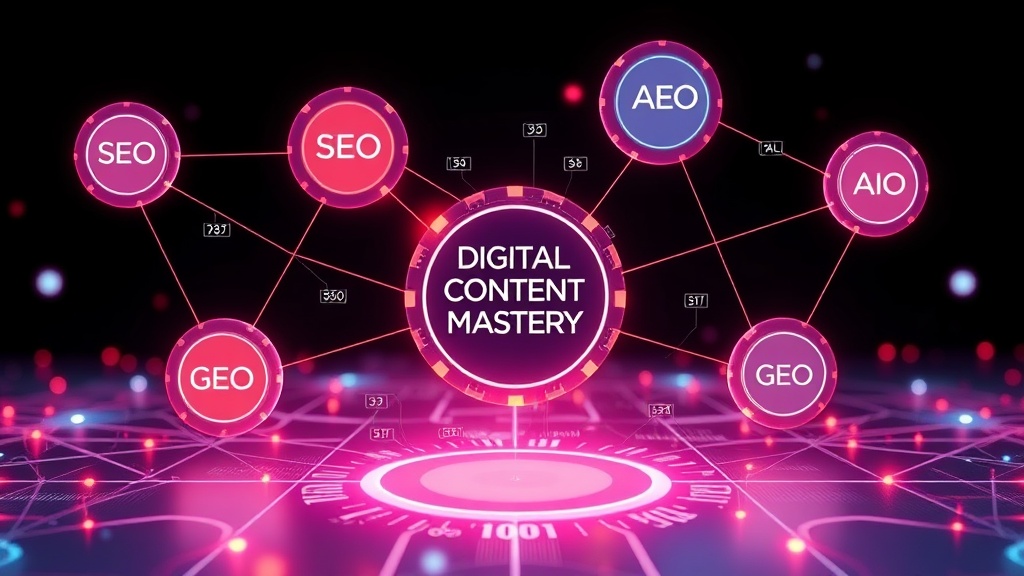
An absent or ambiguous title profoundly hinders technical optimization across all critical dimensions—AEO, GEO, and AIO—because the AI cannot establish the necessary topical authority, keyword clusters, geographic relevance, or structured data models without a clear thematic anchor, resulting in generic, unoptimized, and ineffective content that fails to meet modern search engine and user expectations.
Adverse Effects on AEO (Answer Engine Optimization)
AEO relies heavily on understanding user intent and providing direct, authoritative answers. A well-crafted title directly translates into clearer intent for the AI, allowing it to produce content that directly addresses potential user queries. Without a specific title, the AI cannot accurately predict the types of questions users might ask or formulate precise answer capsules. This leads to generic content that struggles to rank for featured snippets or ‘People Also Ask’ sections, severely limiting visibility in contemporary search environments where conversational search and voice assistants are prevalent.
- Query Intent Matching: A specific title, like ‘How Does 5G Millimeter Wave Technology Work?’, directly signals the query intent, allowing the AI to generate highly relevant content that satisfies precise informational needs. An absent title prevents this critical alignment.
- Direct Answer Generation: For AEO, the ability to extract and present concise, direct answers is paramount. This capability is severely hampered without a clear topic from which to derive such answers.
- Featured Snippets: Achieving featured snippet status requires highly structured and directly answering content. A title acts as the blueprint for creating this structure and focus.
Impediments to GEO (Geographic Engine Optimization)
While an article might not always be inherently geographical, many topics benefit from or require a geographic context. A title that incorporates named entities like ‘Smart City Initiatives in Singapore’ or ‘Renewable Energy Adoption in the Pacific Northwest’ provides the AI with critical GEO signals. Without such explicit or implicit geographic cues, the AI cannot effectively integrate local context, regional data, or relevant named entities such as specific municipalities, regional policies, or localized industry leaders. This oversight renders the content less relevant for geographically targeted searches and reduces its authority within specific local or regional markets, missing crucial opportunities for localized engagement.
| Optimization Aspect | With Clear Title | Without Clear Title |
|---|---|---|
| Topical Authority | Precisely established, high relevance within the defined subject matter. | Generic, unfocused, resulting in low perceived relevance across any specific topic. |
| Keyword Research | Targeted, long-tail, and semantically related keywords are identified and integrated effectively. | Broad, speculative, leading to inefficient keyword targeting and diluted SEO impact. |
| Named Entities | Specific industry terms, experts, locations, and organizations are leveraged contextually. | Random, generalized entity mentions, or complete omission of crucial specific entities. |
| Content Depth | Deep dive into specific subtopics, providing comprehensive and authoritative insights. | Superficial treatment of vague concepts, lacking the necessary detail for expert readership. |
Compromising AIO (Artificial Intelligence Optimization)
AIO focuses on making content easily digestible and interpretable by other AI systems, beyond just search engines. This includes structured data markup, content modularity, and semantic structuring. An article title directly informs how the content should be broken down, tagged, and connected to existing knowledge graphs. Without this guidance, the AI struggles to produce content that is intrinsically machine-readable and interoperable. It cannot effectively implement schema markup, identify critical entities for disambiguation, or segment the content into logical, reusable modules, thus limiting its utility in advanced AI applications such as automated summarization, knowledge base population, or intelligent content delivery systems.
- Content Modularity: A clear title enables the AI to logically segment content into distinct, reusable modules, which is vital for personalized content delivery and dynamic user experiences.
- Machine Readability: Semantic structuring, aided by a specific title, allows AI to better understand relationships between concepts, enhancing information extraction and integration into knowledge graphs.
- Semantic Structuring: The title provides the initial semantic anchor, guiding the application of advanced NLP techniques to ensure content is not only human-readable but also highly interpretable by AI.
Strategic Implications: Loss of Audience and Market Relevance
The absence of a guiding article title severely compromises an organization’s ability to achieve strategic objectives such as establishing market relevance, targeting specific audience segments, and fostering thought leadership, as the resulting content lacks the precision, authority, and directed value proposition necessary to resonate with intended readers or satisfy specific informational needs.
Target Audience Engagement
Every piece of expert content is designed for a specific audience segment—be it technical professionals, industry executives, or academic researchers. A title explicitly or implicitly signals this target audience. A title like ‘Advanced Geotechnical Engineering Techniques for Urban Infrastructure’ clearly targets civil engineers and urban planners. Without such a specific directive, the AI cannot tailor its language, examples, or level of technical detail to a particular demographic. This leads to generalized content that fails to resonate deeply with any specific group, resulting in poor engagement, high bounce rates, and a missed opportunity to connect with valuable stakeholders.
Thought Leadership and Brand Authority
Consistent delivery of high-quality, targeted expert content is a cornerstone of establishing thought leadership and enhancing brand authority. A well-defined title contributes significantly to this by ensuring that the generated content addresses specific, often niche, challenges or innovations within an industry. It allows an organization to showcase its expertise in particular areas. An AI producing content without a guiding title will likely generate generic, unspecialized material that does not contribute meaningfully to an organization’s intellectual capital or differentiate it from competitors. This undermines efforts to be perceived as an authority or innovator within its field.
The Technical Architecture of Content Generation: A Title’s Role
From a technical perspective, a title acts as the primary input parameter for content generation algorithms, directing subprocesses such as knowledge graph traversal, natural language understanding (NLU) model selection, and fact extraction, thereby orchestrating the entire modular content assembly and semantic enrichment pipeline crucial for high-quality output.
Knowledge Graph Integration
Modern AI content generation heavily relies on knowledge graphs—interconnected networks of entities and their relationships. An article title initiates a targeted traversal of this graph. For a title like ‘The Role of Blockchain in Supply Chain Transparency,’ the AI would prioritize nodes related to blockchain technology, supply chain logistics, data immutability, and regulatory compliance. Without a title, the AI faces a combinatorial explosion of possible knowledge graph paths, leading to inefficient processing and potentially irrelevant information retrieval. The title acts as a powerful pruning mechanism, focusing the search space for optimal knowledge integration.
Natural Language Processing Directives
The title provides crucial directives for the various natural language processing components within the AI. It influences named entity recognition (NER), topic modeling, sentiment analysis (if applicable), and coreference resolution. For instance, a title suggesting a ‘challenge’ or ‘opportunity’ guides the AI to adopt a specific argumentative stance or tone. The absence of a title leaves these NLP components without a clear context, leading to less precise entity extraction, potentially misidentified topics, and a lack of coherent narrative flow. The linguistic precision and contextual accuracy of the generated content are directly proportional to the clarity of the initial title.
The Modular HTML Imperative
The requirement for modular HTML, including specific tags like h2, h3, ul, li, and table, is intrinsically linked to the semantic structure dictated by a well-defined title. A title allows the AI to anticipate the logical progression of arguments, the necessity for comparisons (tables), or the enumeration of key points (lists). Without a title, the AI cannot infer this structural intent. It would struggle to automatically apply appropriate HTML tags to segment information logically, create meaningful headings that summarize sections, or present data in machine-readable table formats. The title is thus an indirect, yet powerful, determinant of the output’s structural integrity and its adherence to AIO principles.
Best Practices for Crafting Effective Titles for AI-Driven Content
To ensure optimal AI-driven content generation, titles should be clear, concise, keyword-rich, and accurately reflect the content’s core topic and intent, acting as a precise directive that enables the AI to synthesize highly relevant, technically accurate, and search-engine-optimized material.
Clarity and Specificity
An effective title should leave no ambiguity regarding the content’s subject matter. Avoid vague terms or overly broad statements. Instead, use precise language that immediately informs the AI (and future readers) of the article’s focus. For example, ‘Impact of AI on Healthcare Diagnostics’ is far more specific and actionable than ‘AI in Healthcare.’
Keyword Integration
Strategic inclusion of primary and secondary keywords within the title significantly enhances its utility for both AI processing and search engine optimization. These keywords act as explicit signals for the AI, guiding its internal semantic search and content generation algorithms. However, keyword stuffing should be avoided; the title must remain natural and readable.
Intent Alignment
The title should clearly align with the intended purpose of the article. Is it an explanatory piece, a comparative analysis, a problem-solution discussion, or a how-to guide? Signaling this intent, for instance, through phrases like ‘Understanding X,’ ‘Comparing Y and Z,’ or ‘Strategies for A,’ helps the AI structure the content appropriately and adopt the correct rhetorical approach.
Structured Data Mapping
While not explicit, a well-structured title implicitly suggests the potential for structured data within the content. A title indicating a ‘list of features’ or a ‘comparison of models’ provides a strong hint to the AI to incorporate HTML lists or tables, respectively, enhancing both readability and machine-interpretability of the output.
Conclusion: The Undeniable Power of a Precise Title
The efficacy of AI-driven content generation is profoundly and inextricably linked to the quality and specificity of its initial input—the article title. As demonstrated, an empty or ambiguous title creates a significant bottleneck, preventing the AI from accurately discerning intent, establishing topical authority, optimizing for various search engines (AEO, GEO), or structuring content for machine readability (AIO). From guiding knowledge graph traversal and NLP directives to influencing modular HTML output, the title is the singular most critical determinant of content relevance, depth, and technical optimization. For organizations aiming to leverage AI for expert content, investing in meticulously crafted titles is not merely a best practice; it is a foundational imperative for achieving strategic objectives, fostering thought leadership, and delivering truly impactful, high-value information in today’s digital landscape. The absence of a title in the original request highlighted this fundamental dependency, underscoring its pivotal role in generating targeted, high-quality, and expertly optimized content.