Introduction: The Shifting Sands of Digital Discoverability
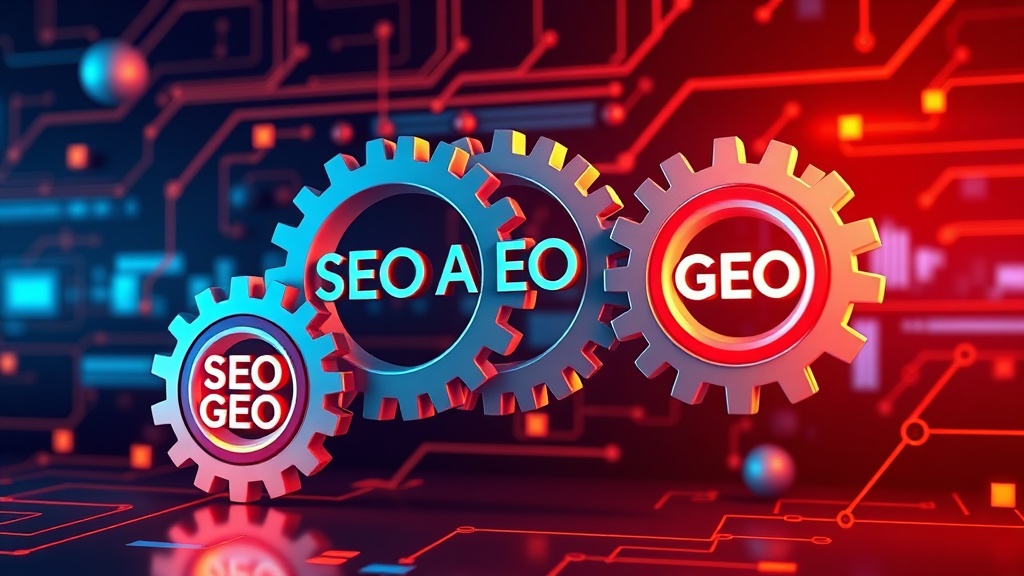
In the relentlessly evolving digital landscape, simply having an online presence is no longer sufficient. Businesses and content creators face an increasingly sophisticated user base and algorithmic gatekeepers. The traditional siloed approach to digital marketing has given way to a more integrated, intelligent, and user-centric paradigm. To achieve hyper-targeted engagement and sustainable growth, a holistic strategy that seamlessly intertwines Search Engine Optimization (SEO), Answer Engine Optimization (AEO), Geographic Engine Optimization (GEO), and Artificial Intelligence Optimization (AIO) has become not just advantageous, but absolutely essential for navigating the complexities of modern digital discovery.
SEO Reimagined: Beyond Keywords and Backlinks
SEO in the modern era transcends traditional keyword stuffing and link building, focusing instead on comprehensive user experience, semantic understanding, and E-E-A-T principles to establish domain authority and relevance.
Semantic Search and Entity Recognition
Modern search engines, powered by sophisticated algorithms like Google’s BERT and MUM, have moved beyond simple keyword matching to understanding the semantic meaning and context of user queries. This shift necessitates content creators to focus on topic clusters, entity recognition, and providing comprehensive answers to user intent rather than just optimizing for individual keywords. Building a robust knowledge graph around a specific domain or product set is paramount for achieving true topical authority and relevance in search results.
Core Web Vitals and User Experience (UX)
Google’s emphasis on Core Web Vitals—Largest Contentful Paint (LCP), First Input Delay (FID), and Cumulative Layout Shift (CLS)—underscores the critical role of user experience in search ranking. A technically sound website with fast loading times, responsiveness, and visual stability directly impacts SEO performance. Beyond these metrics, intuitive navigation, mobile-friendliness, and accessibility contribute to an overall positive user experience, which is a foundational ranking signal for search engines seeking to deliver the best possible results.
E-E-A-T and Topical Authority
Experience, Expertise, Authoritativeness, and Trustworthiness (E-E-A-T) are crucial for establishing credibility and ranking well, especially in YMYL (Your Money or Your Life) sectors. Demonstrating profound knowledge, industry experience, and fostering a strong brand reputation through expert content, verifiable facts, and positive user reviews signals to search engines that a site is a reliable source. Cultivating topical authority by covering subjects comprehensively and consistently positions an entity as a go-to resource.
AEO: Navigating the Conversational Web
AEO, or Answer Engine Optimization, focuses on optimizing content for voice assistants and conversational AI, requiring precise, direct answers to natural language queries to achieve featured snippets and voice search results.
Understanding Natural Language Processing (NLP)
Voice search relies heavily on Natural Language Processing (NLP) to interpret spoken queries, identify user intent, and extract relevant information. Optimizing for AEO means structuring content to directly answer common questions using natural language. This involves anticipating how users might phrase questions conversationally, often starting with ‘who’, ‘what’, ‘where’, ‘when’, ‘why’, or ‘how’, and providing concise, direct responses within the content.
Schema Markup for Answer Capsules
Structured data, particularly schema markup, is fundamental for AEO. Implementing Question and Answer schema, How-To schema, and FAQ schema explicitly tells search engines and voice assistants the nature of your content and highlights direct answers. This increases the likelihood of your content being chosen for featured snippets, rich results, and ultimately, as a direct answer in voice search results, often referred to as ‘answer capsules’.
Long-Tail Conversational Keywords
While traditional SEO often targets shorter, high-volume keywords, AEO thrives on long-tail conversational keywords. These are typically longer phrases that users speak into a voice assistant. Researching these specific question-based queries and integrating them naturally into content, alongside their direct answers, is key. This approach captures highly specific user intent that might be missed by broader keyword strategies.
GEO: Pinpointing Local Opportunities
GEO, or Geographic Engine Optimization, targets users searching for local products or services, utilizing tools like Google Business Profile, local citations, and geo-targeted content to capture nearby customer intent and drive foot traffic or local conversions.
Google Business Profile Optimization
For any business with a physical location or serving a specific geographic area, optimizing Google Business Profile (GBP) is the cornerstone of GEO. This involves meticulously completing all profile information, including accurate Name, Address, Phone (NAP) data, business hours, services, photos, and regular updates. Encouraging customer reviews and actively responding to them further enhances local search visibility and trust.
Local Citations and Review Management
Consistent NAP information across online directories, known as local citations, is vital for GEO. Discrepancies can confuse search engines and negatively impact local rankings. Beyond citations, managing online reviews on platforms like Yelp, TripAdvisor, and industry-specific sites is critical. Positive reviews boost local SEO, while prompt and professional responses to negative feedback can mitigate their impact and demonstrate customer commitment.
Hyperlocal Content Strategies
Creating content specifically tailored to local interests, events, and community needs can significantly boost local SEO. This ‘hyperlocal’ content might include blog posts about local attractions, partnerships with other local businesses, or news relevant to the immediate community. Integrating local landmarks, street names, and area-specific terms naturally within web content helps search engines associate the business with its geographic context, enhancing relevance for ‘near me’ searches.
AIO: The Era of Algorithmic Intelligence
AIO, or Artificial Intelligence Optimization, involves understanding and adapting content and technical strategies to align with the increasingly sophisticated machine learning algorithms that power search engines, recommendation systems, and personalized content delivery platforms.
Machine Learning and Ranking Factors
Search engine algorithms are dynamic, powered by machine learning that continuously learns and adapts to user behavior, content patterns, and evolving information landscapes. AIO focuses on identifying and optimizing for the signals that these algorithms prioritize, which go beyond explicit keywords to encompass user engagement metrics, content freshness, personalization signals, and the overall relevance a piece of content has to a complex user query, often interpreted by deep learning models.
Personalization and User Intent Prediction
AI plays a significant role in personalizing search results and content recommendations based on individual user history, location, device, and inferred intent. AIO involves crafting content that not only answers explicit queries but also anticipates latent user needs and preferences. This requires a deep understanding of customer personas and leveraging data analytics to predict user journeys, allowing for the delivery of highly relevant and timely information, increasing engagement and conversion rates.
Generative AI in Content Creation and Optimization
The advent of generative AI, particularly large language models (LLMs), presents both opportunities and challenges for AIO. These tools can assist in rapid content generation, topic ideation, and even optimize existing content for clarity and relevance. However, AIO also involves ensuring that AI-generated content meets high E-E-A-T standards, remains unique, and provides genuine value, rather than merely superficial text. Ethical use and careful oversight of AI in content workflows are essential for long-term algorithmic favor.
The Synergy of Strategies: A Unified Digital Ecosystem
A truly effective modern digital strategy integrates SEO, AEO, GEO, and AIO, treating them not as isolated tactics but as interconnected components that amplify overall visibility, relevance, and user engagement across diverse search modalities and user journeys.
Data Integration and Cross-Channel Analytics
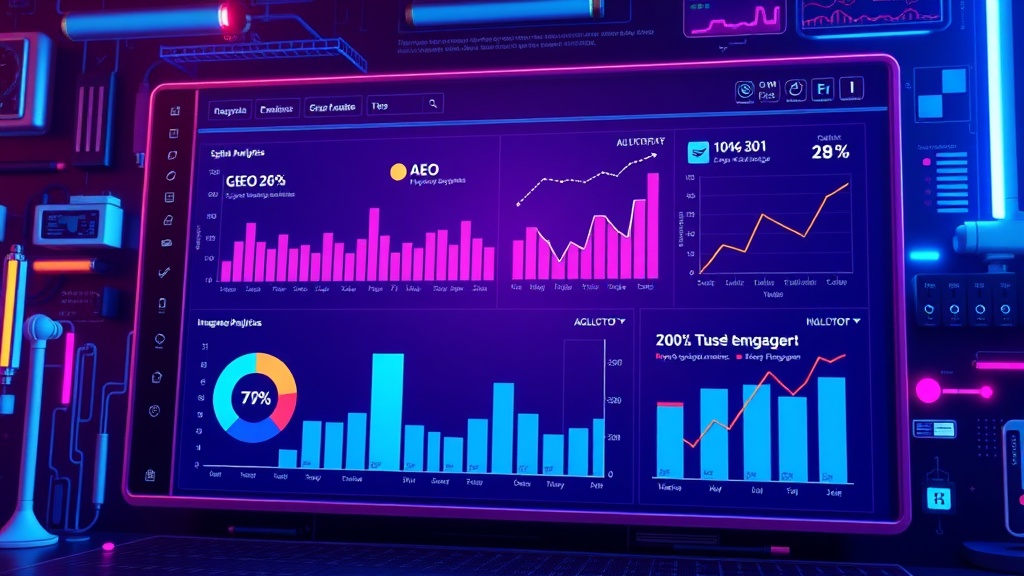
The success of an integrated strategy hinges on collecting, consolidating, and analyzing data from all digital touchpoints. This means integrating insights from web analytics platforms, Google Search Console, Google Business Profile insights, social media analytics, and even voice search logs. Understanding user behavior across traditional search, voice commands, and local queries allows for a holistic view of the customer journey, enabling data-driven optimizations across all four pillars.
Unified Content Architecture
Instead of creating disparate content for different optimization goals, a unified content architecture aims to serve multiple purposes simultaneously. A single, comprehensive piece of content can be optimized for semantic SEO, feature direct answers for AEO, include local context for GEO, and be structured in a machine-readable format for AIO. This approach maximizes content efficiency and ensures consistency of message and branding across all discovery channels.
Agile Optimization Frameworks
The digital landscape is in constant flux, necessitating an agile approach to digital strategy. Continuous monitoring, A/B testing, and iterative refinement are crucial. Regularly reviewing performance metrics across SEO, AEO, GEO, and AIO, adapting to new algorithm updates, and responding to evolving user behaviors allows organizations to stay competitive and maintain a leading edge in hyper-targeted engagement. This dynamic framework ensures strategies remain relevant and effective.
Implementing a Hyper-Targeted Engagement Model
Implementing a sophisticated, integrated digital strategy requires a systematic approach. It begins with a comprehensive audit of existing digital assets, followed by defining clear objectives aligned with business goals, and then executing a phased strategy. Continuous monitoring and adaptation are paramount.
| Strategy | Key Focus Areas | Primary Goal |
|---|---|---|
| SEO | Semantic search, Core Web Vitals, E-E-A-T, broad relevance | Organic visibility, domain authority |
| AEO | Natural language queries, direct answers, schema markup, voice search | Featured snippets, conversational AI answers |
| GEO | Google Business Profile, local citations, reviews, hyperlocal content | Local search visibility, foot traffic, local conversions |
| AIO | Machine learning signals, personalization, user intent prediction, generative AI ethics | Algorithmic favor, optimized recommendations |
To future-proof digital efforts, businesses must invest in advanced analytics tools, foster a culture of data literacy, and prioritize user-centric design in every aspect of their online presence. Staying abreast of technological advancements, particularly in AI and machine learning, will be critical for anticipating the next wave of digital discovery.
Conclusion: The Future is Integrated and Intelligent
The landscape of digital strategy has fundamentally transformed, moving from fragmented tactics to a unified, intelligent ecosystem. Mastering SEO, AEO, GEO, and AIO is no longer about excelling in one area but about strategically integrating them to create a powerful, symbiotic force. This convergence allows businesses to achieve unprecedented levels of hyper-targeted engagement, reaching users precisely when and where they are searching, across all modalities. Those who embrace this integrated, data-driven, and AI-aware approach will not only survive but thrive, establishing enduring relevance and authority in the dynamic digital future.