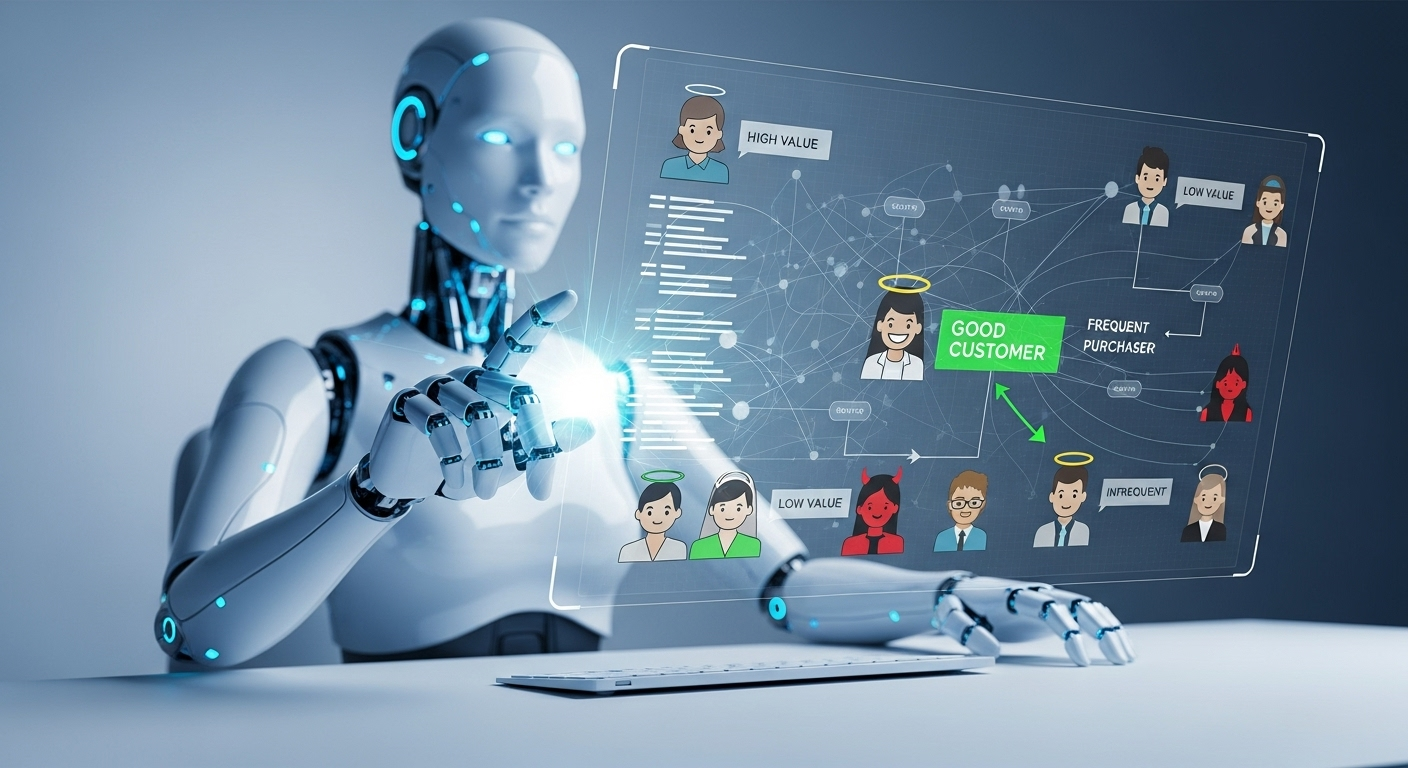
The world of digital advertising is in the midst of a seismic shift, a transformation as profound as the move from print to digital. For years, the game was about manual control and meticulous audience segmentation. Marketers became experts at carving out hyper-specific niches, layering demographic data with interests and behaviors, all in a bid to find the perfect customer. This era of granular control gave entrepreneurs and advertisers a sense of command over their campaigns. But it was also a system built on assumptions, a complex web of rules that struggled to keep pace with the chaotic, ever-changing reality of human intent. In the milliseconds it takes for a webpage to load, a silent, high-stakes auction takes place, and the winner gets to display their ad. Historically, success in this auction was a function of the highest bid and a basic quality score. Today, that model is being completely rewritten by artificial intelligence.
Enter Andromeda, a name that signifies a new constellation in the advertising universe. This isn’t merely an update to an existing platform; it represents a fundamental rebuild of the engine that powers ad delivery, most notably within Meta’s ecosystem. Andromeda is Meta’s answer to a new reality where the sheer volume of ad creatives is exploding, thanks to the rise of generative AI and automated campaign suites like Advantage+. The old systems, reliant on advertisers defining the audience, are ill-equipped to handle this new scale and complexity. Andromeda flips the script. Instead of the advertiser telling the system who to target, the advertiser provides a diverse portfolio of creative assets, and the system’s powerful AI determines who should see which ad, in real time. This move from audience-led to creative-led advertising is more than just a technical change; it’s a strategic imperative for any business looking to thrive in the modern digital landscape. Understanding this new paradigm is no longer optional—it is the key to unlocking scalable growth, improving return on ad spend, and forging more meaningful connections with customers in a world saturated with digital noise.
This evolution is powered by a confluence of next-generation technologies. At its core, Andromeda is a sophisticated retrieval engine. Before an ad can even enter an auction, it must be selected from a pool of tens of millions of potential candidates. This is Andromeda’s primary function: to instantly analyze a user’s real-time signals and select a few thousand of the most relevant ads to compete in the final auction. This retrieval process is driven by deep neural networks and massive computational power, allowing it to understand nuanced connections between a user’s immediate context and the vast library of available ad creatives. This is a departure from older models that relied more heavily on pre-defined, static audience labels. The system now thinks in terms of behavioral signals and creative portfolios, matching the right message to the right moment with unprecedented speed and precision. For entrepreneurs and marketers, this means the focus must shift from micromanaging audience lists to developing a robust and varied creative strategy. The new question is not “Who do I want to reach?” but rather “What range of messages can I provide so the AI can find my ideal customers for me?”
The Architecture of Real-Time Ad Selection
At the heart of modern digital advertising lies the ad auction, a process that occurs billions of times a day in the blink of an eye. Traditionally, this was a relatively straightforward affair based on an advertiser’s bid and a simple relevance score. However, systems like Andromeda represent a complete architectural overhaul, focusing on the critical “retrieval” stage that happens *before* the auction even begins. Think of it as a hyper-intelligent gatekeeper. When a user opens an app or loads a webpage, creating an ad opportunity, Andromeda’s job is to sift through tens of millions of eligible ads and select a few thousand highly relevant candidates. This initial filtering is where the magic happens. It processes three orders of magnitude more ads than the subsequent ranking and auction stages, making it the most computationally demanding part of the process. This selection isn’t random; it’s a sophisticated matching process powered by massive machine learning models that analyze thousands of signals in milliseconds. These signals include user behavior, contextual data from the app or website, time of day, device type, and the semantic meaning of the ad creatives themselves.
The shift to this retrieval-first model is a direct response to the explosion of creative assets. With generative AI tools allowing marketers to produce countless variations of images, videos, and text, older systems couldn’t efficiently test and deploy them all. Andromeda is built for this new reality. It thrives on variety. Instead of an advertiser testing one or two winning ads, the system is designed to handle a large “portfolio” of creatives. It uses this portfolio to learn which messages resonate with different micro-segments of the audience, without the advertiser needing to define those segments manually. This fundamentally changes the workflow for marketers. The emphasis is no longer on finding the one perfect ad, but on creating a diverse library of concepts, angles, and formats. The system’s AI then acts as the ultimate matchmaker, pairing the right creative with the right user at the perfect moment to maximize relevance and drive better outcomes for the advertiser. This automated process ensures that ad spend is directed toward the most effective opportunities in real time, leading to greater efficiency and a higher return on investment.
The Engine Room: AI, Machine Learning, and DCO
The engine driving this new era of ad auctions is a powerful combination of artificial intelligence (AI), machine learning (ML), and Dynamic Creative Optimization (DCO). These technologies work in concert to move beyond simple bidding and targeting rules, creating a system that learns, predicts, and adapts in real time. Machine learning algorithms are the core intelligence, analyzing vast datasets to identify patterns that humans never could. These models predict the likelihood of a user taking a desired action—like making a purchase or signing up for a newsletter—for any given ad impression. This predictive power allows the system to make smarter decisions, not just about which user to show an ad to, but which specific creative variation is most likely to elicit a positive response. This process evaluates millions of variables simultaneously, a scale of analysis impossible to achieve manually, leading to far greater efficiency and scalability for advertising campaigns.
Dynamic Creative Optimization (DCO) at Scale
Dynamic Creative Optimization is the practical application of this AI-driven insight. It is a technology that automates the assembly of personalized ads in real time. Instead of creating hundreds of static, pre-packaged ads, a marketer provides a set of creative components: images, videos, headlines, descriptions, and calls-to-action. When an ad opportunity arises, the DCO system instantly mixes and matches these components to build an ad tailored specifically for that individual user and context. This can be based on a multitude of data points, including their browsing history, geographic location, the current weather, or even the time of day. For example, a retail brand could use DCO to show a user an ad featuring the exact pair of shoes they were just viewing on their website, with a headline that mentions free shipping to their city. This level of personalization dramatically increases relevance and engagement. Systems like Andromeda supercharge DCO by providing a more intelligent pre-selection of ads to begin with, ensuring that the dynamic variations being generated are already from a pool of highly relevant candidates. This combination allows for personalization to be delivered at an unprecedented scale, moving beyond simple retargeting to create genuinely unique ad experiences for millions of users simultaneously.
Predictive Analytics: The Forward-Looking Brain
If DCO is the hands that build the ad, predictive analytics is the brain that anticipates what to build. This branch of AI uses historical and real-time data to forecast future outcomes. In the context of the ad auction, predictive models analyze past campaign performance to determine which creative elements are most likely to drive success. These systems can score new creatives on their predicted click-through and conversion rates before they are even launched, saving significant time and budget on manual A/B testing. Predictive analytics also helps with bid optimization, instantly setting the optimal bid for an ad impression based on its predicted value. This prevents overpaying for low-value impressions and ensures that advertisers don’t miss out on high-value opportunities. By looking forward instead of just reacting to past performance, predictive analytics enables a proactive approach to campaign management. It allows the system to anticipate consumer needs and market trends, automatically shifting budgets to the channels and creatives that are forecasted to deliver the highest return on investment. This forward-looking intelligence is what makes the new ad auction so powerful, transforming advertising from a game of guesswork into a data-driven science.
Data Signals: The Fuel for the Auction
In the world of Andromeda and real-time ad auctions, data signals are the indispensable fuel that powers the entire system. Every ad impression is a unique event accompanied by a rich stream of information that algorithms use to make instantaneous decisions. These signals can be broadly categorized into three main areas: user behavior, contextual relevance, and creative attributes. User behavior signals encompass a user’s historical actions, such as past purchases, websites visited, content engaged with, and ads clicked on. This provides a deep understanding of their interests and intent. The system leverages this data to predict what a user might be interested in next, allowing for highly personalized ad delivery. For example, if a user has been browsing articles about hiking and recently purchased a pair of boots, the system might infer an interest in other outdoor gear.
Contextual signals, on the other hand, relate to the user’s immediate environment at the moment the ad is served. This includes the content of the webpage or app they are using, their geographical location, the time of day, and the type of device they are on. Contextual advertising has seen a resurgence as a privacy-centric alternative to third-party cookies, as it focuses on the relevance of the surrounding content rather than an individual’s long-term browsing history. A user reading a recipe for pasta is in a highly relevant context to see an ad for a specific brand of pasta sauce. AI has enhanced contextual targeting to go beyond simple keywords, enabling it to understand the sentiment and nuance of an article or video, ensuring ads are not just relevant but also brand-safe. Finally, creative signals refer to the attributes of the ad itself. The system analyzes the text, imagery, video content, and overall format to understand what the ad is about and who it might appeal to. The AI learns which visual elements, messaging tones, and calls-to-action perform best with different audiences, constantly optimizing for better performance.
Rethinking Strategy in a Creative-First World
The rise of AI-driven retrieval engines like Andromeda necessitates a profound strategic shift for marketers and entrepreneurs. The old playbook of painstakingly building and managing dozens of micro-targeted ad sets is becoming obsolete. The new paradigm is one where creative strategy is paramount, and the primary job of the advertiser is to fuel the algorithm with a rich and diverse portfolio of ad assets. This “creative-first” approach moves the focus from defining the audience to defining the message in as many compelling ways as possible. The core principle is creative diversification. Instead of trying to guess which single ad will perform best, the goal is to provide the system with a wide range of concepts, angles, formats, and messaging. This allows the AI to do what it does best: test thousands of permutations in real time to find the perfect combination for different segments of the audience—segments that may be too nuanced or transient for a human to identify and target manually.
From Micromanagement to Strategic Oversight
This new reality demands a change in mindset from micromanagement to strategic oversight. Advertisers are no longer pilots manually flying the plane but are more like air traffic controllers, setting the destination and ensuring the system has everything it needs to navigate effectively. Success now depends on providing high-quality inputs. This starts with ensuring that data tracking, such as the Meta Pixel and Conversions API, is set up correctly to provide the algorithm with clean, accurate signals about what constitutes a valuable outcome. From there, the focus turns to creative production. Marketers must build a system for generating a continuous stream of varied content. This means testing different emotional hooks, value propositions, and visual styles. For an e-commerce brand, this could mean creating ads that showcase user-generated content, founder stories, product demonstrations, and benefit-focused testimonials, all running concurrently within the same simplified campaign structure. The algorithm will then dynamically match the testimonial ad to a user showing signs of consideration and the product demo to a user who has shown more direct purchase intent. Campaign structures should be consolidated, moving toward broader audiences to give the AI a larger data pool from which to learn and optimize.
Measuring Success and Scaling Winners
In this automated landscape, the process of measuring success and scaling campaigns also evolves. While it’s tempting to declare a “winner” among your creatives after just a few thousand impressions, the system is designed for longer-term learning. The AI might find that a creative that performs poorly with one audience segment is a top performer with another. Therefore, it’s crucial to give the system enough time and budget to learn before making drastic changes. The key is to analyze performance not just at the ad level but at the portfolio level, understanding how different creative angles contribute to the overall return on ad spend. Scaling is no longer about duplicating a winning ad set and slightly changing the targeting. Instead, it’s about feeding winning concepts back into the creative production cycle to generate new variations on the themes that are resonating. If a problem-solution video format is driving strong results, the next step is to produce more videos that tackle different customer pain points using that same successful framework. This creates a virtuous cycle of testing, learning, and iteration, where the AI continually refines its understanding of what works, allowing businesses to scale their advertising efforts more efficiently and effectively than ever before.
Embracing the New Frontier of Advertising
The transition to AI-powered ad systems like Andromeda is not just an incremental update; it is a fundamental re-architecting of the digital advertising landscape. This new frontier rewards agility, creativity, and a willingness to trust in the power of intelligent automation. For entrepreneurs and marketers who have built their expertise on the principles of manual bidding and granular audience segmentation, this shift can feel daunting. It requires letting go of direct control and adopting a new role as a strategic partner to the algorithm. However, those who embrace this change will unlock unprecedented levels of efficiency, personalization, and scale. The core task is no longer to find the perfect audience for your product, but to create a spectrum of compelling stories about your product and let the machine find the right audience for each story. This approach democratizes advertising in a new way, allowing brands with strong creative to compete effectively, even if they don’t have massive teams dedicated to campaign micromanagement.
The future of advertising performance will be defined not by the complexity of a campaign’s structure, but by the diversity and quality of its creative inputs. Success will be found in the ability to generate a high volume of varied ad assets that explore different customer motivations, pain points, and desires. It will require a commitment to testing and learning, viewing every ad not as a final product but as a data point that feeds a larger intelligence. The platforms are providing a clear direction: broader targeting, simplified campaign structures, and a relentless focus on creative. By aligning with this vision, businesses can ensure their message not only reaches more people but resonates more deeply, creating a stronger connection in the moments that matter most. The new ad auction is here, and it runs on creativity. The brands that understand and adapt to this reality are the ones that will thrive in the years to come.