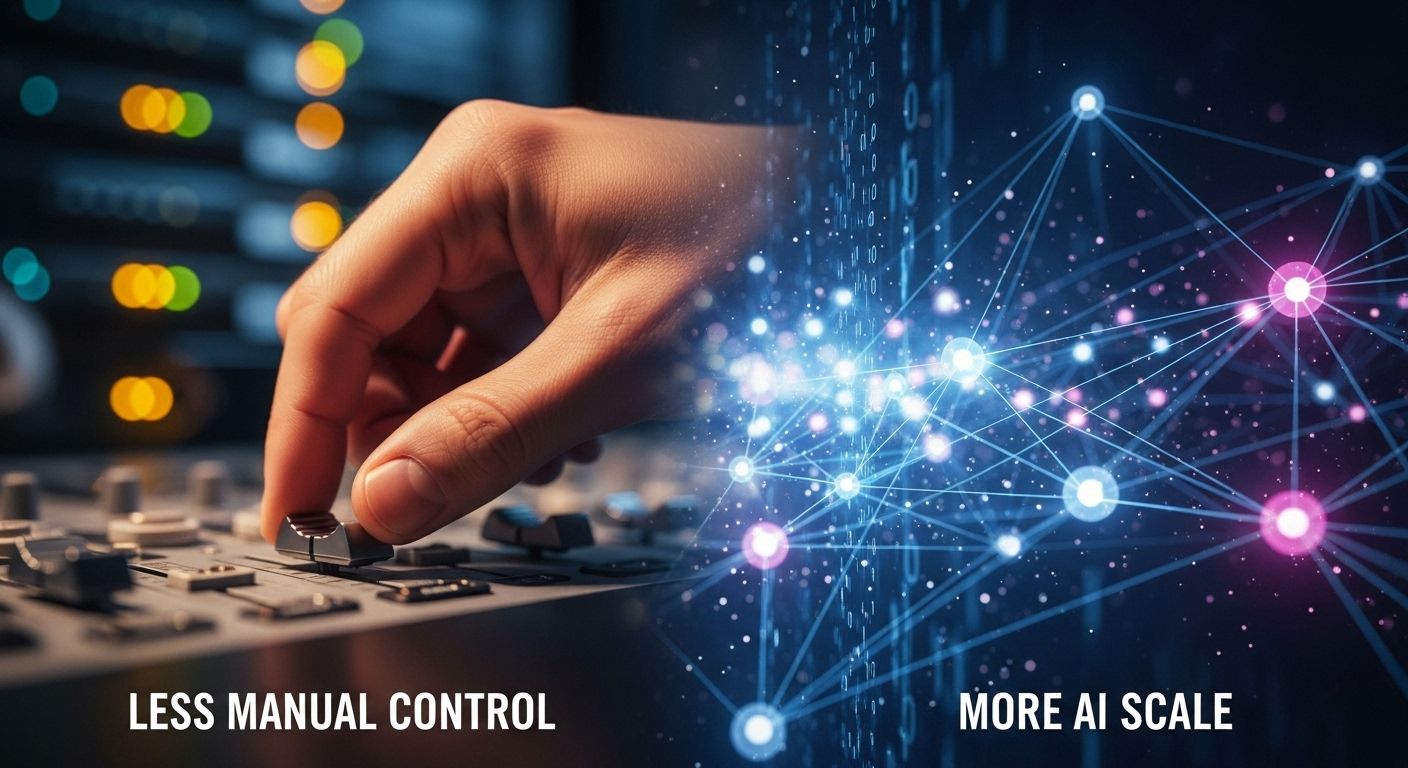
The world of digital advertising is in the midst of a seismic shift, a transformation powered by artificial intelligence that redefines the very nature of marketing. For entrepreneurs and marketers who built their careers on the art of manual campaign optimization—A/B testing headlines, meticulously crafting audience segments, and adjusting bids with surgical precision—this new era can feel both exhilarating and unsettling. At the forefront of this revolution is Meta’s next-generation AI engine, a system internally referred to as Andromeda. This is not merely another feature rollout; it represents a foundational change in the architecture of one of the world’s most powerful advertising ecosystems. Andromeda, powering the ever-expanding Advantage+ suite of tools, is designed to automate nearly every facet of a campaign, from audience targeting and budget allocation to creative optimization. It operates at a scale and speed that is simply unattainable for a human campaign manager, processing tens of millions of ad candidates in milliseconds to find the perfect match for a user. The promise is alluring: greater efficiency, higher return on ad spend (ROAS), and access to predictive analytics that can uncover new customer segments you never knew existed. The trade-off, however, is profound. It demands a fundamental surrender of granular control, asking marketers to trust a black box algorithm with their budgets and brand identity.
This transition is not optional. Meta is increasingly making its AI-driven tools, like Advantage+ campaigns, the default and, in some cases, mandatory setting for key objectives like sales and leads. The old playbook of hyper-specific targeting and manual tweaking is becoming obsolete. Instead, the system now treats advertiser inputs more as “suggestions” than rigid constraints, using broad targeting to give the AI maximum freedom to learn and optimize. This paradigm shift is creating a palpable tension within the industry. On one hand, Meta reports staggering performance gains, with its AI-powered ad solutions generating an annual revenue run rate that has surpassed $60 billion. Advertisers using Advantage+ have reported significant increases in ROAS and lower costs per action. On the other hand, this automation has led to concerns about campaign volatility, rising costs for smaller advertisers, and a loss of the strategic oversight that brands have historically considered essential. For entrepreneurs and marketers, the path forward requires more than just a tactical adjustment; it necessitates a complete reimagining of their role. The value they bring is no longer in the meticulous day-to-day management of campaign settings, but in higher-level strategy, deep customer understanding, and, most importantly, the quality and diversity of the creative they feed into the machine. Andromeda has changed the rules of the game, and success in this new landscape depends on understanding and embracing this trade-off between control and scale.
The Architecture Of Intelligent Automation
At its core, Meta Andromeda represents a fundamental redesign of the ad delivery engine, built to handle the exponential complexity of modern digital advertising. It is an end-to-end system co-designed with hardware, including NVIDIA Grace Hopper Superchips and Meta’s own Training and Inference Accelerator (MTIA) chips, to achieve a massive leap in processing power. This infrastructure allows for a 10,000-fold increase in the complexity of the machine learning models used for ad retrieval—the critical first step where the system sifts through tens of millions of potential ads to create a shortlist of relevant candidates for a specific user impression. This is the key to its power. Where previous systems were limited in the number of ad variations they could consider, Andromeda is built for a world of infinite creative possibilities, fueled by the very generative AI tools Meta is simultaneously rolling out to advertisers. The system is designed to thrive on variety, leveraging deep neural networks to understand the subtle relationships between ad creatives, user data, and conversion signals. It no longer relies on static, predefined audience segments. Instead, every image, headline, and video becomes a targeting signal. The AI studies how different user profiles interact with different creative angles and dynamically routes the message to the person it predicts will be most receptive. This means the creative itself has effectively become the targeting mechanism, a profound shift from the days of layering demographic and interest-based filters. The system’s goal is to simplify the campaign structure for the advertiser—moving toward a model of one campaign, one ad set, and a large, diverse library of creatives—while handling the immense complexity of bidding, placement, and audience matching behind the scenes.
Unlocking Performance Through AI-Driven Scale
For businesses willing to embrace this new automated paradigm, the performance benefits are substantial and multifaceted. The most immediate impact is often seen in efficiency and return on investment. By automating the millions of micro-decisions involved in campaign management—from real-time bidding adjustments to allocating budget across different placements like Facebook, Instagram, and Reels—the system frees up marketing teams to focus on strategic initiatives rather than tactical execution. This automation has demonstrated the ability to significantly lower costs. For instance, Meta’s automated solutions for lead generation have been shown to reduce the cost per lead by 14% to 24% compared to manual setups. More broadly, advertisers leveraging the full Advantage+ suite have reported seeing up to a 22% increase in return on ad spend. The system’s deep learning models can analyze vast datasets to identify patterns and predict user behavior with a level of accuracy that manual analysis could never achieve. This predictive capability allows for more effective budget allocation and ensures that ad spend is directed toward the highest-potential audiences and placements, maximizing every dollar spent.
Hyper-Personalization At Unprecedented Scale
One of the most powerful capabilities unlocked by Andromeda is the ability to deliver hyper-personalized ad experiences at a massive scale. Traditional marketing segments audiences into broad categories, but AI can understand individual user signals in real-time. The system processes a user’s recent activity, content engagement, and even interactions with Meta’s AI chat tools to create a dynamic profile of their current interests and intent. This allows the AI to move beyond simple demographics and serve an ad that is not just relevant to the user’s general profile, but to their specific mindset at that exact moment. For example, the system can automatically test up to 150 creative combinations, identifying which image, headline, and call-to-action resonates most with different micro-segments of the audience. This is a level of testing that would take a human team months to execute manually. With generative AI tools now integrated into the platform, advertisers can create numerous variations of ad copy, backgrounds, and aspect ratios, feeding the system with the diverse assets it needs to tailor the message for each user and placement. This capability democratizes sophisticated personalization, making it accessible even to small businesses without large marketing departments.
Predictive Analytics For Proactive Campaigning
Beyond optimizing current campaigns, Andromeda’s AI engine provides powerful predictive capabilities that enable a more proactive approach to marketing. The system’s deep neural networks are designed to learn complex patterns from historical campaign data and user behavior, allowing it to forecast future trends and identify emerging opportunities. This is a significant evolution from reactive optimization, where marketers adjust campaigns based on past performance. With predictive analytics, the AI can anticipate which customer segments are likely to convert, which creative angles will perform best in the upcoming week, and even how external factors might impact campaign results. For entrepreneurs, this means making smarter, data-driven decisions about budget allocation, product promotions, and market expansion. The AI essentially acts as a strategic advisor, surfacing insights that would otherwise remain hidden in the noise of vast datasets. It can identify lookalike audiences with a much higher degree of accuracy than before and discover untapped markets by recognizing subtle behavioral correlations. This shift from manual analysis to AI-driven foresight allows businesses to be more agile, capitalizing on opportunities before their competitors even see them.
The Marketer’s Dilemma: Ceding Control For Growth
The transition to an AI-managed advertising ecosystem is not without its challenges, and for many seasoned marketers, the biggest hurdle is the loss of direct, granular control. The very skills that once defined an expert media buyer—the ability to fine-tune audience targeting, manually set bid caps, and meticulously control ad placements—are being systematically rendered obsolete by the Andromeda engine. This shift can be deeply unsettling. The new model requires a leap of faith: entrusting multimillion-dollar budgets to a proprietary algorithm whose inner workings are not fully transparent. Advertisers report that campaigns can experience increased volatility, especially during the AI’s learning phase, with costs per result fluctuating unpredictably. This “black box” nature of the system means that when performance dips, it can be difficult to diagnose the root cause. Was it the creative? A shift in the algorithm’s priorities? An external market factor? Without access to the detailed targeting and placement data that was once available, marketers can feel like they are flying blind, unable to apply their experience and intuition to solve problems. This dilemma creates a significant tension between the proven efficiency gains of AI and the strategic need for brand stewardship and predictable performance.
Navigating The New Advertising Landscape
Adapting to the era of Meta Andromeda requires a fundamental evolution in the role and skillset of the marketer. Clinging to outdated methods of manual control will lead to diminishing returns and an uphill battle against an algorithm designed for breadth and automation. Success is no longer defined by one’s ability to outsmart the machine through tactical tweaks, but by the ability to effectively collaborate with it. This involves a strategic shift from hands-on-keyboard media buying to a more directorial role focused on providing the AI with the highest quality inputs. The new mantra for advertisers is to “feed the algorithm” with what it needs to succeed: clear business objectives, clean conversion data, and, above all, a rich and diverse library of compelling creative. Consolidating campaign structures to give the AI broader data sets to learn from is now considered best practice. Fragmented budgets and hyper-segmented audiences starve the machine of the information it needs to optimize effectively. Instead, marketers must learn to trust the system to find the right audience, focusing their energy on the strategic elements that remain firmly within human control.
From Tactician To Strategist
The rise of AI automation elevates the marketer’s role from a day-to-day tactician to a high-level strategist. With the machine handling the “how” of ad delivery, the critical responsibility for humans becomes the “what” and the “why.” This means focusing on foundational marketing principles that AI cannot replicate. It involves developing a deep, nuanced understanding of the target customer—their pain points, motivations, and desires—and translating that insight into a compelling brand narrative and value proposition. The marketer’s job is to define the overarching campaign goals, establish the key performance indicators (KPIs) that truly matter for business growth (like return on ad spend and customer acquisition cost), and ensure the AI’s optimizations are aligned with these strategic objectives. This also involves becoming a more adept analyst of performance at a macro level, moving away from vanity metrics and focusing on how advertising efforts contribute to the bottom line. As AI takes on more repetitive tasks, it is projected that marketing professionals will pivot their work toward more strategic functions, making skills in data analysis and strategic thinking more valuable than ever.
Creative Excellence As The New Frontier
In a world where targeting, bidding, and placement are automated, creative has become the single most important lever for performance and the primary way for brands to differentiate themselves. The Andromeda system is designed to reward creative diversity; the more distinct angles, hooks, and formats you provide, the more opportunities the AI has to find the perfect combination for each individual user. This puts immense pressure on brands and entrepreneurs to move beyond producing a single “hero” ad and instead adopt a high-tempo creative testing and iteration model. The focus shifts to developing a deep creative library that explores various themes, tones, and messages. This doesn’t necessarily mean higher production costs. With Meta’s own generative AI tools, such as the AI Sandbox, advertisers can now quickly create variations of text, generate different backgrounds, and adapt images for various formats like Reels and Stories, making it easier to produce content at scale. The human element remains crucial in this process, providing the storytelling, emotional resonance, and brand authenticity that AI cannot yet generate on its own. The most successful marketers will be those who can blend human creativity with AI-powered tools to consistently produce a high volume of engaging and persuasive ad content.
Forging A Partnership With The Algorithm
The emergence of Meta Andromeda does not signal the end of the marketer, but rather the dawn of a new, collaborative era. The trade-off is clear: we are relinquishing the illusion of precise manual control in exchange for the immense power of AI-driven scale and personalization. While this transition can be unnerving, it also presents an incredible opportunity. By automating the complex, data-intensive tasks of ad delivery, Andromeda frees up human talent to focus on what truly drives business growth: strategy, creativity, and a deep understanding of the customer. The future of advertising on platforms like Meta will not be a battle of human versus machine, but a partnership. The AI will serve as the world’s most powerful distribution engine, capable of matching messages to audiences with unparalleled precision. The marketer’s role, in turn, will be to craft the compelling stories, authentic brand narratives, and diverse creative assets that fuel this engine. Success will be defined not by who can build the most complex campaign structures, but by who can provide the clearest strategic direction and the most resonant creative inputs. Embracing this new dynamic is no longer a choice but a necessity for any entrepreneur or marketer looking to thrive in an increasingly intelligent and automated digital landscape.