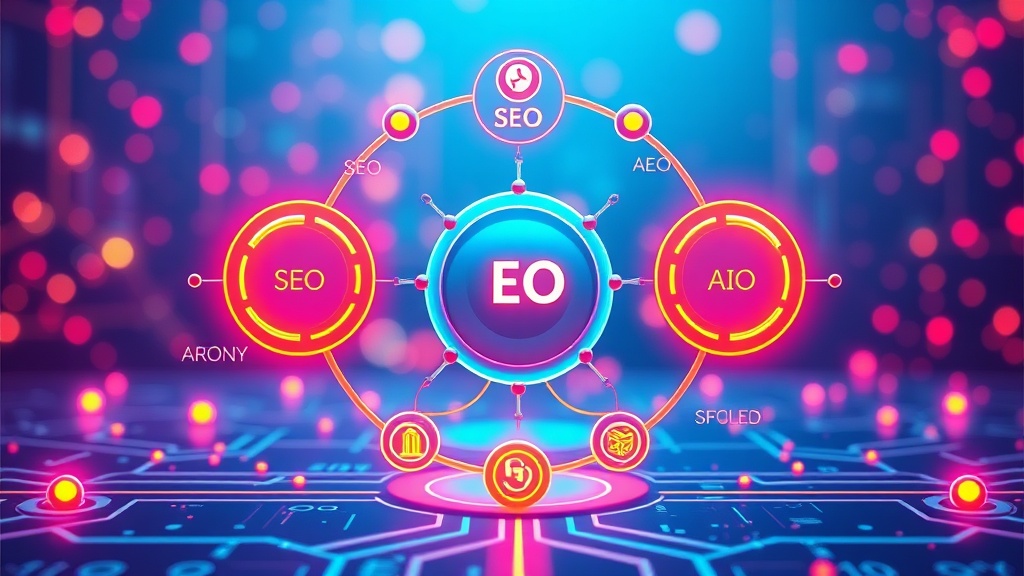
The modern digital landscape is a complex, multi-layered ecosystem where visibility, engagement, and conversion hinge on a meticulously crafted content strategy. As a Universal Technical Strategist and Master Content Architect, I recognize that true digital mastery transcends singular optimization efforts. It demands a holistic, integrated approach that simultaneously leverages Search Engine Optimization (SEO), Answer Engine Optimization (AEO), Geographic Optimization (GEO), and AI Optimization (AIO) to build resilient, high-performing content architectures. This article will dissect each pillar and illustrate their synergistic application.
The Imperative of Integrated Digital Strategy
An integrated digital strategy is essential because it harmonizes disparate optimization techniques—SEO, AEO, GEO, and AIO—into a cohesive framework, ensuring content achieves maximum visibility, direct answers, localized relevance, and future-proof adaptability across all user touchpoints. This unified approach prevents fragmented efforts, enhances user experience, and drives superior long-term performance in an increasingly complex online environment.
Understanding the Core Pillars
In the evolving digital realm, content cannot afford to exist in silos. Each piece of content, from a comprehensive guide to a succinct product description, must be designed with multiple optimization vectors in mind. The convergence of algorithmic sophistication and user behavior necessitates a strategy that is both broad in scope and precise in execution. We are moving beyond simply ranking; we are aiming for omnipresence and direct utility.
Search Engine Optimization (SEO): Foundation of Digital Visibility
Search Engine Optimization (SEO) forms the bedrock of digital visibility by enhancing content’s discoverability in traditional search engines through technical, on-page, and off-page tactics. Its primary goal is to improve organic rankings for relevant keywords, driving qualified traffic to digital assets. SEO ensures search engines can effectively crawl, index, and understand content, positioning it optimally for user queries.
Technical SEO: The Structural Integrity
Technical SEO ensures that search engine crawlers can efficiently access, crawl, and index website content. This involves meticulous attention to elements such as site speed, achieved through optimized image formats like WebP, server response times, and efficient content delivery networks (CDNs). A robust XML sitemap, coupled with a well-structured robots.txt file, guides crawlers to essential pages while preventing the indexing of irrelevant or duplicate content. The implementation of canonical tags is crucial for preventing duplicate content issues across different URLs, consolidating link equity. Mobile-first indexing mandates responsive web design and accelerated mobile pages (AMP) to cater to the predominant mobile user base, directly influencing Core Web Vitals metrics like Largest Contentful Paint (LCP), Cumulative Layout Shift (CLS), and First Input Delay (FID), which are critical ranking factors.
On-Page SEO: Content Relevance and User Experience
On-page SEO focuses on optimizing individual web pages to rank higher and earn more relevant traffic in search engines. This includes strategic keyword research, identifying not just head terms but also long-tail keywords and latent semantic indexing (LSI) terms to capture user intent comprehensively. Content must be high-quality, authoritative, and provide genuine value, adhering to E-A-T principles (Expertise, Authoritativeness, Trustworthiness). HTML elements like title tags, meta descriptions, header tags (H1, H2, H3), and image alt text are vital for communicating topic relevance to both search engines and users. Internal linking strategies build semantic relationships between pages, distribute PageRank, and improve site navigation, enhancing user experience and engagement metrics such as dwell time and bounce rate.
Off-Page SEO: Authority and Trust Building
Off-page SEO encompasses activities performed outside of a website to improve its search engine ranking. The most significant component is backlink building, acquiring high-quality backlinks from authoritative and relevant domains. These backlinks act as ‘votes of confidence,’ signaling to search engines that the content is trustworthy and valuable. Other off-page factors include social media marketing, brand mentions, and local citations, all of which contribute to brand visibility and perceived authority. A diversified backlink profile from various domain authority sources is essential for a natural and sustainable SEO strategy, mitigating risks associated with algorithmic penalties.
Answer Engine Optimization (AEO): Capturing Direct Answers
Answer Engine Optimization (AEO) specifically targets the retrieval of direct, concise answers from search engines, voice assistants, and AI models, aiming for placement in featured snippets, knowledge panels, and direct voice responses. Unlike traditional SEO focused on organic listings, AEO prioritizes clarity, conciseness, and structured data to ensure content directly addresses user queries in a format readily consumable by conversational interfaces.
Understanding Answer Engines and SERP Features
The rise of Google’s Answer Box, featured snippets, knowledge panels, and the increasing prominence of voice search and large language models (LLMs) has shifted the goalpost from merely ranking on page one to directly answering user queries. Answer engines prioritize content that is precise, factual, and easily extractable. This requires a fundamental rethink of content structure and presentation. The goal is to be the definitive, short-form answer source.
Structured Data and Schema Markup
Implementing schema markup, a form of structured data vocabulary, is paramount for AEO. Schema.org vocabulary helps search engines understand the context and meaning of content, not just keywords. Types of schema relevant to AEO include Article schema, FAQPage schema, HowTo schema, Product schema, and Review schema. Properly marked-up data allows search engines to confidently extract information and display it directly in rich results, significantly increasing visibility and click-through rates. For instance, FAQPage schema directly feeds into ‘People Also Ask’ sections and voice search queries.
Conversational Content Design
Content designed for AEO must be conversational, anticipating user questions and providing direct, unambiguous answers. This involves using a natural language processing (NLP) friendly tone, structuring information in a question-and-answer format, and creating succinct summary paragraphs. For voice search, content needs to be optimized for natural language queries, often longer and more conversational than typed queries. The ‘inverted pyramid’ style of writing, where the most important information is presented first, is highly effective for AEO, allowing answer engines to quickly identify the core response.
Geographic Optimization (GEO): Local and Global Reach
Geographic Optimization (GEO) focuses on tailoring digital content and strategies to specific geographical locations, enhancing relevance for local searches and ensuring appropriate global targeting for international audiences. It encompasses local SEO techniques like Google Business Profile optimization and international SEO strategies such as hreflang tags, driving location-specific traffic and conversions.
Local SEO: Connecting with the Neighborhood
For businesses with physical locations or those serving specific geographical areas, local SEO is indispensable. The cornerstone of local SEO is a meticulously optimized Google Business Profile (GBP) listing, ensuring accurate business information (NAP: Name, Address, Phone Number), hours of operation, services, and high-quality images. Local citations across directories like Yelp and Yellow Pages, coupled with consistent online reviews, build trust and local authority. Content tailored to local events, landmarks, or community issues further strengthens local relevance, attracting ‘near me’ searches and driving foot traffic or local service inquiries. Geo-targeted keywords, such as ‘best coffee shop in Seattle,’ are crucial.
International SEO: Bridging Borders Digitally
For global enterprises, international SEO ensures content is appropriately presented to users in different countries and languages. The proper implementation of hreflang tags in the HTML head or XML sitemap is critical, signaling to search engines the specific language and regional targeting of each page variation. This prevents duplicate content issues across different linguistic versions. Other considerations include country-specific top-level domains (ccTLDs), subdirectories, or subdomains for different regions, and culturally sensitive content localization rather than mere translation. Understanding regional search engine preferences (e.g., Baidu in China, Yandex in Russia) is also vital for comprehensive global reach.
Hyperlocal Content Strategies
Beyond broad local targeting, hyperlocal strategies delve into even finer geographical distinctions, optimizing for neighborhoods, districts, or specific community needs. This can involve creating content about micro-events, local news, or highly specific services within a very confined area. Hyperlocal content fosters deeper community engagement and can capture niche markets that broader local SEO efforts might miss. It requires a granular understanding of local demographics and specific user pain points unique to a small geographic footprint.
AI Optimization (AIO): Future-Proofing Content Architecture
AI Optimization (AIO) involves leveraging artificial intelligence and machine learning tools across the content lifecycle, from ideation and generation to personalization, distribution, and performance analysis. Its goal is to create more intelligent, adaptive, and efficient content ecosystems that anticipate user needs, enhance engagement, and scale effectively in an AI-driven digital landscape.
AI in Content Generation and Curation
Artificial intelligence, particularly large language models (LLMs) like GPT-4, offers unprecedented capabilities in content generation, ideation, and summarization. AI can assist in drafting initial content, brainstorming topics based on trending queries, and even localizing content at scale. While AI-generated content can significantly boost efficiency, human oversight is paramount to ensure factual accuracy, maintain brand voice, inject genuine creativity, and adhere to ethical content guidelines. AI also aids in content curation by identifying evergreen content for repurposing or identifying gaps in existing content libraries based on user analytics.
AI-Powered Personalization and Recommendation
AI’s ability to analyze vast datasets of user behavior enables hyper-personalization of content delivery. Recommendation engines, powered by machine learning algorithms, can dynamically serve up content, products, or services most relevant to an individual user based on their past interactions, preferences, and demographic data. This includes personalized landing pages, email marketing sequences, and in-app content feeds. Such personalization dramatically increases engagement rates, reduces churn, and drives conversions by presenting users with precisely what they need or are likely to be interested in at the optimal time.
Semantic Understanding and Knowledge Graphs
AI’s advancements in natural language processing (NLP) and natural language understanding (NLU) are at the heart of semantic search and knowledge graphs. Search engines and AI systems use these technologies to understand the context, meaning, and relationships between entities and concepts within content, rather than just keywords. Content architects must design content that is semantically rich, drawing clear connections between topics and entities. Building a robust internal knowledge graph, linking related content and concepts, enhances the content’s value and discoverability by AI-driven systems, enabling more intelligent retrieval and synthesis of information.
The Holistic Content Architecture Blueprint
A holistic content architecture blueprint integrates SEO, AEO, GEO, and AIO into a unified strategy, ensuring content is discoverable, directly answers user queries, resonates locally and globally, and is future-proofed by AI. This blueprint emphasizes modularity, continuous optimization, and cross-functional collaboration to build a scalable, high-performance digital presence.
Synergistic Strategy Development
The true power of this universal technical strategy lies in its synergistic application. For example, local service pages (GEO) should be optimized for featured snippets (AEO) using schema markup (SEO) and have their content drafted with AI assistance (AIO). Keyword research for SEO informs conversational query anticipation for AEO. E-A-T principles for SEO are amplified by a brand’s local authority (GEO). AI’s ability to analyze performance data refines all other optimization efforts. Each pillar strengthens and informs the others, creating a robust, adaptive content ecosystem.
Modular Content Design Principles
To manage this complexity, content must be architected with modularity in mind. Modular content is broken down into reusable, self-contained units that can be assembled, adapted, and repurposed across various platforms and formats. This approach facilitates AIO by making content easily consumable by AI models for summarization or rephrasing. It also simplifies updates, ensures consistency, and allows for efficient personalization across different user segments and geographical locations without duplicating effort.
Performance Monitoring and Iterative Refinement
No digital strategy is static. Continuous performance monitoring using analytics platforms like Google Analytics 4 (GA4) and Google Search Console is crucial. Metrics such as organic traffic, featured snippet impressions, local pack rankings, conversion rates, and user engagement signals provide invaluable feedback. AI-driven analytics tools can identify patterns and suggest optimization opportunities, allowing for agile, iterative refinement of content, technical infrastructure, and strategic approaches. A/B testing various content formats or SEO elements further informs best practices.
Conclusion: The Future of Digital Mastery
Achieving digital mastery in today’s intricate online environment requires more than just isolated optimization tactics. It demands a sophisticated, universal technical strategy that integrates SEO, AEO, GEO, and AIO into a seamless content architecture. By building a content ecosystem that is technically sound, intent-driven, geographically astute, and AI-optimized, organizations can ensure sustained visibility, profound engagement, and unparalleled adaptability. This holistic approach is not merely a competitive advantage; it is the fundamental blueprint for future-proof success in the ever-evolving digital landscape.