In the rapidly evolving digital ecosystem, traditional siloed approaches to online visibility and engagement are increasingly becoming obsolete. As search algorithms grow more sophisticated, user behaviors diversify, and artificial intelligence permeates every facet of digital interaction, a paradigm shift towards integrated strategies is not merely advantageous, but imperative. This article explores the critical convergence of Search Engine Optimization (SEO), Algorithm Experience Optimization (AEO), Geographic Experience Optimization (GEO), and Artificial Intelligence Optimization (AIO), detailing how their synergistic application forms the bedrock of a robust, future-proof digital strategy designed for unparalleled market dominance.
The Evolving Digital Landscape and the Need for Unification
The digital landscape is characterized by dynamic shifts driven by technological advancements and changing user expectations, necessitating a unified approach to maintain competitive advantage and ensure comprehensive online visibility.
The Limitations of Siloed Strategies
Historically, digital marketing channels like SEO, paid advertising, social media, and email marketing often operated independently, each with its own goals, metrics, and tactical implementation. This fragmentation frequently led to duplicated efforts, inconsistent brand messaging, and missed opportunities for cross-channel synergy. For example, a content piece optimized purely for SEO might not consider voice search nuances handled by AEO, or its local relevance for GEO, or its potential for AI-driven personalization via AIO. This disjunction results in inefficient resource allocation and a diluted impact on the target audience, failing to capitalize on the interconnected nature of modern digital interactions. Without a unified framework, organizations risk encountering data isolation, preventing holistic insights into customer journeys and overall campaign performance.
Synergistic Benefits of Integration
Integrating SEO, AEO, GEO, and AIO transforms individual strengths into a formidable collective force. A unified strategy ensures that every piece of content, every technical optimization, and every user interaction contributes to a singular, overarching objective. For instance, optimizing a local business listing (GEO) simultaneously enhances its visibility in conversational AI searches (AEO) which are often contextually aware, while the underlying technical structure supports traditional web search rankings (SEO). Furthermore, AI (AIO) can analyze the performance across all these channels, offering predictive insights for content creation and targeting, thus creating a feedback loop for continuous improvement. This interconnected approach maximizes efficiency, improves user experience across all touchpoints, and cultivates a stronger, more coherent brand presence.
Search Engine Optimization (SEO): The Foundational Pillar
Search Engine Optimization remains fundamental, focusing on enhancing a website’s visibility in organic search results by adhering to search engine guidelines and user intent.
Core Principles of Technical SEO
Technical SEO ensures that search engine crawlers can efficiently access, crawl, and index website content. Key elements include site architecture, URL structure, canonicalization, mobile-friendliness, and page speed optimization through core web vitals like Largest Contentful Paint LCP, Cumulative Layout Shift CLS, and First Input Delay FID. Proper implementation of structured data markup, such as Schema.org, provides explicit clues to search engines about the content’s context and meaning, facilitating rich snippets and enhanced search result visibility. XML sitemaps and robots.txt files guide crawler behavior, while secure socket layer SSL implementation establishes trust and is a ranking factor. Addressing crawl errors and broken links through Google Search Console is also crucial for maintaining site health.
Content and On-Page Optimization Best Practices
On-page SEO involves optimizing individual web pages to rank higher and earn more relevant traffic in search engines. This encompasses keyword research and strategic placement within title tags, meta descriptions, header tags H1, H2, H3, and body content. Content must be high-quality, comprehensive, and directly address user search intent, employing Latent Semantic Indexing LSI keywords and topic clusters to demonstrate topical authority. Image optimization, including alt text and descriptive file names, improves accessibility and searchability. User experience metrics, such as dwell time, bounce rate, and click-through rate CTR, also indirectly influence rankings, emphasizing the need for engaging and well-structured content.
Off-Page SEO and Authority Building
Off-page SEO refers to actions taken outside of a website to impact its search engine rankings. The most prominent factor is backlink building, which involves acquiring high-quality, relevant links from authoritative external websites. These backlinks act as ‘votes of confidence,’ signaling to search engines that the linked content is valuable and trustworthy. Strategies include content marketing for linkable assets, digital PR, guest posting, and broken link building. Brand mentions, social media signals, and online reviews also contribute to a site’s overall authority and perceived trustworthiness, indirectly boosting its organic search performance and reinforcing its E-E-A-T framework: Experience, Expertise, Authoritativeness, and Trustworthiness.
Algorithm Experience Optimization (AEO): Mastering Machine Learning Interfaces
Algorithm Experience Optimization focuses on tailoring content and technical infrastructure to be understood and favored by advanced, AI-driven search algorithms, particularly in conversational and voice search contexts.
Understanding AI-Driven Search Algorithms
Modern search engines like Google’s RankBrain, BERT, MUM, and Meta’s LLaMA 3 leverage sophisticated machine learning and natural language processing NLP models to interpret queries and content with unprecedented accuracy. These algorithms move beyond keyword matching to understand semantic meaning, context, and user intent. AEO requires content creators to focus on answering implicit questions, providing comprehensive answers, and structuring information logically, rather than merely stuffing keywords. Understanding how these algorithms process information, including entity recognition and knowledge graph integration, is vital. This necessitates a shift towards natural language generation and a deep comprehension of how AI learns and interprets human communication patterns.
Prompt Engineering and Conversational Search
Prompt engineering is central to AEO, especially for voice search, chatbots, and AI assistants. It involves crafting queries and content that are optimized for natural language processing, mimicking how users speak rather than type. This means using full sentences, interrogative phrases (who, what, where, when, why, how), and colloquialisms. Content should be structured to provide direct answers, often in a question-and-answer format, making it easier for AI to extract and present information. Optimizing for featured snippets, known as ‘position zero,’ becomes a high priority, as these are frequently sourced for voice search responses. Understanding implicit biases in AI models and ensuring diverse, unbiased content is also part of advanced prompt engineering.
Data Structuring for Algorithmic Understanding
To truly optimize for algorithmic understanding, data must be structured in a machine-readable format beyond basic Schema.org. This includes leveraging knowledge graphs, ontologies, and advanced semantic web technologies that explicitly define relationships between entities. For instance, using JSON-LD for detailed product information, event schedules, or FAQ pages allows algorithms to ingest and process data more efficiently, enhancing visibility in rich results, knowledge panels, and direct answer boxes. The goal is to make data unambiguous for AI, reducing cognitive load for the algorithm and increasing the likelihood of accurate interpretation and retrieval. This also extends to internal linking strategies that establish clear relationships between topical content clusters.
Geographic Experience Optimization (GEO): Localized Digital Dominance
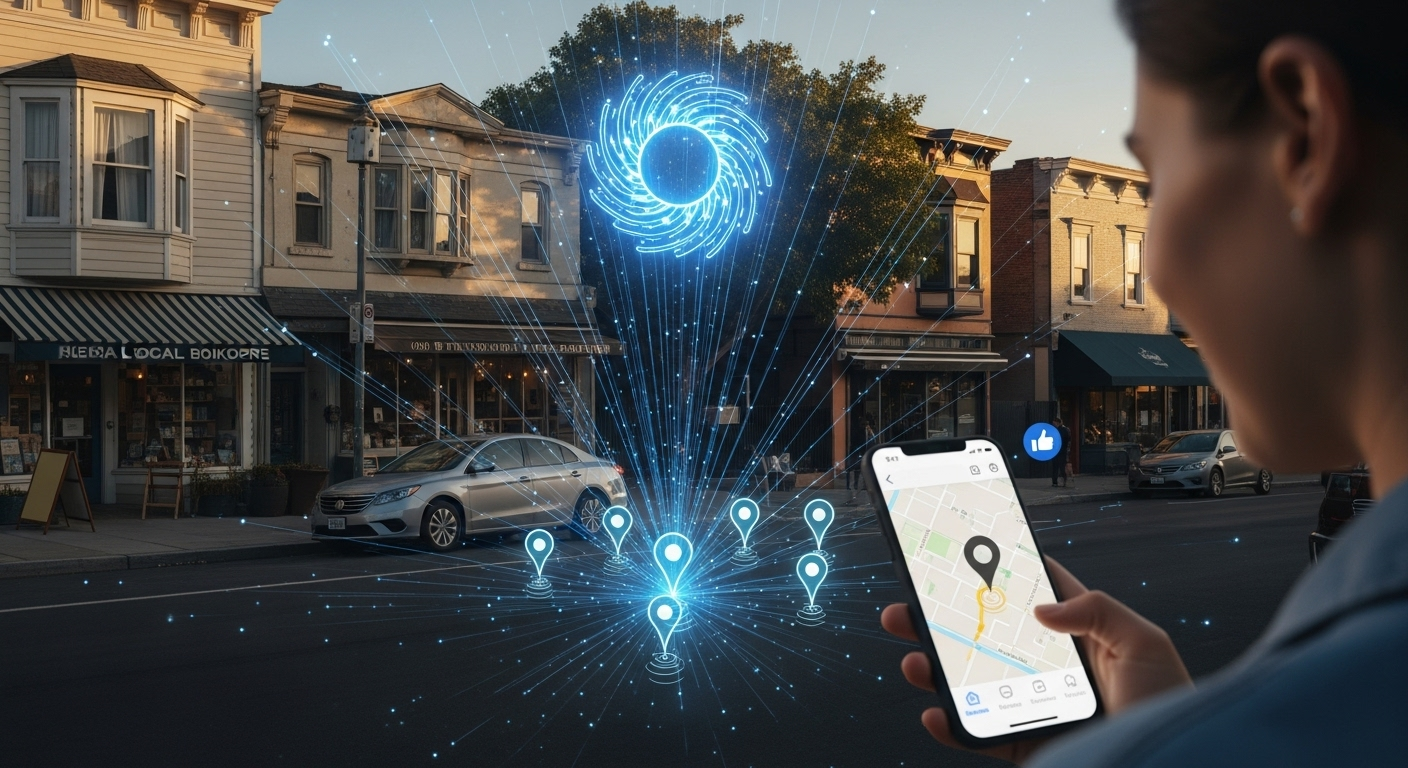
Geographic Experience Optimization targets audiences based on their physical location, tailoring digital assets to enhance local visibility and drive local engagement and conversions.
Hyper-Local Search and Proximity Factors
Hyper-local search focuses on user queries with explicit or implicit geographic intent, often for businesses ‘near me.’ Proximity to the searcher, relevance of the business to the query, and prominence (reputation, reviews, authority) are key ranking factors. GEO involves optimizing for local keywords, city-specific terms, and landmark references. Mobile optimization is paramount, as a significant portion of local searches occur on mobile devices. Understanding the interplay between a user’s device location, IP address, and historical search data helps in accurately targeting and delivering relevant local search results. The rise of geo-fencing and location-aware applications further emphasizes the importance of precise geographical targeting.
Local Business Profiles and Citation Management
Maintaining accurate and comprehensive local business profiles, primarily Google Business Profile, is the cornerstone of GEO. These profiles allow businesses to appear in Google Maps, local pack results, and knowledge panels. Optimization includes precise business categories, consistent Name, Address, Phone NAP data across all online directories, high-quality images, regular posting of updates, and active engagement with customer reviews. Citation management, ensuring consistent NAP information across a broad spectrum of local directories and industry-specific listings, builds credibility and trust with search engines. Erroneous or inconsistent data can severely hinder local search visibility and confuse both users and algorithms.
Geo-Fencing and Location-Based Marketing
Geo-fencing employs GPS or RFID technology to create virtual geographic boundaries, enabling businesses to deliver targeted messages or ads to smartphone users who enter or exit a defined area. This powerful location-based marketing tactic allows for hyper-relevant campaigns, such as sending a promotional offer when a customer is near a retail store. Beyond passive targeting, GEO also involves leveraging location data for audience segmentation, personalized recommendations, and real-time engagement. Integrating this with customer relationship management CRM systems allows for a more personalized and effective outreach, driving foot traffic and local conversions. Data privacy considerations and consent management are critical components of ethical geo-fencing strategies.
Artificial Intelligence Optimization (AIO): The Future of Intelligent Content
Artificial Intelligence Optimization leverages AI technologies to enhance content creation, personalization, and marketing automation, driving efficiency and predictive performance across all digital channels.
AI-Powered Content Generation and Curation
AIO enables scalable and intelligent content creation through AI writing assistants and generative models like GPT-4 or Gemini. These tools can assist with drafting articles, summarizing complex texts, generating meta descriptions, and even personalizing product descriptions at scale. Beyond generation, AI excels at content curation, identifying trending topics, gaps in existing content, and optimizing content for specific audience segments based on real-time data analysis. However, AIO stresses the importance of human oversight to ensure factual accuracy, brand voice consistency, and ethical considerations. The goal is not to replace human creativity but to augment it, allowing content creators to focus on strategic thinking and nuanced storytelling.
Personalization and Predictive Analytics
AIO empowers unprecedented levels of personalization by analyzing vast datasets of user behavior, preferences, and demographics. AI algorithms can predict future actions, recommend relevant products or services, and tailor content experiences in real-time. This includes dynamic website content, personalized email campaigns, and customized ad creatives. Predictive analytics, driven by machine learning, identifies potential churn risks, customer lifetime value, and optimal times for engagement. By understanding user intent and context with greater precision, AIO facilitates highly relevant interactions that significantly boost conversion rates and customer satisfaction. Implementing robust data pipelines and privacy-preserving machine learning models are key for ethical personalization.
Automation of Digital Marketing Workflows
One of the most significant benefits of AIO is the automation of repetitive and data-intensive digital marketing tasks. This includes automating A/B testing, bid management in advertising platforms, email segmentation, customer service chatbots, and even aspects of SEO monitoring and reporting. AI-driven automation frees up human resources to focus on strategic initiatives, creative development, and complex problem-solving. It also enables faster response times, greater accuracy, and the ability to operate at a scale previously unattainable. By integrating AI into various workflow stages, organizations can streamline operations, reduce operational costs, and achieve higher levels of efficiency across their entire digital marketing ecosystem.
Crafting a Unified Digital Strategy: A Holistic Framework
A unified digital strategy integrates SEO, AEO, GEO, and AIO into a cohesive framework, ensuring all efforts are synchronized, data-driven, and focused on maximizing holistic digital presence and performance.
Integrated Data Analytics and Performance Measurement
A holistic framework demands an integrated approach to data collection and analysis. Rather than viewing SEO, AEO, GEO, and AIO data in isolation, organizations must establish a centralized data repository and leverage advanced analytics platforms. This allows for cross-channel attribution modeling, identifying how different touchpoints contribute to conversions across the entire customer journey. Key performance indicators KPIs should be defined that reflect the combined impact of all strategies, such as unified organic visibility, voice search conversion rates, local foot traffic, and AI-driven content engagement. Tools like Google Analytics 4, Salesforce Marketing Cloud, and custom data warehouses become critical for providing a singular, comprehensive view of digital performance and informing strategic adjustments.
Cross-Channel Content Synchronization
Content is the common thread that weaves through SEO, AEO, GEO, and AIO. A unified strategy requires content synchronization, ensuring that content created for one channel is adaptable and optimized for others. For instance, a detailed blog post (SEO) can be repurposed into conversational snippets for voice assistants (AEO), localized versions for specific regions (GEO), and personalized recommendations via AI (AIO). This involves creating a content hub model, where foundational content is stored and then adapted for various distribution points. Maintaining consistent brand voice, messaging, and factual accuracy across all platforms is paramount. A content calendar that maps out multi-channel deployment and iterative content refinement based on integrated performance data is essential.
Organizational Alignment and Skill Development
Implementing a unified digital strategy necessitates significant organizational alignment. Teams traditionally siloed (e.g., SEO specialists, content writers, data scientists, local marketing managers) must collaborate closely, sharing insights and resources. This often requires breaking down departmental barriers, fostering a culture of cross-functional communication, and establishing shared goals. Furthermore, continuous skill development is crucial. Digital professionals must evolve beyond their narrow specializations to understand the broader implications of AI, advanced algorithms, and data integration. Training programs in prompt engineering, semantic SEO, local marketing analytics, and AI ethics become vital for building a competent, unified digital team capable of executing this integrated strategy effectively.
Comparison Table: SEO vs. AEO vs. GEO vs. AIO
| Aspect | SEO (Search Engine Optimization) | AEO (Algorithm Experience Optimization) | GEO (Geographic Experience Optimization) | AIO (Artificial Intelligence Optimization) |
|---|---|---|---|---|
| Primary Focus | Organic web visibility via traditional search engines | Optimizing for AI/ML-driven search, voice, and conversational interfaces | Targeting local audiences based on geographic proximity | Leveraging AI for content, personalization, and automation |
| Key Tactics | Keywords, backlinks, technical SEO, on-page content, site architecture | Prompt engineering, semantic structuring, direct answers, featured snippets | Google Business Profile, NAP consistency, local keywords, geo-fencing | AI content generation, predictive analytics, marketing automation, personalization |
| Core Metrics | Organic traffic, keyword rankings, bounce rate, conversion rate | Voice search volume, direct answer rate, conversational engagement, entity recognition | Local pack rankings, foot traffic, local queries, map views, local reviews | Content engagement, personalization effectiveness, conversion rate lift, automation efficiency |
| Technological Pillars | HTML, CSS, JavaScript, structured data (Schema.org) | NLP, knowledge graphs, semantic web, machine learning models | GPS, IP targeting, mobile optimization, local directories, location services | Generative AI, machine learning, deep learning, neural networks, data science |
| Impact on User | Finding relevant information via web search | Receiving quick, concise answers through AI assistants | Discovering local businesses and services | Personalized content, recommendations, seamless interactions |
The strategic integration of SEO, AEO, GEO, and AIO is no longer an option but a strategic imperative for any entity seeking to thrive in the modern digital arena. By understanding the distinct yet complementary roles of these disciplines and orchestrating their efforts within a unified framework, organizations can unlock unparalleled visibility, enhance user experiences, and drive sustainable growth. The future of digital dominance belongs to those who master this convergence, transforming complex technological landscapes into coherent, actionable strategies that resonate across every digital touchpoint.